


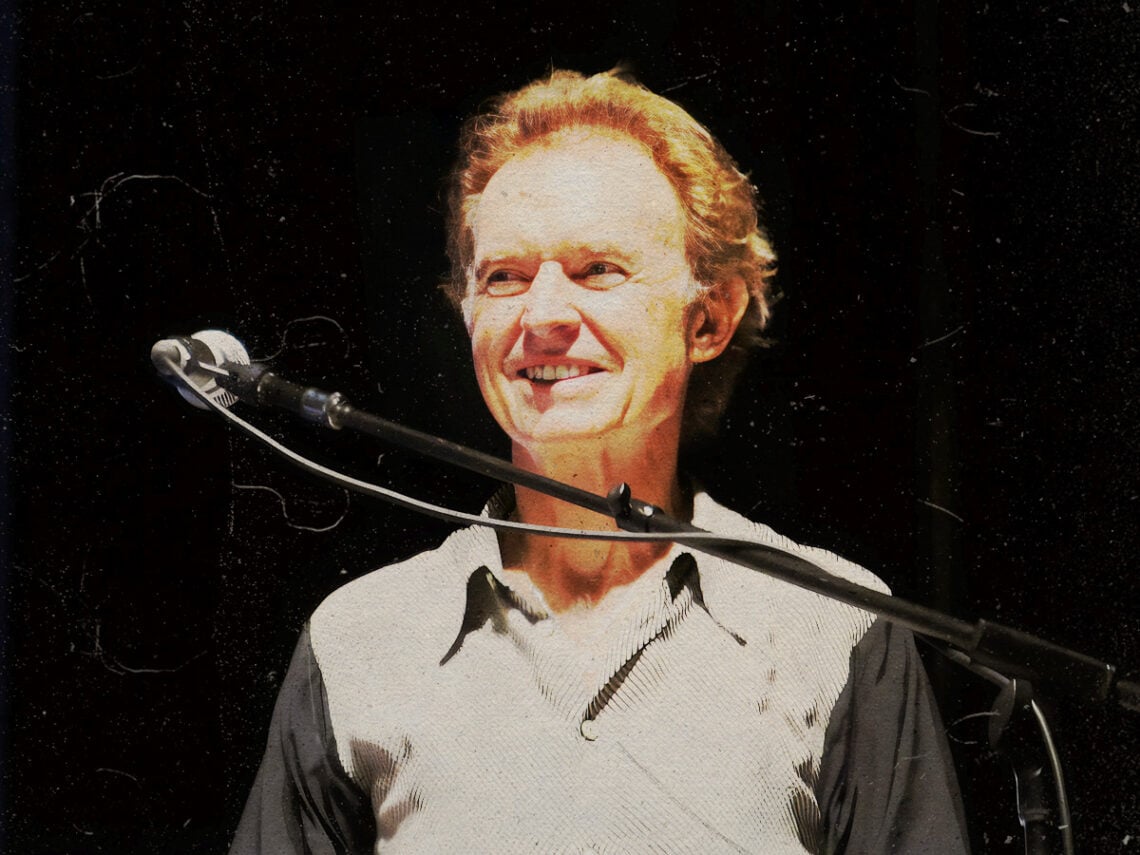
How The Beatles shaped Gary Wright’s ‘Dream Weaver’

The all-encompassing influence of The Beatles on the landscape of popular music and culture is unimaginable. From the jungles of Brazil to the snowy mountains of Mongolia, there are few corners of the globe that went untouched by the unforgettable stylings of John, Paul, George and Ringo – at this point, it wouldn’t be all that surprising an arctic penguin in an Abbey Road T-shirt. More or less every pop and rock scene of the past six decades can be traced back, in some way, to the songwriting of Lennon and McCartney. However, in some instances, such as the case of Gary Wright, the influence of The Beatles is much more apparent.
The American musician rose to prominence as a member of the Carlisle-based blues rock outfit – and leading contestant in the contest for the worst band name ever – Spooky Tooth. Attempting to blend R&B stylings with early rock ‘n’ roll stars (much like every single other band during the 1960s), Spooky Tooth did not have the biggest impact on the music scene of the decade. So, when the group disbanded in 1970, it was not a particularly tragic loss. The members split off into their separate paths, with Wright leaving to pursue a solo career while many of his bandmates jumped ship to join the ranks of Humble Pie.
Solo careers are famously hit or miss, and the early products of Wright’s efforts were somewhat lacklustre. Nevertheless, the lineage of his career was about to change forever, thanks to the work of, arguably, the best Beatle: George Harrison. After the break-up of The Beatles in 1970, Harrison pursued his own solo career, further exploring the Indian influences he had first come across with The Beatles. Harrison recruited Wright to contribute keyboard tracks for All Things Must Pass, Harrison’s first post-Beatles solo work.
The influence of George Harrison forever altered Gary Wright, who later wrote, “I had really never met anyone quite like George before. He didn’t seem to be on some huge ego trip like other artists I had met over the years” in his memoir. The pair seemed to get on well, and Wright was invited to work on six further Harrison releases, including Cloud Nine and Extra Texture (Read All About It).
Harrison’s impact on Wright would not be limited to the guitarist’s solo work, with the former Beatle proving to influence Wright’s definitive work significantly. After signing with Warner Brothers in 1974, the songwriter penned ‘Dream Weaver’, which became his biggest hit by far. Reaching number two in the US singles chart and topping the charts in Canada, the single established Wright as a successful solo artist despite the limp performance of the album it was taken from.
The inspiration for ‘Dream Weaver’ was largely down to the influence of two Beatles. Reportedly, Harrison had once given the keyboard player a copy of Autobiography of a Yogi, written by Paramahansa Yogananda. One of Yogananda’s poems, God! God! God!, features the line, “When my mind weaves dreams”, which proved to be influential on the construction of ‘Dream Weaver’. However, Wright also drew upon the work of John Lennon, whose song ‘God’, from John Lennon/Plastic Ono Band, has the lyric “I was the dreamweaver”.
So it seems as though the pioneering influence of The Beatles was not limited to the period in which the Fab Four were together, their respective solo work proved to be incredibly impactful for a range of musicians and artists. Of all the people they inspired, Wright certainly has more to be thankful for than most, as ‘Dream Weaver’ became his biggest hit, launching his solo career and establishing the man as a giant of the 1970s music scene.
