


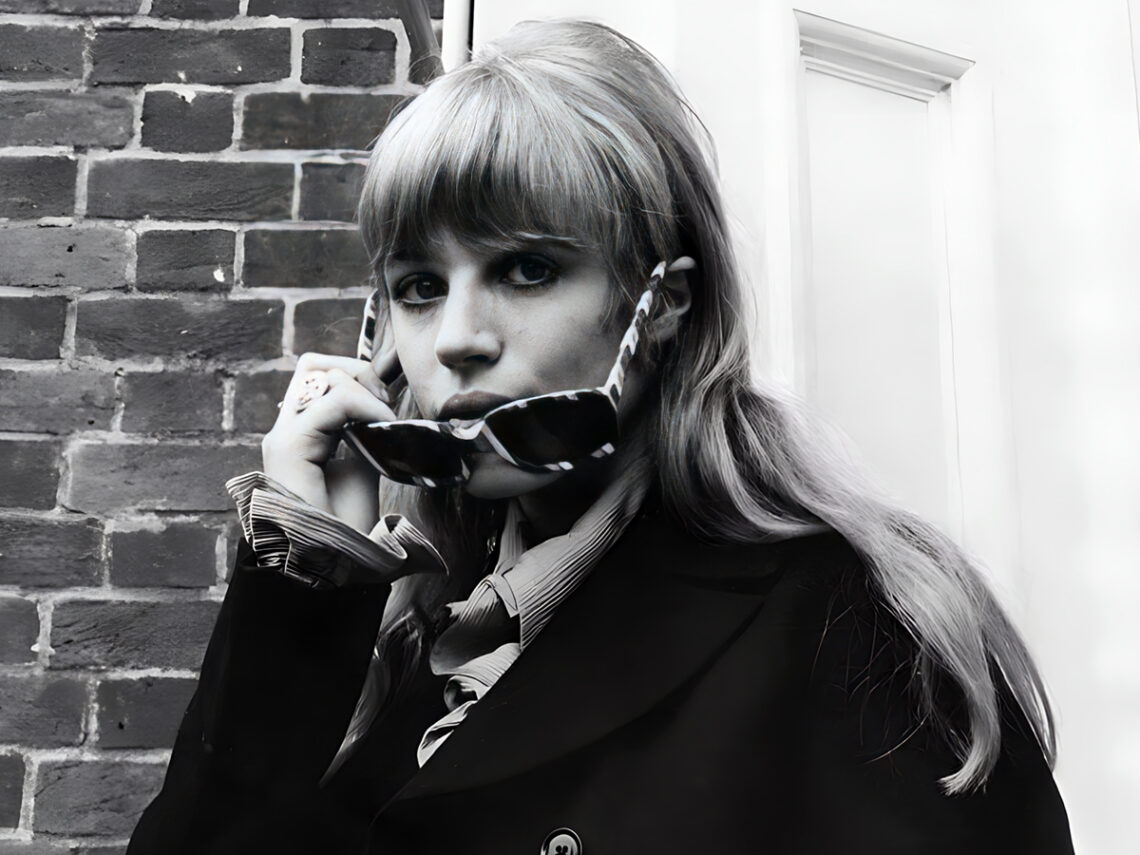
The Beatle who “really scared” Marianne Faithfull

It’s fair to say that the late, great Marianne Faithfull saw and did a lot in her time. As a singer in her own right, she churned out hits including ‘Sister Morphine’ and ‘As Tears Go By’ alongside The Rolling Stones, but also perhaps became better known as a starry piece of the entourage for such bands, as well as the likes of The Beatles.
But it was during her time with the Fab Four in particular that some more sinister aspects of the hedonistic rock and roll world began to reveal themselves to Faithfull, not necessarily tainting her view of the industry as a whole but more so the stars who were publicly taking it by storm. This was especially true when it came to John Lennon, the celebrated Beatles king but who, behind closed doors, would have a very different story to tell.
The Beatles’, and especially Lennon’s, penchant for psychedelics and LSD can admittedly be somewhat glamorised or treated quite superficially in the regaling of their legacy, but as Faithfull told Louder Sound in 2011, the effects of these trips had the potential to harbour highly damaging impacts. She said: “Lennon and John [Dunbar, an artist friend of Faithfull’s] took thousands of acid trips together. Lennon’s attitude towards me changed a lot when I went off with Mick [Jagger]. He didn’t like that at all.”
But more than just Lennon’s petty grievances with her choice of boyfriend, Faithfull recalled how there was an increasingly unnerving side to his drug use. “I’d see him, and he was always in such a wild state on acid it scared me,” she admitted. “He really scared me, actually. All the emotion that came out on the Plastic Ono Band was there for years for all to see.”
As much as he is undoubtedly a musical icon, the facts of Lennon’s personal life, and in particular his treatment of women, were stark and undeniable. Faithfull alluded to as much when describing the effects of his acid trips, giving a glimpse into the Beatle’s convoluted mind by saying: “He had [a] huge number of demons. Maybe we all do, but he had more than most.”
While the likes of ‘Lucy in the Sky with Diamonds’ explore a kaleidoscope of colour and dizziness when it comes to the contested influences of such substances, the truth was that this illusion was a lot more literal than it might suggest. The mirage of the swinging ‘60s may have been all about peace and free love, but the fumes fuelling that evidently hid a decidedly darker undercurrent that the glorified history of the decade would much rather us forget.
Even though it’s indubitable that Faithfull herself would have been no stranger to these certain proclivities that came part and parcel of the era and the lifestyle, her retelling of those stories gives a much more realistic and blunter version of events. In line with the host of terrifying conspiracies which persistently swirled around The Beatles, it’s clear that the effects of a life of artistry, mania, and experimentation had consequences that many were too scared to admit.
