


The bands that Sting couldn’t stand listening to: “I just hated”

Everything that Sting ever made needed to have a bit more going on than straight pop music.
He loved the idea of making music that would resonate in people’s hearts like he did with The Police, but the lion’s share of his greatest work usually came from him working on something that went off in a strange direction compared to the usual pop song formula of four chords and a knockout chorus. Sting revelled in tunes that took people on a journey, but that didn’t mean every experiment got his approval, either.
But before the Police had even been a thought in his mind, Sting was already becoming one of the more eclectic players that the underground had ever seen. He wasn’t afraid to pull from different genres all the time, and even in an age when punk was meant to ridicule anyone who could play their instrument well, Sting was much more excited by people who had total command of their instrument, like Jaco Pastorius.
And when he had people like Andy Summers and Stewart Copeland to bounce off of, it was a lot easier for him to make tunes that had more depth to them. Every member of the trio knew how to make something a bit more off-the-beaten-path, and while each of them loved the idea of serving the song, no one could have imagined that a tune like ‘Walking on the Moon’ would have had a shot on the charts with its strange effects.
Bands like Sex Pistols and The Clash were just beginning to infiltrate the charts every now and again, but even if Sting didn’t identify with them specifically, he definitely didn’t resonate with what he heard out of the blues bands. The heavy metal progenitors like Led Zeppelin may have been heavy for their time and offered something new to rock and roll, but Sting could only see the pretentious side of them whenever he turned on their tunes.
He needed a lot more excitement in his music, and no matter how fast Jimmy Page and Ritchie Blackmore played, they were never going to be enough for him, saying, “I played Dixieland, mainstream, bebop, free-form, I played in a big band. I also played as a backing musician for various cabaret artists. It was a very rich education which was totally outside of Rock and Roll. I wasn’t interested in rock’n’roll. The halcyon days for me to be interested in Rock music were the early 70s. I found the Rock music of the time abhorrent. It was Led Zeppelin, Deep Purple – music I just hated.”
Then again, are we sure that we’re talking about the same band here? Sting calling the more gluttonous era of Zeppelin abhorrent might have checked out, but since he had that eclectic mix of styles in his record collection, you’d think that he be interested when Page came up with something like ‘The Rain Song’ or decided to make a delve into Eastern modern on a track like ‘Kashmir’.

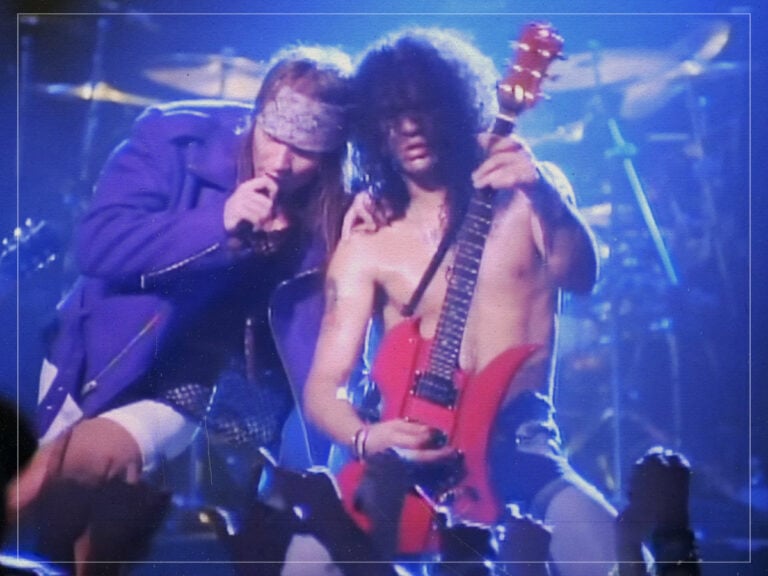

That had its place, but Sting was more interested in taking music into the world of jazz a little bit more. He already loathed the idea of making world music every time he performed, but the idea of hanging out with artists that seemed to know where the songs were going before he even did was a lot more reassuring than a band that seemed to be one step away from collapsing in on themselves.
Zeppelin and Purple definitely had a lot more facets that Sting might not have wanted to know about, but writing them off isn’t always the best way of approaching this kind of music. No, it’s not exactly subtle in what it’s trying to do every single time they play, but it was a much better alternative than going back to the same bluesy tropes that everyone else had been trying to do ever since the first Zeppelin album.

Never Miss A Beat
The Far Out Led Zeppelin Newsletter
All the latest stories about Led Zeppelin from the independent voice of culture.
Straight to your inbox.