


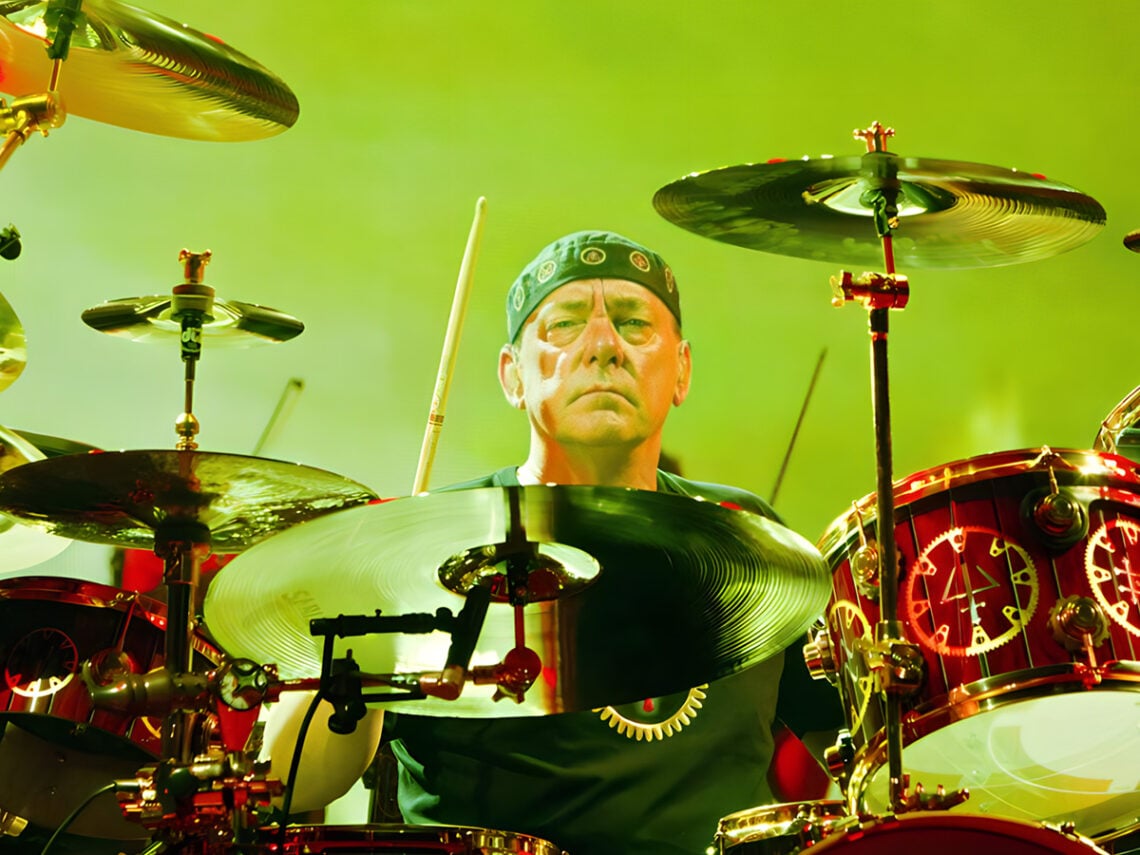
The band Neil Peart called the loudest in the world: “the speaker was overwhelmed”

When Rush first got started, Neil Peart didn’t anticipate being one of the best drummers in the world.
There were certainly bands that he was following in the footsteps of like Led Zeppelin and The Who, but by the time that the Canadian power trio hit their peak, it was impossible to think that such a full sound was coming out of only three dudes cutting loose on their instruments. Half of their songs sounded like a freight train from the minute they got started, but Peart felt that they hadn’t even scratched the surface of what the true power trios could do.
Then again, a trio is already a bit of an odd beast in the world of rock and roll. Although everyone from Nirvana to Cream has made some of the best records of their generation with only three people, everyone usually needs to carry equal weight in the equation, or the whole thing will come tumbling down. Rush were already at that point on their debut, but Peart helped give them the extra muscle they needed.
He could play like Keith Moon and John Bonham if he wanted to, but a lot of his rhythms were a lot more clinical. This was clearly someone who studied the same intricate parts that he saw out of people like Bill Bruford and Buddy Rich, but even if they all had a signature touch whenever they picked up two sticks, no one seemed to have the same amount of power that Peart had whenever he played.
And that’s what made Rush such an oddity back in the day. They had all of the complicated sections and episodic songs that you’d expect out of a band like Yes, yet their backing tracks were so heavy that they could have easily competed with the likes of Black Sabbath if they wanted to. But long before Tony Iommi started creating his own badass riffs, the genesis of heavy metal may have begun a few years earlier when Blue Cheer started blowing out every single speaker that they touched.
Led Zeppelin might get the title of the original “hard rock” band, but an album like Vincebus Eruptum is almost designed to be as heavy as possible from its opening notes. There are definitely the seeds of Rush planted in that band, considering their heavy riffs and a singer who could belt to the rafters, but Peart was always struck by the power when they kicked into tunes like ‘Summertime Blues’.
The Who may have turned it into a rock and roll juggernaut, but after turning the song into a musical nuclear bomb, Peart felt that no one else could have touched their volume when he first saw them, saying, “[They were] ‘the world’s loudest band’. I had our family TV turned down low, trying not to disturb Mom and Dad, but the speaker was still overwhelmed with static and distortion. Drummer Paul Whaley thrashed at the cymbals with both arms, Leigh Stephens was a dark-haired menace grinding out thick guitar riffs, and Dickie Peterson wailed through a pyramid of blond hair with his bass guitar hanging low.”
And while Whaley’s drumming does have that sense of reckless abandon that all good drummers are supposed to have, Peart opted for a different direction. He could still play the most maniacal fills anyone had ever heard, but given how precise everything was, his greatest moments felt like a rhythmic machine gun hitting your eardrums every single time he tore through a song like ‘La Villa Strangiato’.
Blue Cheer may have been all about volume, but Rush were the ones that helped bring a structure back to everything. They didn’t need to be the most popular band in the world, but as long as they followed their muse and kept their fans’ ears ringing every single time they left the stage, they knew they had done their job.
