


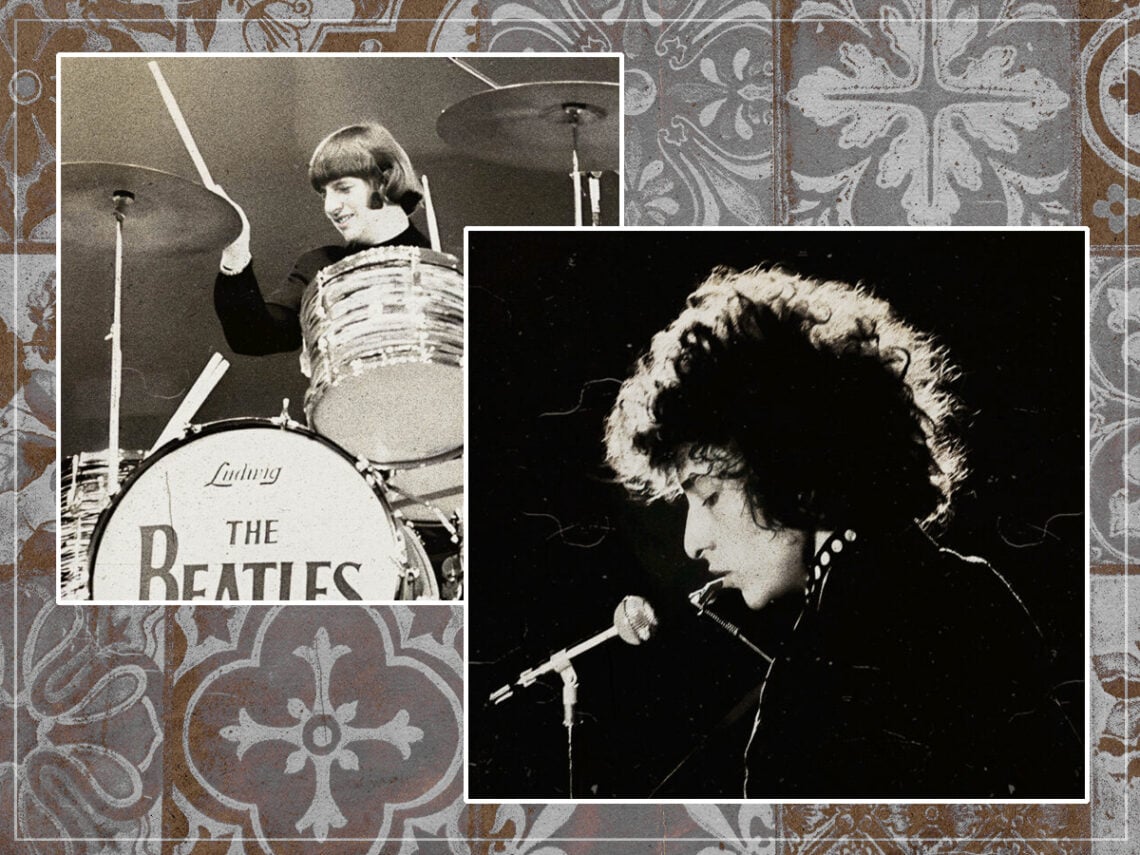
The band Bob Dylan called the anti-Beatles: “War is declared”

“I knew they were pointing the direction of where music had to go”. Those are the fateful words Bob Dylan retrospectively revealed about The Beatles. From their “outrageous” chords to their “staying power”, the band represented the future of music as soon as they got swinging. They undoubtedly influenced Dylan’s decision to go electric and defined the ideologies of the 1960s.
But what did they represent? “The Beatles represented freedom,” is how Roger Daltrey simply put it. David Bowie went with: “The Beatles opened the door for everybody else”. And Jimmy Page decreed: “The Beatles were the first to do a lot of things. They were innovators”. In essence, they were a hopeful force for positive change. They led a mainstream charge of heightened spirituality. They were larger than the sum of their parts by design.
But not every band goes in for that kind of thing. Some bands don’t want to reach for the stars with lofty ideals; they want to trudge through the mire and reflect what life is really like. As far as Dylan was concerned, this made The Clash the utter antithesis of the Fab Four. “The Clash have nothing but disdain for Beatlemania,” he writes in The Philosophy of Modern Song.
“‘I Wanna Hold Your Hand’, all the theme songs for Little Missy and the school maids, sweet-little sixteen mania, have no place in the real London anymore,” he continues. “In the real London war is declared. London is in the underworld. The world of drugs and waterfront real estate — The Clash sneer at the fool on the hill.”
In Dylan’s view, the Clash singing “phoney Beatlemania has bitten the dust” was not just a lyric but a philosophical mantra. It wasn’t so much that they didn’t like what had come before, it’s just that The Clash saw that the times had a-changed, and they thought it was their duty to reflect that rather than lose their heads in the clouds of the past.
As guitarist Mick Jones explained to the Wall Street Journal, “We were fans of The Beatles, The Who and The Kinks — but we wanted to remake all of that… Our message was more urgent — that things were going to pieces.” London had become an underworld of inequity; the virtues of ‘All You Need Is Love’, sadly, no longer fit. The youth needed something else; they needed to take stock and reconcile the present rather than lofty ideals.
Nevertheless, as Dylan’s message suggests, The Clash and The Beatles are not that far apart, they are opposite by virtue and being inverse and obverse on the same coin. Both bands looked to – as Strummer put it – give “the youth of the world a lot of respect”, arming them with a message that aligned to the zeitgeist, but one was gritty and blunt by design and the other was far more dreamy.
Both acts, it is plain to see, clearly made it their business to signpost “the direction of where music had to go”, it’s just that they were pointing in very different directions. For Dylan, one faced the heavens, and the other pointed to the underworld.

Never Miss A Tale
The Far Out Bob Dylan Newsletter
All the latest stories about Bob Dylan from the independent voice of culture.
Straight to your inbox.