


The jazz musician who leaves Angus Young in awe: “One of the greatest ever”

There’s nothing wrong with having one musical trick throughout your entire career. Some fans might like their favourite artists to innovate every time they go into the studio, but expecting any musician to just kick ass with a sound that they know a bit too well is hardly a problem if they keep delivering quality tracks.
Although Angus Young doesn’t seem to listen to many rock artists outside of Chuck Berry and Little Richard based on AC/DC’s catalogue, he knew that he was listening to brilliance whenever he stuck on Louis Armstrong.
That’s not to say that Young ever claimed to be a one-trick pony, either. Yes, AC/DC do rely on heavy blues to get them through most of their classic hits, but blues and traditional jazz weren’t that far away before rock and roll came to fruition. If anything, they seemed like two sides of the same coin.
Although AC/DC rarely ventured beyond their signature hard rock formula, Angus Young has never hidden his admiration for musicians from vastly different traditions. For him, great music was defined less by genre than by conviction, feel and the ability to connect with an audience.
Many blues artists relied on simple riffs to get through a song, but jazz traditionalists brought improvisation into the mix, usually soloing over the chord changes and getting raw emotion out of every standard they played. In essence, they were jamming before that term was even being used, but Armstrong was something different.
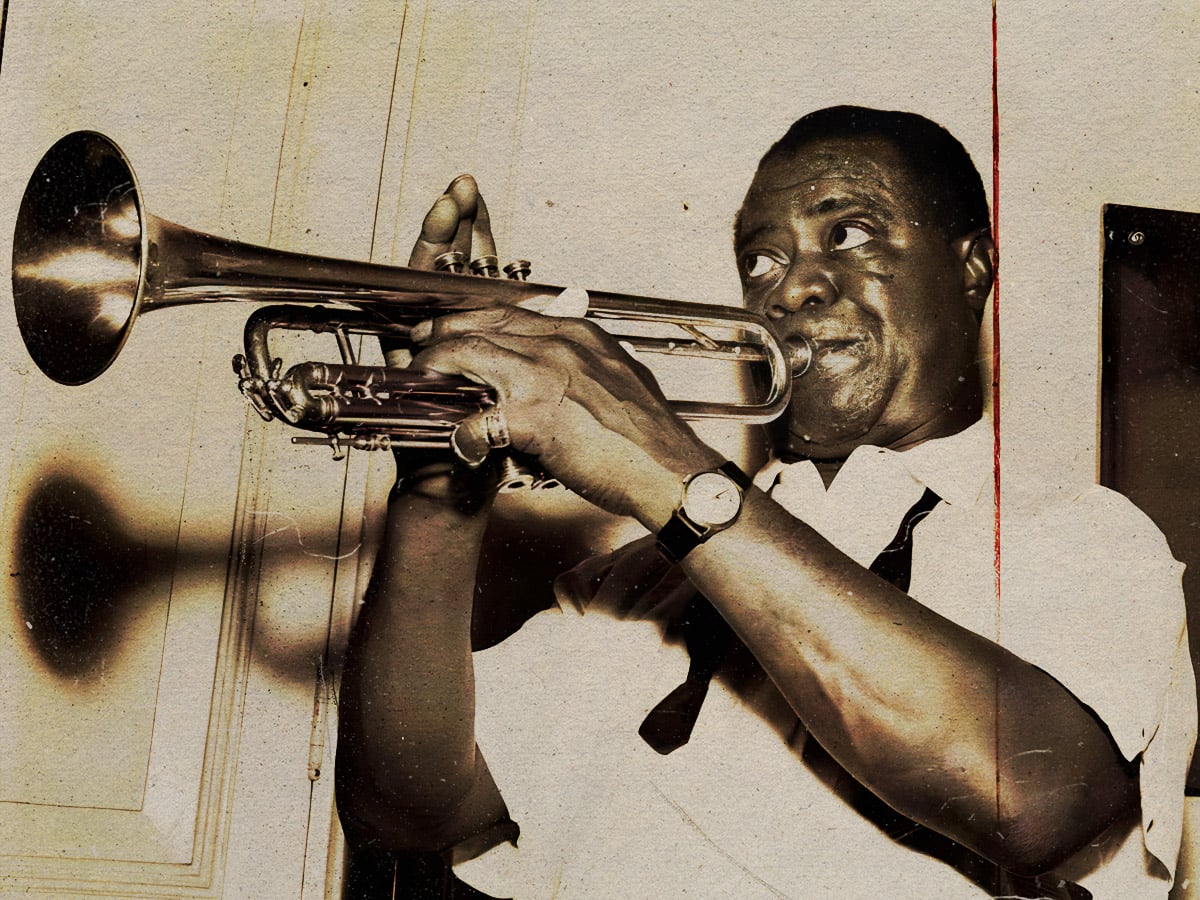
Outside of being an incredible bandleader and showman for his time, he was looking to entertain his audience from a pop perspective. If Elvis Presley created the pop formula for rock and roll on tracks like ‘Hound Dog’, Armstrong turned ‘What a Wonderful World’ and ‘Hello Dolly’ into the jazzy take on the three-minute single, all wrapped up in that sandpaper smooth voice of his.
Armstrong’s influence reached far beyond jazz circles. His warmth as a performer and his instinct for memorable melodies helped establish a blueprint for popular music that countless rock musicians, even those with little interest in jazz itself, would absorb in the decades that followed.
Even though Young was far from a jazzy player, he had to admit no one compared to Armstrong’s talent, telling Louder, “My sister and her husband took me to see him when I was a kid, and that’s always stuck with me. I still think he was one of the greatest musicians of all time. When you listen to his old records and hear the musicianship and emotion on them, and you realise that the technology in those days was almost non-existent – they all had to be done in one take.”
It’s not like AC/DC didn’t take advantage of Armstrong kicking the door down, either. Nothing about Armstrong’s voice was meant to be pristine, so it wasn’t that hard for someone to go from his throaty growl to Bon Scott’s boozed-up barfly vocals or Brian Johnson’s searing vocal tone, which still stands as one of the most aggressive instruments in rock and roll.
Then again, Young may have taken more than just vocals from Armstrong. Listening to the way that he plays his solos, the resident schoolboy guitar hero does take a few cues from how jazz traditionalists craft melodies, looking to make something people can hum afterwards rather than just play scale exercises in the same key as the song.
It’s not like Young is the only one affected by jazz, either, with fellow rockers from Cream to Steely Dan sprinkling in complex harmony into their classics. AC/DC may be the poster children for what rock and roll is supposed to sound like, but their tastes are a lot more eclectic than just roaring guitars and screeching vocals.
Young’s admiration for Armstrong serves as a reminder that musical influences rarely follow obvious paths. While AC/DC became synonymous with loud guitars and stripped-back rock, the qualities Young valued most, melody, feel, authenticity and emotional commitment, were just as present in the work of a jazz pioneer. Sometimes, the greatest lessons come from artists whose music sounds nothing like your own.
