


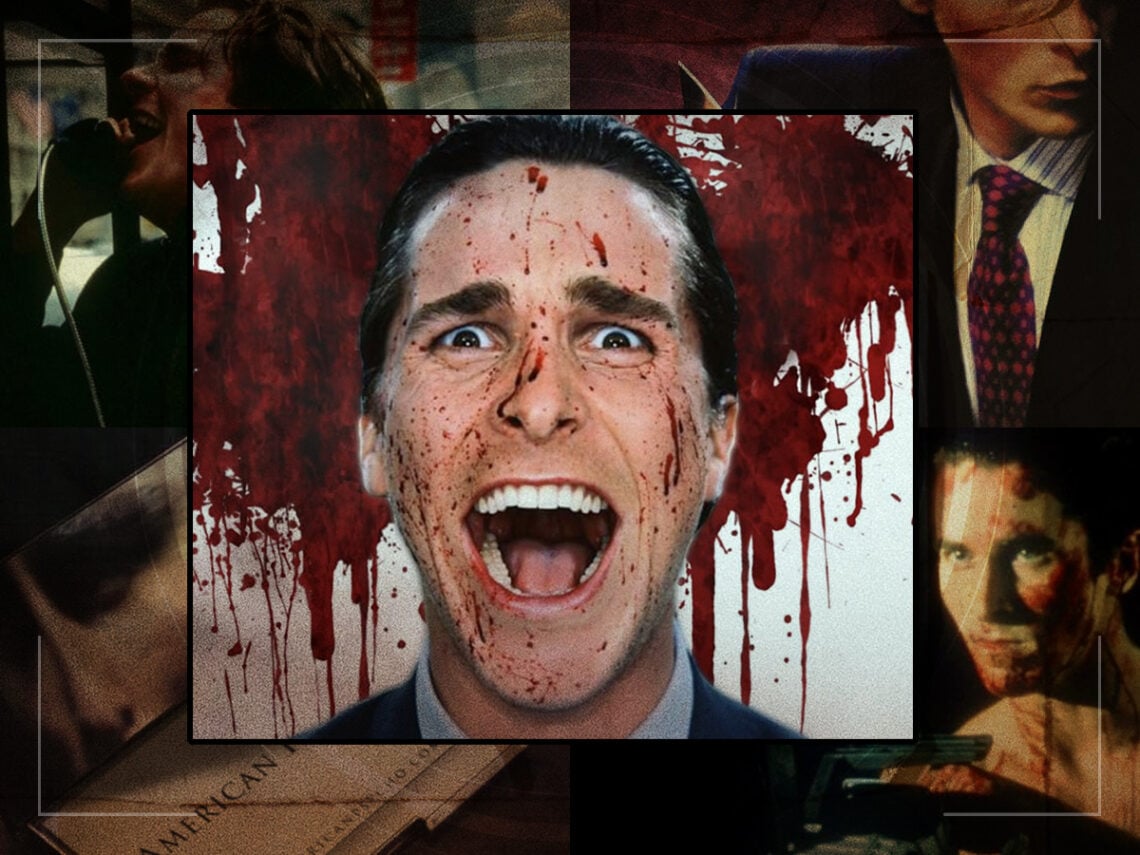
‘American Psycho’ ending explained: Who is Patrick Bateman?

Should you ever be brave enough, or wise enough for that matter, to pick up a copy of Bret Easton Ellis’ American Psycho novel, it is a scientific certainty that at one point you will utter, ‘Who on earth thought that this was filmable’.
In many ways, the prose is an examination of obscenity. In fact, I’d wager that it is almost physically impossible to be any more vulgar in print form.
Nevertheless, they did make a film out of it, and a damn good one it turned out to be. Helped along immensely by the most faithful character-to-on-screen portrayal in cinema history, American Psycho, the movie is a triumph of quotable lines and memorable images. However, it isn’t as easy to convey 400 pages of persistent subtext in 100 minutes of a pitch-black comedy film.
But there are so many completely understandable questions left at the end of the movie that it feels necessary to take stock and try to comprehend exactly how the story concludes. Condensing a book into a movie is never an easy task.
Thus, there is rather more ambiguity when it comes to the ending in the movie version. Essentially, the confusion comes to the fore because it is harder to portray an allegory on screen. In the book, Ellis constructs Patrick Bateman as a metaphor for corporate capitalist society. In other words, while he is a real being, everything about him represents the Wall Street bourgeoisie as a whole.

Is Patrick Bateman the ultimate yuppie?
Take, for instance, the fact that although the film is utterly sickening, it is also strangely yet undeniably motivational. Beyond the gristle of a deranged madman and his despicable actions, his skincare routine, snappy dressing, fitness regime, apartment complex and socialite living, are all oddly inspiring.
This is true of the real world, where flash cars and chiselled abs adorning private swimming pools rack up likes in their millions on social media without much discerned appraising of how such riches were acquired.
Bateman himself is wrapped up in this world. He craves more than anything to go to the most elite restaurants in New York. Not once does he praise the food; in fact, most of the time, he just pushes it around the plate—it is merely being there that matters. While Bateman might be an extreme example, we are all fallible on this front, and that is symbolised by the other characters who seem strangely in awe of him. Whether that be an investigating officer (Willem Dafoe) or his secretary (Chlöe Sevigny), these characters are blinded by the lure of his superiority in the hierarchy of society and fail to identify his evident madness.
This notion is romanticised as well as skewered in the film, the trappings of wealth and the false perception of success run alongside the satire. This is why there is something respectable about him despite being unbelievably debauched. In the end, this is why he gets away with it. In truth, corporations are like that. They are the accepted face of psychopathy in society. And that psychopathy has to continue to support this status quo. So, the whole thing is perpetuated.
Thus, Bateman, acting as a mask for this corporate world, has to continue killing and continue to rise above the mounting moral implications. He can’t face his own deranged actions. His insane remarks throughout almost act like confessions on this front. If he were to actually reconcile his nightly bloodlust, it would be like a corporation questioning whether it should be making obscene profits while inducing a cost-of-living crisis.
Well, in the book, every character is confused for someone else multiple times over. This is a statement about the faceless schmucks who make up yuppie culture. Every individual is merely a suit representing this reprehensible side of society and its wanton degeneracy. Therefore, he gets away with it in the end, the way corporations continually do so. In the crimes that led to the financial crash of 2007, hardly any of the bankers were ever held criminally accountable.
Is Patrick Bateman a real person?
Ultimately, this was because of the difficulty of picking someone to blame. Bateman is no different. Nobody even knows who he is. People think he is Paul Allen because they only know Paul Allen as a name in a suit. This is also apparent with the obsession with business cards—a literal representation that there is such little individual identity among the pack that they have to have their name displayed in type-set for someone to know who the hell they actually are.
Therefore, it might be confusing in the film’s finale when he has a breakdown and announces his crimes, only to be exonerated, but ultimately, nobody knows who he is. There is genuine confusion shown by his attorney on this front. The result is that the crimes go unanswered and the murderous corporate engine keeps ploughing on.
Bateman’s breakdown is not retribution in a strict sense, it is slightly more figurative and biblical than that: you can’t escape ultimate judgement. The “mask of sanity” that slips is actually a mask of insanity; when a confession of crime is viewed as his most deranged moment, you can picture the sinful machine we’re dealing with.
