


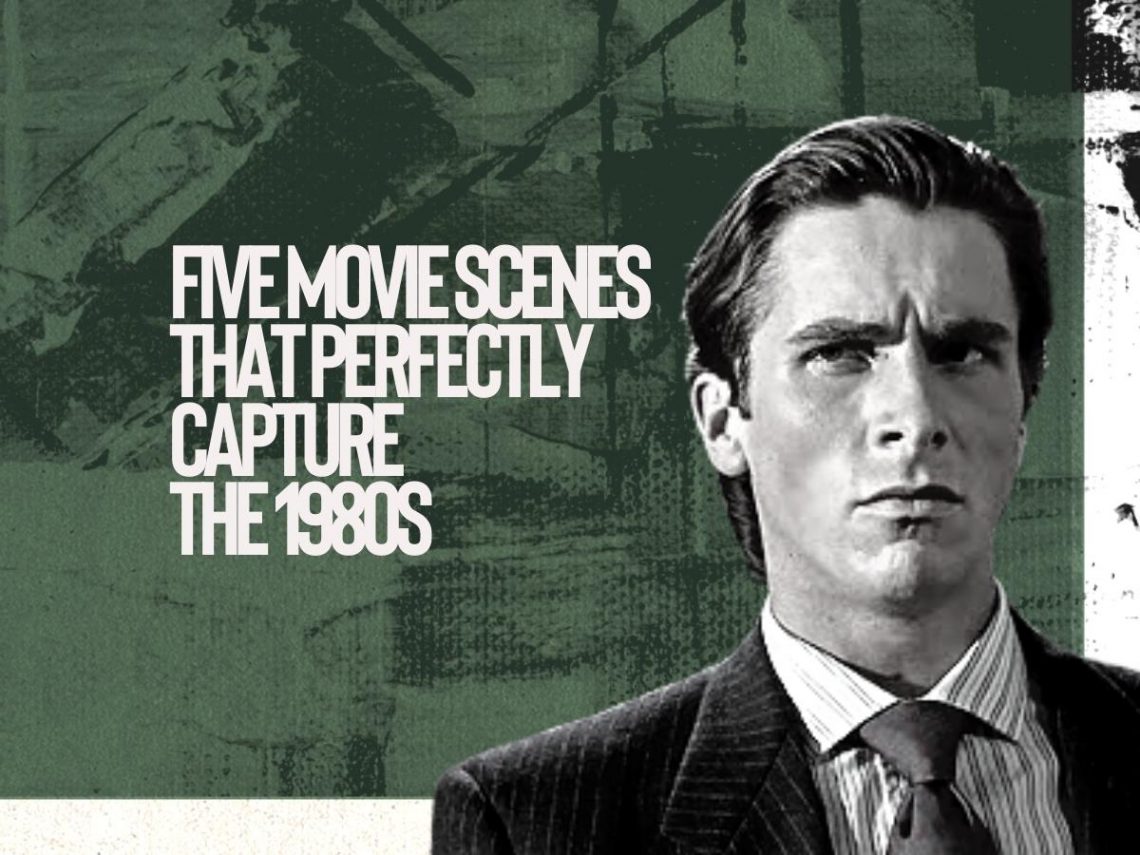
Five movie scenes that perfectly capture the 1980s

A zeitgeist is a tricky thing to capture. When you’re in amongst it, the spirit of the age might pass you by, and when you’re looking back, you might fall foul of crafting a facsimile that seems like the real thing from afar but misses all the details. As Ferris Bueller said in the 1980s: “Life moves pretty fast. If you don’t stop to look around once in a while, you could miss it.”
In a way, he has put his finger on exactly what makes era-encapsulating scenes so romantic. Nostalgia is a touchstone to our own pasts whether they relate to our lives or not. They strip away the superfluous details of life’s nitty-gritty ways and serve us a sepia-toned scene that we can delve into with revelling reminiscence. They are happy postcards sent from the era with all the missed trains of the trip cast to one side. But that doesn’t mean they have to be sugar-coated either, they are as they are, and we love them for that.
So, whether it’s bouffant hair, synths, banking culture or cocaine, the 1980s is an era that offered up a wild range of neon signposts to the rise of the technological age. Stranger Things has thrived on this, but it’s movies that we’re looking at this time. In fact, it’s those specific movie moments that perfectly distil an entire epoch down to a few illustrious moments.
We have captured a few of the finest 1980s moments on film below.
Five movie scenes that perfectly capture the 1980s:
‘Head over Heels’ montage – Donnie Darko
Everything. Absolutely everything about the 1980s is captured perfectly in this one amazing sequence. In fact, I’d almost be tempted to say that it is the single greatest retrospective encapsulation of an era ever put to film. Somehow, without it seeming like a forced tapestry, you have the rampant cocaine use, the worship of glossy beauty, a fitting soundtrack, a junior dance step routine, a bit of bullying, and fashion that doesn’t seem like an OTT pastiche.
The whole thing unfurls so poetically that it feels like an undertow coaxing you back to those days—a fitting feat given the time travel synopsis of the 2001 film. Music is often reflective of the time in which it was made given the immediacy and use of time-specific studio technology. Thus, Donnie Darko’s decision to pick an anthemic tune and purposefully match the shots to it proves to be beautifully effective at bottling up not only the sights of the 1980s but also the energy.
Lunchtime – The Breakfast Club
In a time of excesses and broadening tastes, the world was getting smaller, and things were getting bigger at the same time. For all this lunchtime scene might be rather dry, it brilliantly captures the changing culture of the day. It’s not only the new-fangled western introduction of sushi that gets put under the microscope but the rise of individualism and the quirks therein.
It says a lot about the 80s that while John Bender might be aghast at each strange lunch afore him, the only one he comments on is the most savoury, mundane around. Whether inadvertently or otherwise, this is a perfect allegory for a time when it wasn’t hip to be square no matter what Huey Lewis was proclaiming like a false prophet.
‘Eye of the Tiger’ sequence – The King of Kong: A Fistful of Quarters
We lost our way somewhere along the line, Friedrich Nietzsche mused at this quandary long before Donkey Kong, but the 1981 phenomenon may well have proved him wrong. You see, we hadn’t killed God with technology, we had simply found a new one, and his name was Billy Mitchell, video game player of the century.
If the 1960s was all about putting the world to rights with dreams of a liberated utopia, then the 1980s was the dawn of trivial distractions. Somehow this ethos of frivolity lingers on. The decade is bewilderingly alive and well, in fact, we’re obsessed with it. Kids just find the ‘80s inherently nostalgic for some reason. The blood-pumping moment of two men gearing up for battle as ‘Eye of the Tiger’ plays in the background is a beautiful snapshot of the era played forward.
Political problems speech – American Psycho
In one of the most capitalist-inclined restaurant set-ups going, the murderous, materialistic Patrick Bateman rattles off a list of the world’s woes as though it was rehearsed straight from a ‘what to say at dinner’ section in GQ. He does not adhere to a single one of his espoused beliefs and the scoffs of his friends show that it’s all just a laughable game.
Nihilism and the notion of the self were the prevalent tenets of the time. The problems of the world were subsumed in a lot of chatter and ill-thought gestures like Live Aid, but ultimately the capitalist engine ramped up to new heights. Bateman comically rattles these off before going back to sipping his favourite expensive scotch and seeing what the other diners are wearing in one of the greatest satires ever written.
Phoebe Cates gets out of the pool – Fast Times at Ridgemont High
It’s the youth that defines an era. Perhaps that’s why it’s so hard for us older fuddy-duddies to purvey the current zeitgeist. Elvis Presley defined the 1950s even though he was largely condemned by society for swivelling his hips, in the 1960s the older folks were still loving jazz while they tutted at Beatlemania and so on. The culture of the day is the one that gets passed around school.
Every generation needs a teen movie, and Fast Times at Ridgemont High was the comedy that conjured up an encapsulation of the era. Pop riveted into the minds of every high school kid of the day is Phoebe Cates fulfilling wanton fantasies. It’s the lustre of the scene that depicts the times. Censorship was going to war with the assimilation of sex in the mainstream and movies were putting up a wry fight. Every era has its own iconography and Cates emerging from the pool is certainly somewhere in the lore of the 1980s.
