


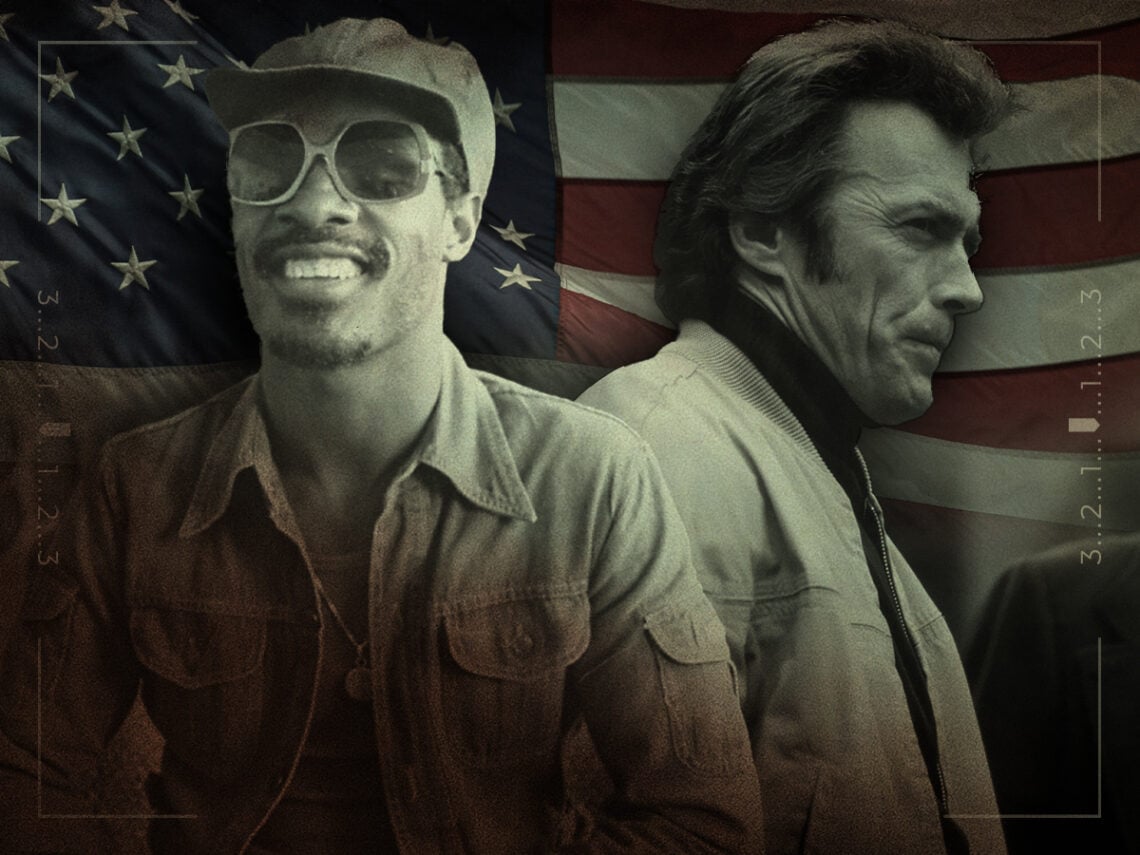
The American icon Stevie Wonder and Clint Eastwood both agreed changed the nation for the better

Every now and then, you’ll get some contrarian trying to stoke the cultural fire by claiming that a band like The Beatles or an artist like Bob Dylan is overrated.
It’s a baseless attempt at stirring fury, but one that subtly hints towards the desire for partisanship within music, raising the question then, of whether there is anybody ubiquitously loved by culture, to which I’d argue, it is Ray Charles.
In many ways, Charles was the cornerstone of modern music. Beloved by all songwriters and fans alike, for his ability to craft a deeply soulful melody that flew on top of lyrics of bluesy storytelling and gospel intensity. In fact, it was he who was largely responsible for blending the traditional realms of R&B music with the more modernised take of soul that was beginning to sweeten the artistic globe, come the mid-1950s.
His track ‘I Got A Woman’ was widely considered the very first soul song in history for how it blended gospel sensibilities and modernised them with a driving blues piano, jazz horn arrangements and lyrics that stepped away from spiritualism.
No artist has profited from that sense of innovation better than Stevie Wonder, who has always been quick to credit Charles as his North Star. He started by referencing the pair’s shared experience of blindness, stating, “Long before I knew we had so much in common, I knew him as a man and a voice that touched my heart”.
But then, he continued, to succinctly outline the profundity of his artistry and how it ultimately guided him on his own career, explaining, “His voice made me feel like I wanted to love deeper, to care more and reach out and touch the world”.
As Wonder outlines, Charles’ genius extended the realms of musicianship. Of course, he led Wonder into a world of songwriting that ultimately helped him become the icon he is, but Charles’ influence is found on a host of key figures in completely different artistic worlds. The careful approach to his work that Wonder lauds is the very same thing that someone like Clint Eastwood revered in the soul icon.
“I’m here to join the chorus to praise Ray. He was called a genius,” Eastwood said, “Certainly, Ray was supertalented but talent comes with a lot of work. I don’t think I’ve met anyone with a stronger work ethic than Ray Charles.”
Eastwood passionately continued, “He worked so hard to be a perfectionist and entertain us all. He was a teacher who taught us about the blues to people who didn’t understand the blues. He taught us about country music. He reinstilled our interest in patriotic songs. Anything he touched was just good.”
While they may seem like an unlikely duo, there’s a grit to Charles’ music that can be traced through to Eastwood’s filmography, where both artists have used their work to engage with modern America and its societal make-up, illuminating injustices while similarly celebrating and soundtracking the joy of people whose lives have inspired their works.

Never Miss A Tale
The Far Out Clint Eastwood Newsletter
All the latest stories about Clint Eastwood from the independent voice of culture.
Straight to your inbox.