


The 1990s icon Bob Dylan looked up to: “I’d love to make a record like that”

There aren’t too many songwriters working today who haven’t taken at least a touch of inspiration from Bob Dylan.
Ever since he started making folk tunes in the 1960s, Dylan’s way with words has helped pave the way for the singer-songwriters of every generation, writing songs that had more on their mind than the traditional love song format. Although Dylan may have carved out a unique place for himself, that didn’t mean he stopped listening to the new music on the scene.
Part of what kept Dylan relevant for so many decades was his refusal to become trapped by his own legacy. While countless artists spent years trying to imitate him, Dylan remained more interested in discovering fresh ideas, constantly searching for new sounds that could challenge his assumptions about what his music should be.
Throughout his musical evolution, Dylan was known as a master chameleon in every facet of his career. Despite being known as the resident folkie of rock music in the early 1960s, his experience with The Beatles led him to rework his sound to fit the rock mould, garnering both praise and denial from folk artists who preferred the classic Dylan sound.
Then again, this wouldn’t be the first time Dylan would switch up his sound. Throughout albums like Self Portrait, Dylan would continue to make creative strides that were deliberately unsophisticated, putting together tracks that had more to do with experimentation than his usual biting social commentary.
By the time he had reached the early 1980s, Dylan had changed faces again as a born-again Christian, spending his time making gospel records about his spirituality like Slow Train Coming and Saved. Just as he started to change his sound again, Dylan would get to work with his fellow rock legends at the turn of the decade, playing songs alongside George Harrison and Roy Orbison in the Traveling Wilburys.
Even though most artists of Dylan’s generation had started to fade from relevance in the 1990s, Dylan was about to embark on a bold new creative journey, putting out albums like Time Out of Mind that reflected his experiences after being a legend for so long. As much as Dylan stayed true to himself, he initially wanted to make something in the vein of an alternative rock legend.
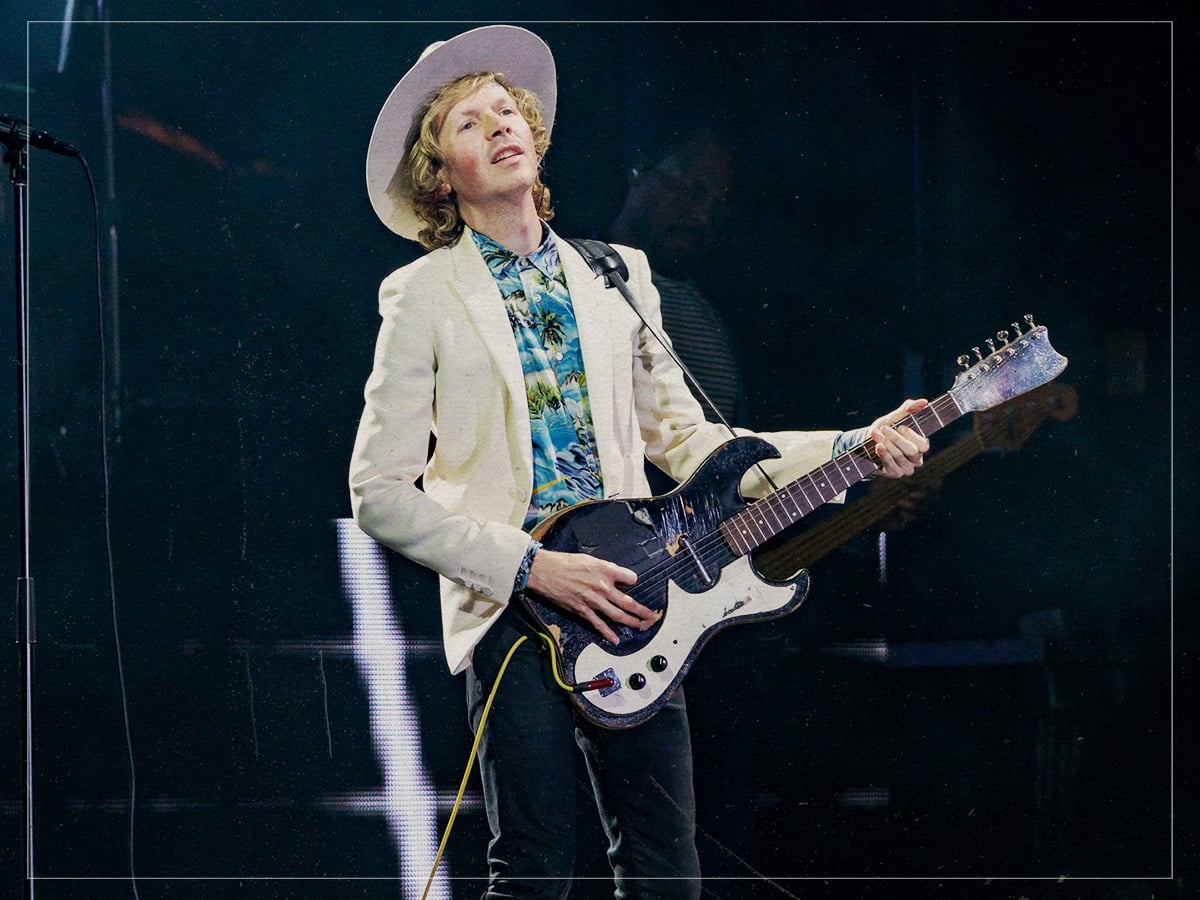
Around the same time the Time Out of Mind sessions were happening, Beck was storming onto the scene with his warped version of rock and roll. Combining folk, electronica, and rock on his album Odelay, Dylan was knocked out by what he heard and initially wanted to write something that had the same kind of impact.
According to mixer Mark Howard, Dylan was taken by what Beck could do, saying, “Bob said, ‘I’d love to make a record like that kid Beck.’ Odelay was out, and he liked the way it sounded. We thought that would be a really cool angle for Bob”. Even though Beck had his flair for quirky rock and roll, Dylan indulged in a few sonic detours across his new record.
When putting together a song like ‘I Can’t Wait’, the backing track involved putting a hip-hop beat under Dylan’s piano, which played into the more eclectic style that he was going for. Despite his willingness to experiment, ‘To Make You Feel My Love’ is about as pure Dylan as it gets, featuring a heartbreaking lyric that felt like it was pulled straight from his soul. Dylan may not have made something as weird as Odelay, but Time Out of Mind reflects the rock legend learning to adapt to the sounds of the 1990s.
In the end, Dylan didn’t make his version of Odelay, nor did he need to. Instead, Time Out of Mind became another example of his greatest strength as an artist: absorbing inspiration from the world around him while filtering it through his own unmistakable voice. The result was a record that felt contemporary without sacrificing the qualities that had made him one of the most influential songwriters in modern music.

Never Miss A Tale
The Far Out Bob Dylan Newsletter
All the latest stories about Bob Dylan from the independent voice of culture.
Straight to your inbox.