


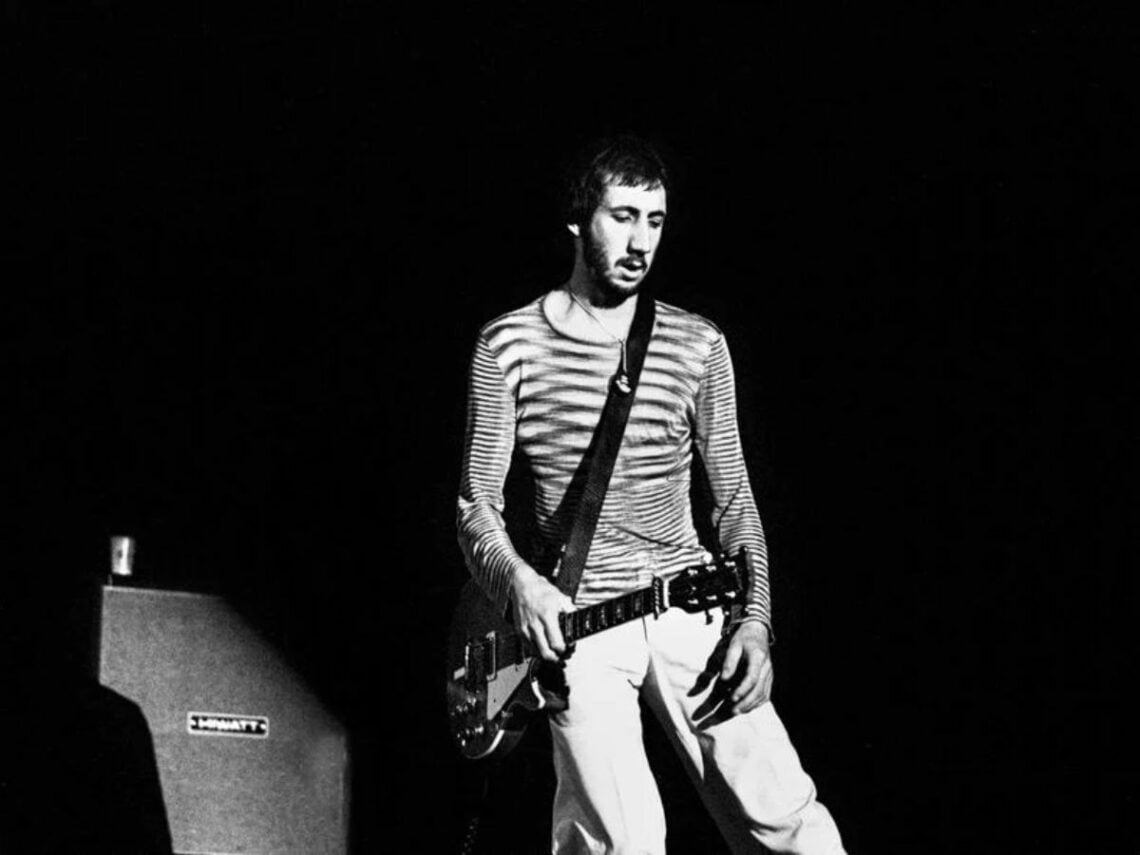
“War medal”: The painful album Pete Townshend vowed never to make again

Being immensely proud of an album and enjoying the creative process are not mutually exclusive, as The Who’s Pete Townshend knows all too well.
The dream scenario is a concept record like Tommy or Quadrophenia, which allowed him to get lost in storytelling, escape to a different world that he’d built in his mind, and forget about the real life that he was leading.
Fulfilment typically came from looking outwards rather than within, in a songwriting sense for Townshend. Constructing songs from abstract ideas was second nature, but when it came to examining the turmoil that ran amok within aspects of his own life, he’d have preferred to run for the hills.
Townshend has been sober since 1982, which was a life-changing moment, and forced him to deal with the issues that had led to him reaching for the bottle in the first place. At this point, he’d been in the music business for almost 20 years, an industry where drink is often more readily available than food, and eventually, he knew this dangerous habit could no longer continue.
The decision came after a self-destructive period for Townshend, as well as The Who, following the tragic death of Keith Moon in 1978, which was proof that nobody was invincible.
In 1980, Townshend, who was still drinking at this point, first faced up to his issues and released the solo album Empty Glass, which was effectively a cry for help. He laid his heart on the line, hoping and praying that people would listen, but it was a process that Townshend found extremely difficult to live through, nonetheless.
14 years after the album’s release, Townshend, thanks to more than a decade of sobriety, was in a thoroughly different headspace and able to reflect upon Empty Glass with the benefit of distance. With that space, he was able to honestly look back on the true meaning of the record, while also admitting that he’d never want to make another album in that set of challenging circumstances.
Speaking to David Sheff for Playboy in 1994, Townshend said of Empty Glass: “It was wanting to not be a drunk. Alcoholism produced my most morally beret period – 1978 through 1980 – and Empty Glass, which most people think is my best solo work. That album is, in a sense, a cry for stability, a cry for an empty glass, for sobriety and for a return to values that I held above everything else.”
He poignantly continued: “But the reason the cry was authentic was that I was in real trouble. The album is like a war medal. I went through hell, and I don’t undervalue it, but I don’t aspire to do it again. The 14 years since then, being sober, are far preferable, though a few months ago I decided to go on a bender.”
As Townshend mentioned, he briefly slipped back into old habits in 1993 but has remained sober since. If he ever succumbed to temptation, Townshend would only need to place the needle on Empty Glass to deter him from pouring another.
Empty Glass was an album that Townshend needed to make for himself, which is why it made more sense to release it under his name rather than with The Who. It’s a deeply personal body of work that represents the darkest chapter of his life, which is why he vowed never to re-live those painful days that spurred its creation.
While it’s an album he’d rather leave untouched in the distant past, the fact that Townshend described its completion as a “war medal” shows just how proud he truly is of Empty Glass and what the record represents.
