


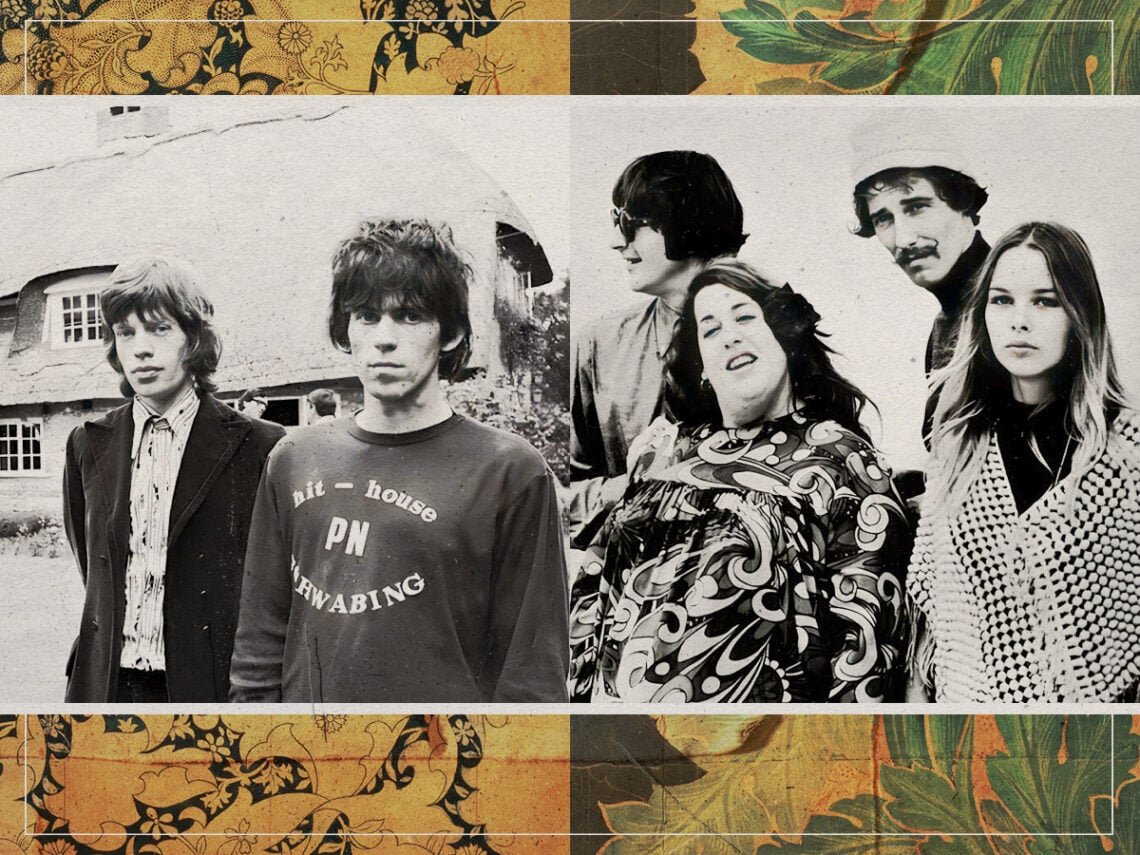
The album Keith Richards and Mick Jagger almost made with John Phillips

Drug addiction runs through the fabric of rock ‘n’ roll like a necessary thread without which everything would fall apart. Of course, that is a complete fallacy, and the reality is that nothing ever good comes of it. Aside from the arguments, fall-outs, and health implications, it can also stagnate progress or cause opportunities to dissolve completely. At least, that’s what happened when John Phillips lost what might have been his biggest break since The Mamas and the Papas.
Aside from being what some people call America’s answer to The Beatles, The Mamas and the Papas contributed to the optimistic mood of the 1960s with songs that turned up the heat on vocal harmonies while showcasing the power of band dynamics. Although each member would undeniably end up counting the days to freedom, from the outside perspective, the band were extraordinary.
Behind the scenes, however, Phillips became idolised by the musicians he worked with but villainised by those who saw his darker sides, the ones where he let his control get the better of him and took it out on those who were nearby. There were many reasons for his short fuse, like the breaking down of his marriage to Michelle Phillips or the growing addiction he had to drugs.
When the band broke up in 1968, each member – except for Cass Elliot, who was always destined for greatness – faced the monumental task of reinventing themselves and working on projects that would establish who they were as solo acts. For Phillips, however, the best part of the following decade would be filled with failed projects, affairs, financial distress, drugs, and a lot of travelling.
According to many he worked with, drugs made it almost impossible to finish a project with Phillips, a habit that would result in him losing out on one of the most important opportunities of his entire career in 1976 when he re-established his kinship with The Rolling Stones’ Keith Richards and Mick Jagger after moving to London. The genesis of the partnership came while attending a cricket match in Manchester when Jagger gave him an offer he couldn’t refuse: to create a record for Rolling Stones Records, with Jagger and Richards producing.
Soon after the recording sessions began in 1976, the tragedy of Richards and Anita Pallenberg’s son passing resulted in Phillips inviting them to stay with him at his apartment, which saw Phillips and his wife Geneviève Waite become addicted to heroin. After attempting to get clean, Phillips became addicted to cocaine, too, after the treatment programme failed to crack down on the use of the drug in managing withdrawal.

Then, once the sessions were set to resume once more, Phillips enlisted Harvey Goldberg after The Rolling Stones’ engineer Keith Harwood died in a car crash while Richards was awaiting trial for being caught with heroin in his possession. Meanwhile, Jagger felt as though the record was a lost cause despite coming into the studio one or two times to provide backing vocals.
Still, despite being “a poster child of what you would expect a junkie to look like,” as Goldberg put it, Phillips was keen to push on and create a record that felt reminiscent of the Stones’ distinctive sound. “John was enormously enamoured of the Rolling Stones,” Goldberg added, “and was such a fan that he wanted the album to sound like the Stones and there they were. The reality is he was overpowered by them.”
At the same time, in the studio, it was incredibly difficult to get any real work done. Upon entering the studio, both Phillips and Richards, who was also in the throes of addiction, would immediately make a beeline for the bathroom. According to Goldberg, this made everybody feel on edge. “No one wanted to be the one to go back there,” he said, “because we didn’t know if we would find them dead.”
On another occasion, Goldberg noticed Richards standing by his guitar amp, looking utterly perplexed, like he couldn’t make sense of what he was seeing. After asking if he needed help with anything, Richards glanced up to him and then back at the amp before an expression of realisation fell across his face. “I forgot my guitar,” he said. Another time, Phillips appeared from the bathroom with “blood stains on his sleeve.” He hears Golberg cracking his knuckles and says, “You really shouldn’t do that. That could be a problem for you later in life.”
After losing $170,000 and everything turning to dust, the mixes went missing for years, and the record never came to fruition. Discussing the project in his 1986 autobiography Papa John, Phillips knew he messed up. “I had sabotaged the greatest break of my career since the Mamas and the Papas,” he wrote, saying that the entire ordeal caused him to feel an “intense self-loathing.”
