


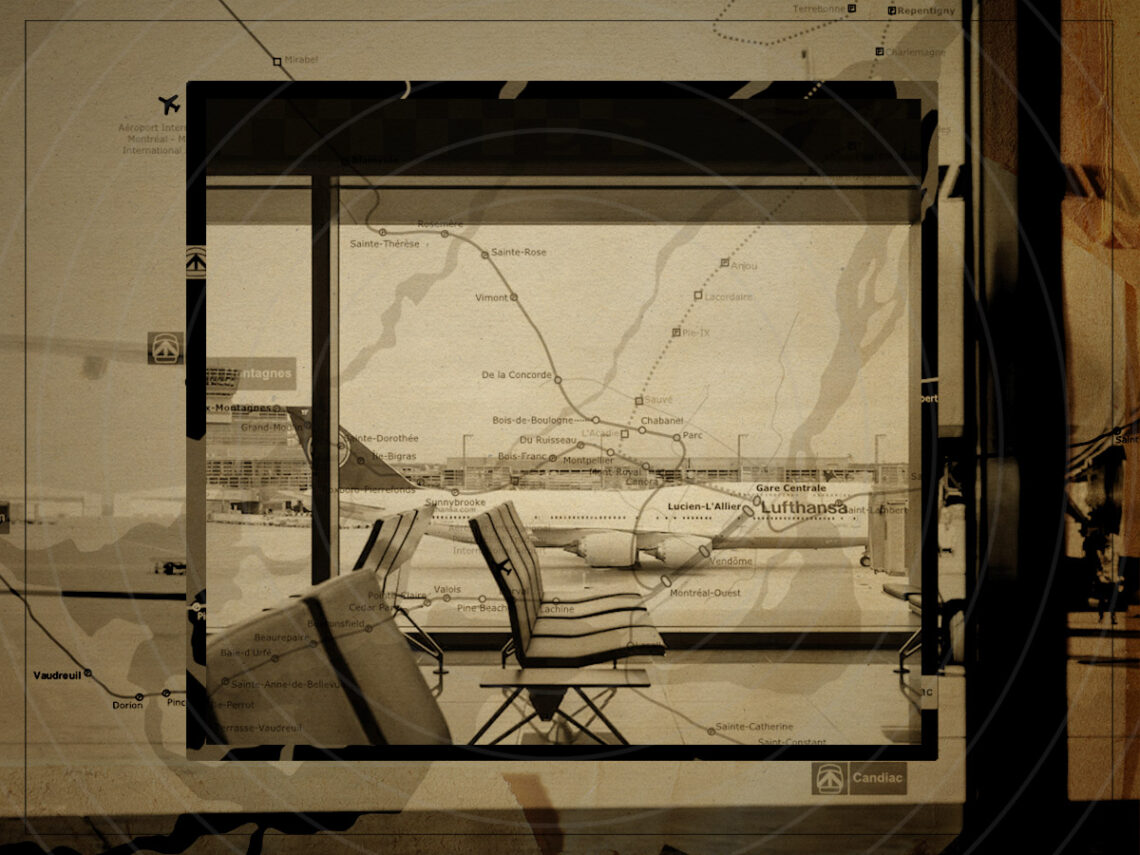
The runway for a town that never existed: The strange death of the world’s biggest airport

As anyone who has ever flown in or out of London knows, there are good airports, Heathrow, Gatwick, City, and there are bad ones, I’m looking at your Luton, Southend and Stansted. There’s also another category of airport, and that’s the colossal failure, and we’re looking at Canada for this one.
These airports generally fail for a variety of reasons. Some are grandiose vanity projects, such as Castellon-Costa Azahar Airport in Spain, which was driven by local politician Carlos Fabra, who even erected a statue of himself at the airport, and famously didn’t have any international flights for four years. Then there are the airports lost due to political strife. The main case in point is Nicosia International Airport, which has sat in a UN buffer zone since the Turkish invasion of Cyprus in 1974.
Then there’s the most common, the poorly located airport that seemingly got built with little to no planning on the location whatsoever. Step forward, the infamous Montreal-Mirabel International Airport. Known as YMX, it was initially planned in the 1960s and was intended to be a marvel of the Canadian aeronautical industry. The original purpose of YMX was to replace Dorval Airport, now known as Montreal-Trudeau. With Montreal experiencing an economic boom at the time, it was expected that there would be too many passengers going in and out of Dorval, especially given that it was difficult to expand.
Originally, it looked like the airport would be to the west of Montreal, a move that would have allowed the airport to also serve Ottawa. That area already had the infrastructure to support the airport with only minor tweaks. However, after a lot of debating, it was eventually decided to be built in the village of Sainte-Scholastique. An area that had no rail links to the city and only two major roads. Two new major roads and a high-speed rail link that linked directly into the Montreal metro were planned in order to get holidaymakers to and from the airport.
Then the planners started to really get wild, with the original plans having the airport at 97,000 acres, only marginally smaller than the whole city of Montreal itself. So, Montreal-Mirabel was born, eventually opening in October of 1975, just in time for the following summer’s Olympic Games.
Sadly, the airport that opened didn’t really resemble the one planned, which, given that it uprooted entire communities, who were forced to move out, left a bad taste in the mouth. The finished airport took up just 19% of the space allocated, with just two runways of the originally planned six and one terminal of a planned six being built. To make things worse, the high-speed rail link was never built, which meant that customers would need to rely upon the highways, of which all of those planned didn’t materialise. Buses from the city were a huge step down from the planned high-speed train route, and those making their way to the airport by car were stuck in busy traffic, thanks in part to its location and also the lack of roads.
While Mirabel took care of international flights, the planned move of Domestic and US flights from Dorval also never took place. In turn, this led to more frustration from those who needed to travel between airports for some connections. By October 31st, 2004, just over 29 years from opening, the airport stopped all passenger flights. Since then, the airport remains open for cargo travel, but its buildings have either been demolished or used for film sets. Its life in cinema has seen Tom Hanks and Leonardo DiCaprio on site, with appearances in The Terminal, Catch Me If You Can and even The Aviator.
The tale of Montreal-Mirabel is a cautionary one. Politicians and planners need to fully weigh up the impact on the local communities around the building of these superstructures. In a world in which nearly every building job goes over-budget, it’s important that projects being sustainable and financially viable is the highest priority, above getting caught up in trying to create something historic.
