


“A treasure in the history of cinema”: Chloé Zhao compares Frances McDormand to Charlie Chapin

Chloé Zhao’s greatest collaboration was a result of adaptability and mutual trust.
Few filmmakers have had ascensions as quick as that of Zhao, who has somehow become one of the industry’s most reliable and acclaimed directors in a record amount of time. Although it was less than a decade ago that she was directing independent, microbudget dramas with a cast mostly composed of non-actors, she has now helmed a ‘Best Picture’ winner, a Marvel Cinematic Universe entry, a very popular literary adaptation, and the upcoming reboot of Buffy the Vampire Slayer.
The moment that changed her career was her decision to direct Nomadland, a drama about an unhoused woman and her experiences in rural America, and although the film featured the same naturalism and supporting cast of unknowns that had defined her earlier work, it benefited from the involvement of a huge star in Frances McDormand, who also served as a producer.
McDormand is one of the few actors who is genuinely transformative, and can seemingly shape herself into being any character, with Nomadland seeing her as the passive woman Fern, who reflects on her life and legacy during a unique road trip. When describing working with her, Zhao compared her approach to acting to the comedy of Charlie Chaplin.
“Watching her was like watching Chaplin,” Zhao claimed, “I thought, if this film is just her walking around in the heartland of America, just doing stuff, someone will watch it”.
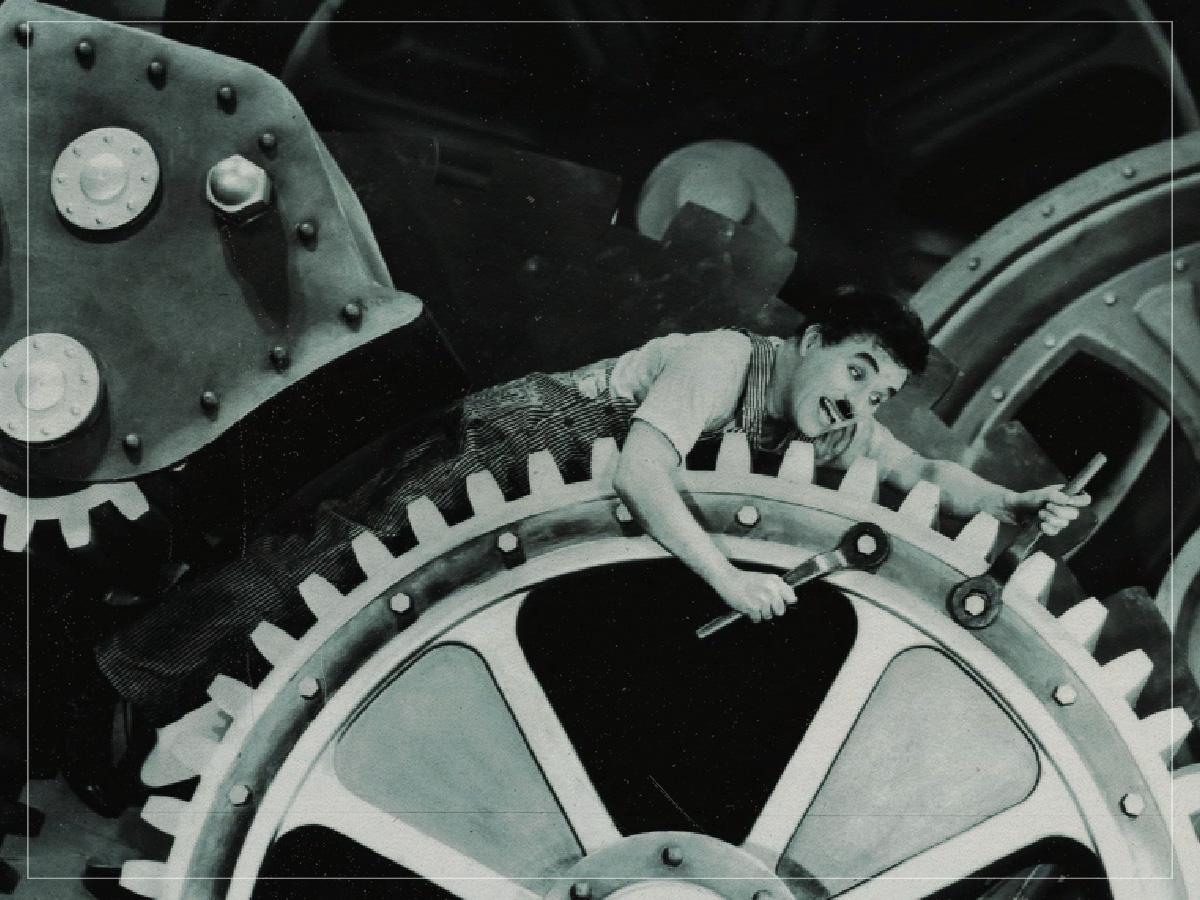
Chaplin is often thought of as the ultimate physical comedian, but he was actually one of the most ambitious and thoughtful directors in the Golden Age of Hollywood, with his films like Modern Times and City Lights analysing burgeoning social and economic movements in the same way that Zhao’s work does.
As is the case with Chaplin’s work, Nomadland is a seemingly straightforward story that ends up encapsulating the heart of an entire generation and moment in history, but in the making, the significance of working with McDormand, one of the most decorated living stars, was not lost on Zhao, and when directing her, she praised the actor for her wealth of experience.
“She’s a treasure in the history of cinema. She said, ‘I take a little bit from each of my characters with me, and they become part of me’. She really wants to live and feel and experience life through acting, and that’s what we really need because all the other non-professional actors are living their lives in front of the camera to many degrees,” Zhao recalled.
Nomadland was released at just the right moment for it to have the most impact, making its festival debut when the world was shut down as a result of Covid-19, with the story of connectivity, redemption, and naturalism feeling more resonant than ever, and it became one of the most dominant award season contenders in years as it swept every major precursor before winning ‘Best Picture’ at the Oscars.
Beyond the obvious weight of the central performance, which earned McDormand a record-breaking third win for ‘Best Actress’, the film had a structural simplicity and cohesive flow that made it stand out within Zhao’s filmography. Her subsequent efforts haven’t worked as well, wherein Eternals saw her out of her depth, dealing with the spectacle of Marvel, and Hamnet was a heavy-handed melodrama that didn’t have the same authenticity as her prior work, but she’s only getting started.
