


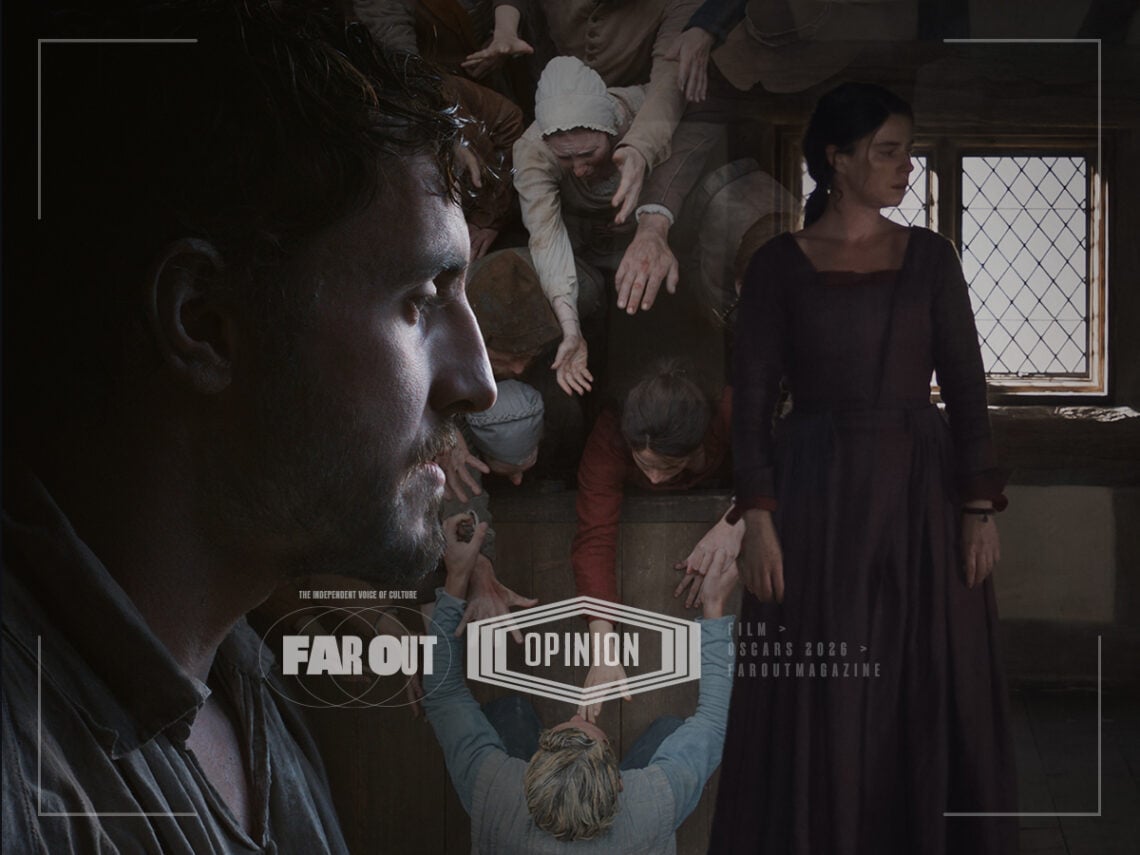
Chloé Zhao’s ‘Hamnet’ is nothing more than trite Oscar bait

After hearing such mixed reviews about Hamnet, the first film Chloé Zhao has made since selling out to Marvel for Eternals, I finally decided to fork out the money on a ticket for something I’d been told by friends I probably wouldn’t like. But I like to make up my own mind, and with all the recent Academy Award buzz surrounding the film, I needed to decide for myself – was this film Oscar bait or not? Would I be moved?
I went in with an open mind, picking a rainy Saturday afternoon to sink into my local cinema’s red chairs. This was my Hamnet afternoon. Sadly, all my suspicions were confirmed; Zhao has lost it. Hamnet is not worth the hype. It’s hard to keep up with every new film that emerges, and sitting there, my fingers stuck in a bag of Magic Stars, I knew that I likely wouldn’t go near this film if it wasn’t for the endless chatter that has surrounded it lately, but that’s how they get you.
Anyway, I like Shakespeare, I think Jessie Buckley and Paul Mescal are great actors, and I thoroughly enjoyed Zhao’s Oscar-winning Nomadland. What could go wrong with Hamnet? From the moment the film opened with the supposedly profound shots of trees, the sun streaking through their branches, I instantly thought of Terrence Malick, a director I’m aware Zhao idolises. But this is no Tree of Life.
Everything about Hamnet feels like it has been designed to encourage tears to form and the sound of tissues crinkling to override the irritating rustle of popcorn. I’d rather listen to the noise of someone digging into their snacks than hear the constant over-dramatic swell of Max Richter’s score, which feels like it has been precisely placed to instruct us when to cry, when to be shocked, when to brood. It’s predictable and meaty, a pseudo-spiritual choral cry with building horns. It doesn’t exactly deal in subtlety.
Speaking of, the film then employs one of the most overdone tales in cinema history, with Mescal’s William telling Agnes the story of Orpheus and Eurydice. I’ve never heard that one before. Look, it worked in Portrait of a Lady on Fire, but here, it feels trite, and sure, it’s one of the great classic stories that audiences will be most familiar with, but that ground has already been covered.
The entire film hinges on the relationship between Agnes and William, with the former mainly left to raise their children while he’s off gallivanting in the big city as a playwright. Shakespeare is horrible to poor Agnes, shouting and making himself crazy over candlelit writing sessions, and he can’t even make it back in time for little Hamnet’s death. This isn’t historically accurate, of course – much of Shakespeare’s life remains a mystery – but what is meant to be an indictment of male selfishness sort of falls flat.

Agnes is an overly archetypal earthbound mother figure, in contact with some witchy, spiritual heritage, which spurs her to insist on giving birth in the forest alone, spreading out across the roots and the mud as she wails… The whole thing feels like it’s trying so hard to be profound and moving, but it’s not, it’s contrived – Zhao’s film plays into exactly what a general audience – and Academy voters – want to see.
An insane number of dramatic crying scenes? Check. An angry outburst? Check. A raunchy sex scene? The death of a child? A denouement full of mounting emotional tension and manipulation? A ‘to be or not to be speech? Check, check, check, and check. Zhao wants us to cry; she wants us to walk out of the cinema saying, ‘Oh my god, I’m a mess’. It’s lazy. We hardly even get to know Hamnet before he is killed off, so how are we meant to feel all that invested?
Hamnet doesn’t do anything new, apart from demonstrating that Oscar bait is alive and well. As long as we have the Academy Awards, we’ll always have movies whose very mechanisms are designed to look you in the eye and say, ‘Well, go on, cry! Isn’t this sad?’ Nature is depicted here as this beautiful saviour and womanly palace, and while you can’t really argue with that, the film just plays like one big reel of endless clichés.
Zhao is pretty successful in her aims of making us emotional, because even though I felt little towards the characters – even little Hamnet, sorry – I still felt a wobble in my throat during that final sequence, even if I knew I was being manipulated into shedding a tear. My eyes remained dry, though, because there simply wasn’t enough to get me emotionally invested in this vapid, Malick-wannabe excuse for a ‘Best Picture’.
With all things considered, I still don’t think Hamnet was an awful film-watching experience, per se. You get what you’re expecting – lots of drama, lots of tears, and a fairly surface-level exploration of grief. It’s just fine. But that’s what makes it such an outrageous Oscar contender – the film is so unimaginative, especially for a story centred around one of the most influential figures in history.
Everything is manufactured to elicit a strong emotional response instead of just letting it happen. I don’t need an epic swelling of strings to tell me when to cry, and I don’t need endless fades to black or shots of trees made to look like some heavenly dwelling to know the level of ‘importance’ of what I’m watching.
Just how Barbie spoonfed us feminism 101 and Everything Everywhere All At Once spoonfed us nihilism, Hamnet shoves grief into our gobs with as much delicacy as a toddler learning to eat solids.
