


“It’s a horrifying situation”: the 2016 Liam Neeson movie threatened by North Korea

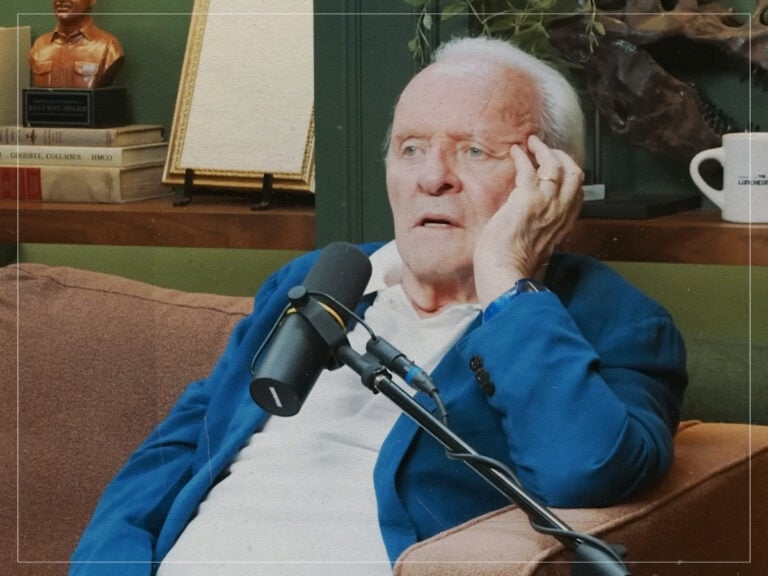
There’s something inherently scary about Liam Neeson, but it’s difficult to know exactly what it is. It could be his gravelly Irish ‘I’ll find you’ voice, it might be the fact he barely seems to smile in anything, ever, or it could be the fact he’s six foot four inches tall. Whatever it is, no matter how old he is now, you just still wouldn’t mess with him.
But even Neeson, star of hundreds of those movies in which he seeks a bloody one-man revenge for some supposed indiscretion, like Jason Statham as a grandad on the rampage, would think twice were he faced with the entire might of North Korea’s military.
Luckily for the Ballymena-born actor, that situation has not yet occurred, but it might well have done a few years back. That’s because in 2016 he made the seemingly bizarre decision to travel to South Korea and make a war movie set in the 1950s called Operation Chromite, in which he starred as the famed American General Douglas MacArthur, tasked with leading a spying mission behind enemy lines in North Korea.
It was a strange one, primarily because this was an entirely South Korean-made and funded film, and Neeson was one of only four cast members who didn’t hail from the country; in fact, his lines are the few featured in the movie that are heard in English. Nevertheless, it was a huge hit for the producers on release, topping the box office in South Korea and generating a return of $50million worldwide against a budget of just a fifth of that amount.
There was a problem, however, and you can probably guess what it was. Neeson said in a press conference to promote the film: “North Korea and South Korea signed an armistice in 1953, and both countries are still essentially at war. It’s a horrifying situation and in light of very recent events (such as the Sony hack) we are all, not just as filmmakers, but as citizens of this world, very concerned.”
The Sony hack that Neeson referred to came about after Seth Rogen made a film in 2014 called The Interview, a political satire about two journalists going to speak to the North Korean leader Kim Jong Un, only to end up recruited by the CIA and tasked with taking him out.
Probably unsurprisingly, North Korea wasn’t very happy about this, and though they denied any involvement, an anonymous group subsequently hacked into Sony Pictures computer network, leaking a trove of information plus a message that the studio should pull the ‘movie of terrorism’.
Perhaps it was a one-off warning, because no such activity took place after Neeson’s movie, possibly because, unlike The Interview, it didn’t contain a death scene of one of the country’s longest-serving leaders. Neeson was certainly very happy with the experience of putting it together, stating: “I was aware that very few Western actors make a Korean film, and I felt very, very honoured and very, very privileged… It was kind of mind-blowing actually, the commitment and dedication [the film crew had on] all their individual jobs was quite awe-inspiring.”
The film did so well that a sequel was hastily arranged, a 2019 effort named The Battle of Jangsari, which also opened at number one in South Korea, but didn’t feature Neeson, though they did draft in a Hollywood name to take part, and it was the distinctly less frightening Transformers star, Megan Fox.
