


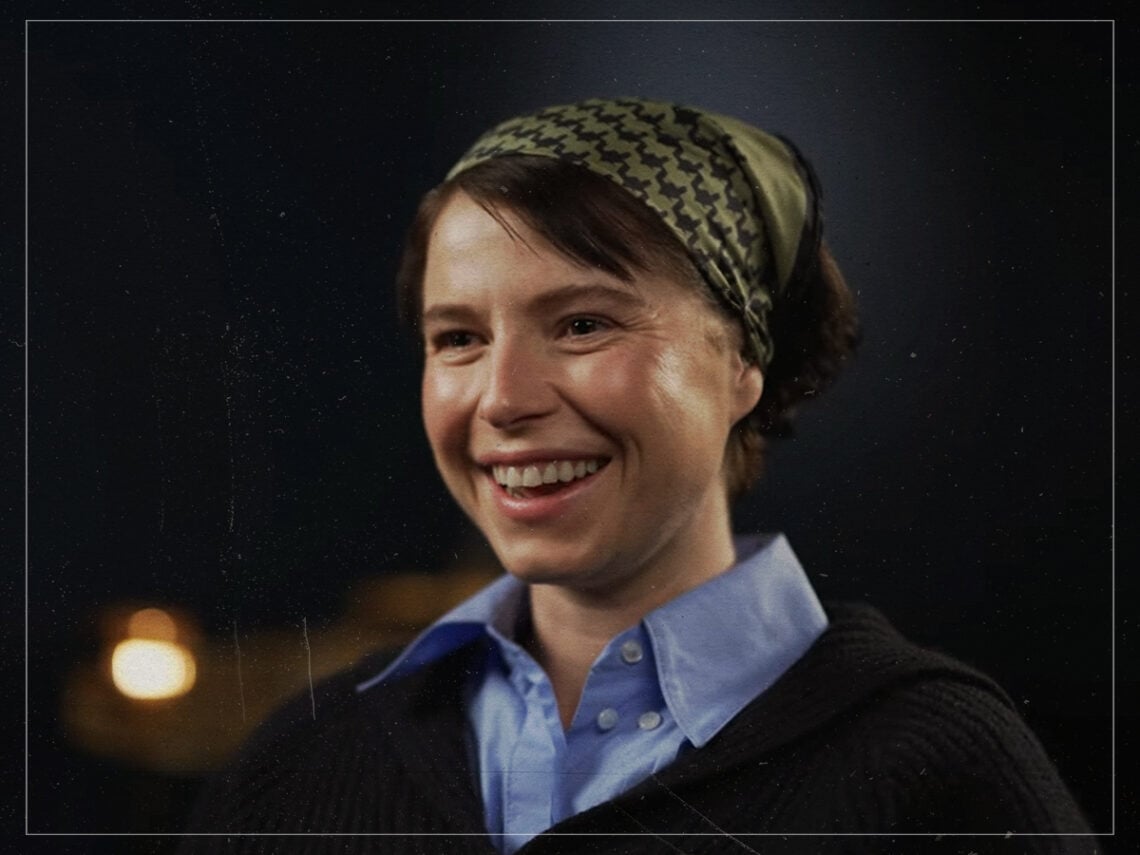
The 2013 song Jessie Buckley couldn’t live without: “The simplicity, the beauty, the expression”

It’s hard to imagine modern life without William Shakespeare, not because we’re all quoting Hamlet on the bus, but because, from phrases like wild-goose chase, heart of gold, break the ice, vanish into thin air, his language has quietly shaped how we speak and the emotional vocabulary we borrow when our own words fall short.
So, it feels fitting that Jessie Buckley, who has just delivered one of the most acclaimed Shakespearean performances of the decade, winning a Bafta, Golden Globe and an Academy Award for ‘Best Actress’ for her role as Agnes Hathaway in Chloé Zhao’s Hamnet, has a song she “couldn’t live without” that draws on the same well of inherited language, landscape and memory.
The 2025 adaptation of Maggie O’Farrell’s eponymous novel, exploring Shakespeare’s family life and the grief that followed the death of his 11-year-old son, brought Buckley much acclaim, but long before the awards and Cabaret, Wild Rose, The Lost Daughter and RADA, she was growing up in a Killarney household where music was as essential as conversation.
The eldest of five children, she grew up in a family of seven who spent summers in a caravan by the sea, and nearby was an artists’ village, created from a restored famine settlement, where her mother, a trained harpist and singer, would spend a week working on her music each year. Her father wrote poetry, and Jessie and her siblings entertained guests at the family B&B with Irish dancing. For Buckley, it was the first place where she understood that art wasn’t something distant or exclusive, but something people built their lives around.
It’s that world she instinctively returned to when asked to choose the one song she couldn’t live without to open her Desert Island Disc selections earlier this year, opting for ‘Samhradh Samhradh’, a 2013 recording by Irish-American collective The Gloaming, featuring Martin Hayes, Iarla Ó Lionáird, Caoimhín Ó Raghallaigh and Thomas Bartlett.
Built around an ancient sean-nós melody, the track captures everything that made The Gloaming one of the most exciting folk quartets of the 2010s. Hayes’ delicate fiddle, Bartlett’s restrained piano and Ó Lionáird’s haunting vocals marry minimalist arrangements, classical textures and an almost cinematic sense of space, allowing for Irish traditional music to move beyond the constraints of being a museum exhibit to gently be pulled into the present
The title translates simply as ‘Summer, Summer’ in English, which resonated with Buckley, as she recalled, “This just brings me right back to my childhood. The simplicity, the beauty, the expression that was just pouring out of the mountain…my mum, the fish, and love”.

She reminised about walking over the hill to the retreat, where the landscape suddenly opens onto a sweeping view of the Atlantic and the Skellig Islands, the remote outcrops once inhabited by monks seeking solitude at the edge of the known world. As the bay revealed itself below, one of her parents would play ‘Samhradh Samhradh’ as they climbed over the top of the hill, forever binding the music to that landscape in her mind.
It’s why the track remains more than just another favourite song; for Buckley, it’s a portal back to everyone and the Irish landscape that shaped her, and to the musical inheritance she absorbed long before she ever stepped onto a stage herself.
