


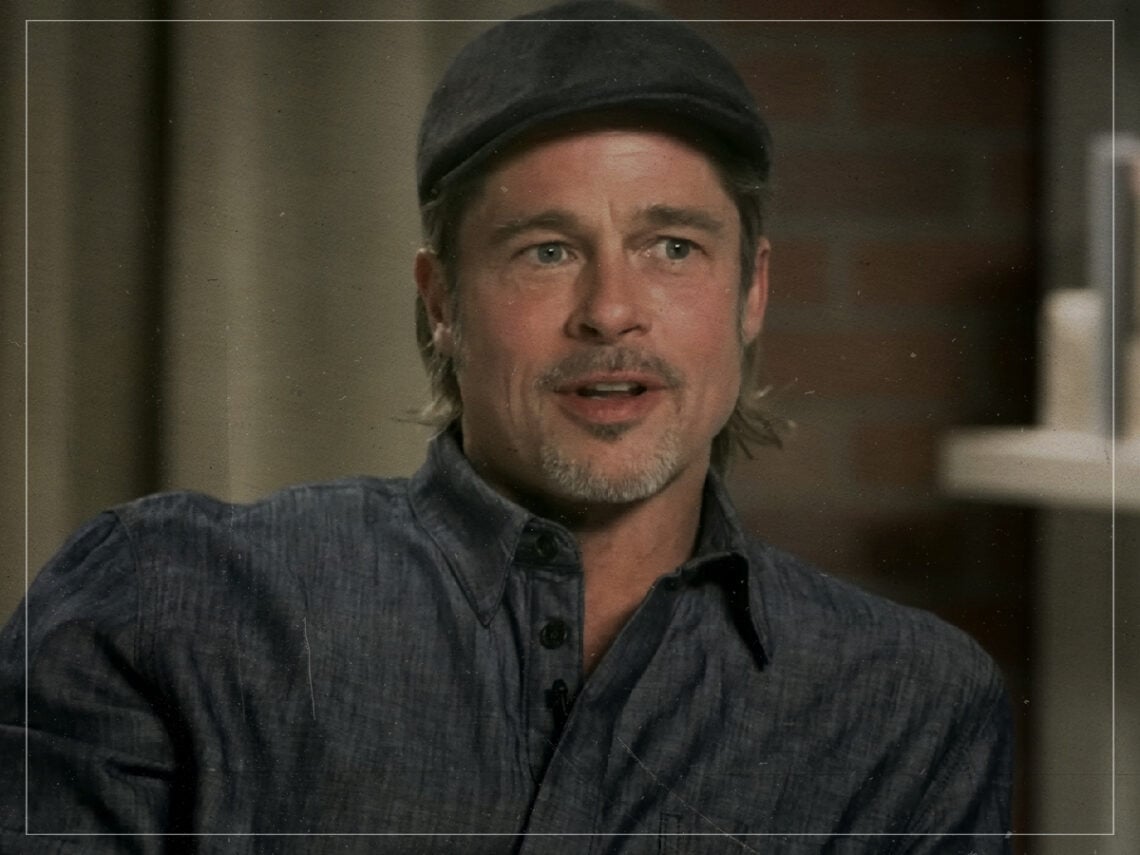
“Disappointed”: The 2004 movie Brad Pitt felt failed to live up to its potential

You’d think there really wouldn’t be much to be embarrassed about if you were a Hollywood icon on the same level as Johnny Depp, Leonardo DiCaprio, Al Pacino, Robert De Niro or Brad Pitt, yet, alas, such titans of modern cinema are human.
Even those that we deem the greatest actors of all time are capable of half-hearted performances, well, apart from Daniel Day-Lewis and the late John Cazale.
Thanks to collaborations with the likes of David Fincher, Quentin Tarantino, Ridley Scott, Terry Gilliam, Spike Jonze and Terrence Malick, among many others, Pitt has become one of the most celebrated actors of modern cinema, thriving in each and every role he takes on. Rising through the ranks of the industry in the late 1980s, Pitt would become a household name in the following decade thanks to appearances in Thelma & Louise, True Romance and Seven.
Give it a couple more decades, and Pitt would be swimming in critical acclaim and industry silverware, gaining acting nominations for The Curious Case of Benjamin Button in 2009 and Moneyball in 2012. He’d later pick up Oscar wins for his producing work on Steve McQueen’s 12 Years a Slave and his acting performance in Tarantino’s 2019 masterpiece Once Upon a Time… in Hollywood.
However, the role he said that he was most “disappointed” with came in 2004, when he collaborated with the German filmmaker Wolfgang Petersen for the historical epic Troy.
“I was disappointed in it,” Pitt told The New York Times in 2019, “When you’re trying to figure things out in your career, you get a lot of advice. People are telling you that you should be doing this, and other people are saying you should be doing that.”
Continuing, he adds, “What am I trying to say about Troy? I could not get out of the middle of the frame. It was driving me crazy. I’d become spoiled working with David Fincher. It’s no slight on Wolfgang Petersen; Das Boot is one of the all-time great films. But somewhere in it, Troy became a commercial kind of thing. Every shot was like, ‘Here’s the hero!’ There was no mystery. So about that time, I made a decision that I was only going to invest in quality stories, for lack of a better term. It was a distinct shift that led to the next decade of films.”
Looking back, it’s difficult to argue with the outcome of that decision. In the years that followed, Pitt increasingly gravitated towards filmmakers with stronger authorial identities, appearing in projects that felt less concerned with spectacle and more interested in character, mood and perspective. Whether working with Andrew Dominik on The Assassination of Jesse James by the Coward Robert Ford or later reuniting with David Fincher, he seemed determined to avoid becoming just another studio-made action hero. The lesson he took from Troy wasn’t about avoiding big films altogether; it was about finding stories that gave him something more meaningful to do within them.
Appearing beside other Hollywood actors such as Eric Bana, Diane Kruger, Brian Cox, Rose Byrne, Orlando Bloom and Sean Bean, Pitt starred as Achilles in Peterson’s adaptation of Homer’s Iliad. The film follows the assault on Troy by the Greek forces, telling the story of the lives of the men involved in the battle. Though the movie achieved commercial success and was even nominated for an Oscar, it didn’t do too well on the critical front.
At the time, Troy represented exactly the sort of prestige blockbuster that many leading men were chasing. Historical epics were enjoying a resurgence following the success of films such as Gladiator, and the prospect of playing Achilles carried an undeniable allure. From the outside, it looked like a perfect fit for Pitt: a major studio production, a legendary character and the opportunity to anchor a film on a truly colossal scale. That is partly why his later criticism of the project came as such a surprise.
Still, even if Pitt was “disappointed” with the movie, at least he learned a lesson or two for the future, recalling: “[Troy] really made me think, I’m following my gut from here on out. I had to do Troy because — I guess I can say all this now – I pulled out of another movie and then had to do something for the studio. So I was put in Troy. It wasn’t painful, but I realised that the way that movie was being told was not how I wanted it to be. I made my own mistakes in it.”
