


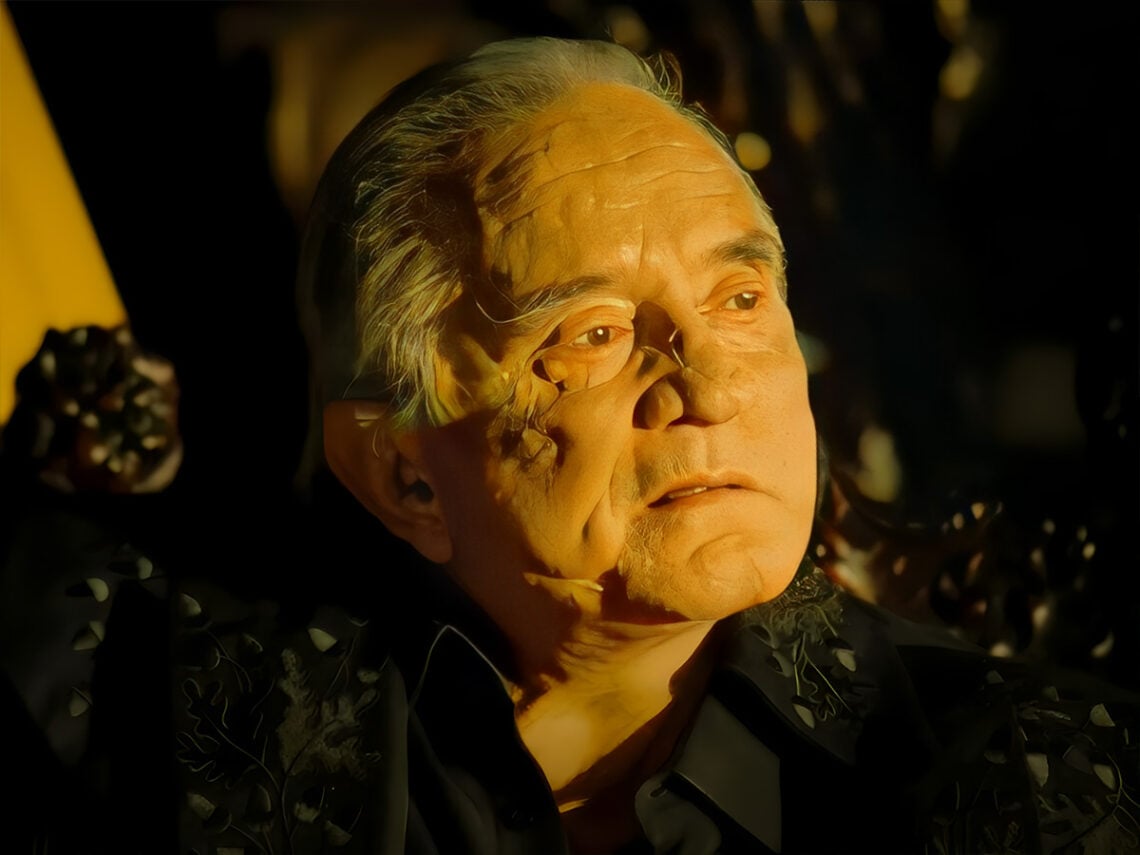
The 2002 song that took Johnny Cash nine months to write: “Verse after verse”

In the late 1950s, Johnny Cash became a salient name on Sun Records’ country roster.
His first recordings, ‘Hey Porter’ and ‘Cry! Cry! Cry!’, both released in 1955, gave him leverage in the scene that he consolidated with immortal hits like ‘I Walk the Line’ and ‘Folsom Prison Blues’, which appeared on his 1957 debut album, With His Hot and Blue Guitar.
As a rising talent in the mid-west, Cash joined the circuit with more-than-familiar names like Elvis Presley, Carl Perkins, Jerry Lee Lewis and his future wife, June Carter. As the ‘Man in Black’ and a prison gig pioneer, Cash built up a reputation as an outlaw. This image was augmented by a hedonistic lifestyle of drug and alcohol abuse, which saw him arrested on a couple of occasions over the early 1960s.
An unsteady patch prevailed through most of the ’60s as Cash grappled with his failing marriage to Vivian Liberto and his elusive muse on the road, June Carter. In 1966, Cash finalised his divorce from Liberto, and two years later, he finally got remarried to Carter, who helped subdue Cash’s inner outlaw.
In 1997, after four decades of prolific performance, Cash retired from touring as he became increasingly frail. Over the remaining six years of his life, Cash remained active in the studio, most notably working on his turn-of-the-century albums, American III: Solitary Man and American IV: The Man Comes Around. The popular releases included immortal reimaginations of songs by Nine Inch Nails, Nick Cave, Neil Diamond, Depeche Mode, Paul Simon and more.
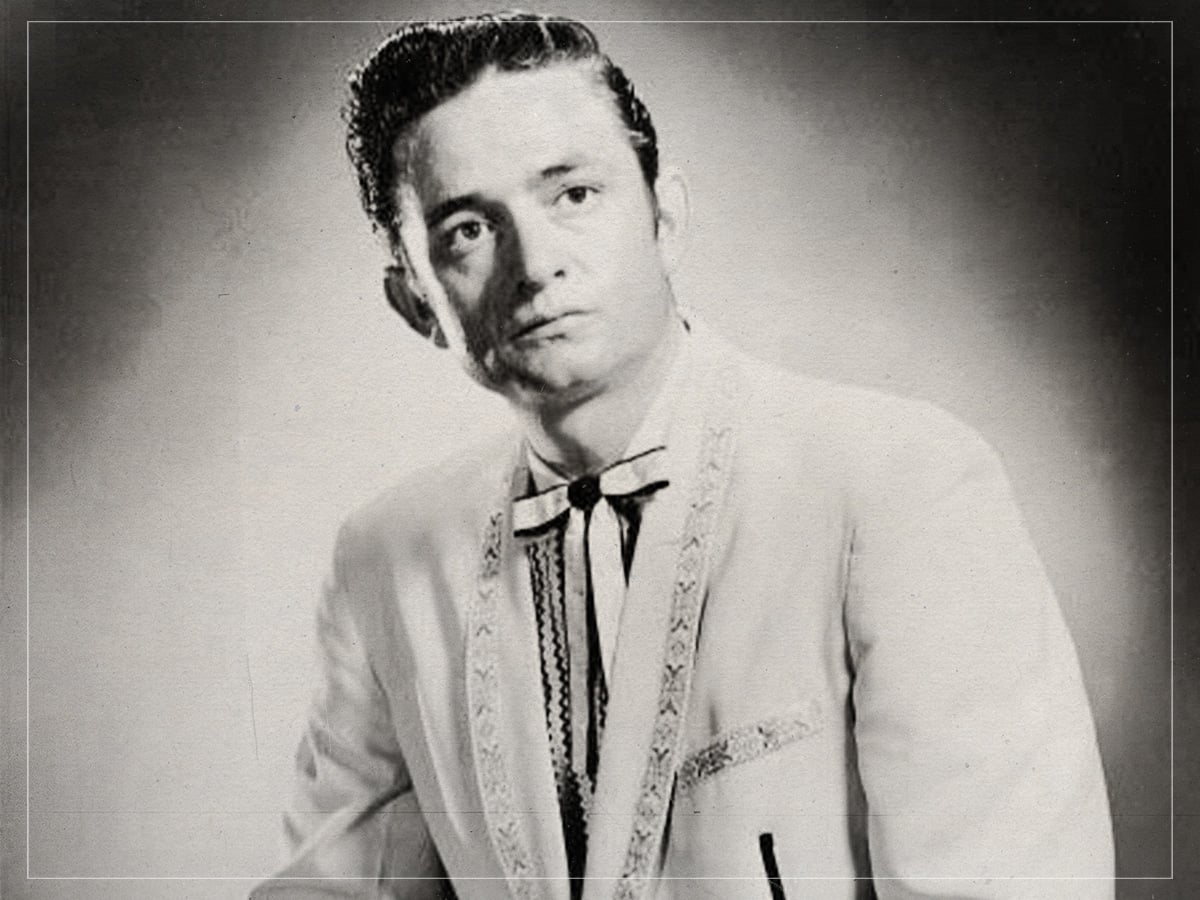
Shortly before the arrival of American IV: The Man Comes Around in 2002, around a year before his death, Cash spoke to American Songwriter magazine about the new album and his longstanding approach to songwriting. “I always knew I wanted to be a songwriter and a singer,” Cash told the interviewer. “You know the thing about songwriters, you have to write when the song starts coming. At least, that’s the way it was with me. The songs just started coming to me, and I had to write them down.”
Later, Cash revealed that, when he writes songs, he must have a title from the beginning. “The title is always very important to me,” he explained. “I hear songs by somebody, and they’ll say, ‘I don’t have a title yet.’ That doesn’t make any sense to me. All of my songs from the get-go have a title. That is the standard bearer that I lean on throughout the writing of the song, going back to the writing of the title. I don’t force that either, but when it’s appropriate, go back to the title.”

“If the song is there, it usually doesn’t take me very long to write it,” he continued. “When I start to write, I write enough so that I’ve secured the idea and don’t forget it. Usually, the first lyrics I come up with are always the best, and I make sure they are down on paper because I start thinking about other lines, and I forget them. I make it a point that, no matter how inconvenient it might be, even if I’m in bed, I get up and get a pen and paper and write it down so I don’t lose it.”
While it didn’t usually take too long for Cash to get his songs together, there was one notable exception. American IV: The Man Comes Around was mostly comprised of covers, but three of its tracks were Cash originals: ‘Give My Love to Rose’, ‘Tear Stained Letter’ and ‘The Man Comes Around’. The last of these, from which the album took its name, took Cash an entire human gestation period to complete.
That extended writing process marked a rare departure from Cash’s usual instinctive approach. Rather than capturing an idea quickly and preserving its initial spark, he found himself returning to the song repeatedly, refining and reshaping it until it carried the weight he felt it deserved. The scale of the subject matter demanded more than spontaneity, pushing him into unfamiliar creative territory.
“It took me nine months to write it,” Cash admitted, discussing ‘The Man Comes Around’. “I wrote verse after verse, probably 25 or 30 verses, before I was satisfied with the verses I wanted to use in the song. It’s the first time I’ve ever overwritten a song, but I felt like it was necessary. The song was very special to me. It’s a spiritual about the second coming of Christ, about judgment day, the day of redemption.”
In the end, that patience paid off. ‘The Man Comes Around’ stands as one of the most powerful pieces from his later years, blending biblical imagery with a sense of finality that felt deeply personal. It was not just another song in his catalogue but a statement of belief and reflection, shaped by time, persistence and a rare willingness to linger over every detail.
