


The 1992 album that left Tom Waits in awe: “His last major work”

To delve into the discography of Tom Waits is to wend your way through shady back alleys before finally finding a table in some seedy nightclub, where strange faces turn to greet you with twisted eyes.
Over the years, Waits has leaned over the bar to introduce us to various fascinating and frightening characters, some disagreeable and some infectiously charismatic. That’s the thing with Tom Waits: even when he’s leading us into the dark, we can’t help but follow him.
In 2005, around the time of his La Tigre e la Neve album, Waits was invited to select 20 of his favourite records during a feature with The Guardian. This diverse list not only offers valuable insight into the musician’s key inspirations but also includes a detailed breakdown of why each album has been selected.
Like Waits’ discography, his selection of favourite albums is utterly anarchical. Where other musicians may have been governed by some overriding penchant for a specific style or era, Waits floats between genres and time periods, picking out albums purely for their content.
Take his first three selections, for example: Frank Sinatra’s In The Wee Small Hours, Thelonious Monk’s Solo Monk and Captain Beefheart’s Troutmask Replica. Who else but Tom Waits would put a crooner, a jazz pioneer, and a rock ‘n’ roll avant-gardist side by side? “This is indispensable for the serious listener,” Waits says of Troutmask Replica. “An expedition into the centre of the earth, this is the high jump record that’ll never be beat, it’s a merlot reduction sauce. He takes da bait. Dante doing the buck and wing at a Skip James suku jump. Drink once and thirst no more.”

Captain Beefheart was close friends with another of the musicians on Waits’ list, Frank Zappa. Tom Waits cut his teeth in the same area of Los Angeles where Frank Zappa, by the 1970s at least, was one of the biggest fish around.
After playing in small clubs to audiences of 250, he landed a regular gig supporting Frank Zappa and The Mothers of Invention. However, Waits’ favourite Zappa album is a far cry from the experimental, bombastic rock ‘n’ roll of The Mothers. The 1992 project The Yellow Shark sees Zappa return to his roots as a composer of modern orchestral music.


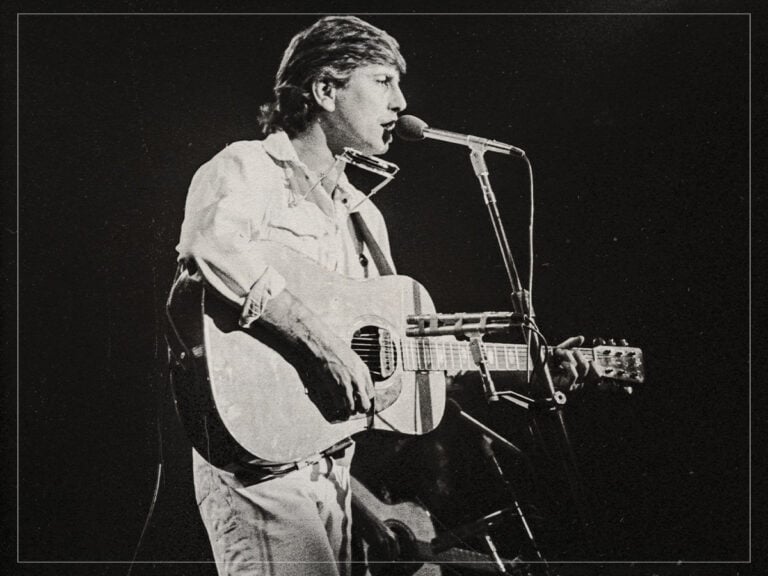
“It is his last major work,” Waits writes. “The ensemble is awe-inspiring. It is a rich pageant of texture in colour. It’s the clarity of his perfect madness, and mastery. Frank governs with Elmore James on his left and Stravinsky on his right. Frank reigns and rules with the strangest tools”.
Those of you who are expecting trailing guitar solos and provocative lyrics should take a moment to readjust your expectations. The Yellow Shark, released almost exactly a month before Zappa’s death, is a collection of new and old music performed by the Ensemble Modern and conducted by Zappa himself. Tracks include orchestral renditions of ‘Uncle Meat’ and reworks of ’80s Synclavier tracks like ‘G-Spot Tornado’.
Waits’ admiration for The Yellow Shark also reveals how deeply he valued artists who refused to stay creatively static. Like Zappa, Waits spent decades dismantling expectations around what his music should sound like, evolving from smoky jazz ballads into clattering experimental blues and theatrical soundscapes.
Zappa’s final orchestral work represented the same restless artistic instinct that Waits recognised in himself: a refusal to simplify ideas merely to remain commercially digestible.
There is also something poignant in Waits gravitating toward one of Zappa’s final statements as an artist. Rather than celebrating the satirical rock provocateur most casual listeners associated with Zappa, Waits focused on the composer beneath the chaos, praising the discipline and ambition hidden inside the eccentricity.
In many ways, The Yellow Shark acts as a fitting parallel to Waits’ own career — strange, uncompromising and deeply sophisticated beneath its rough exterior. It is the sound of an artist pursuing pure creative expression right until the very end.
