


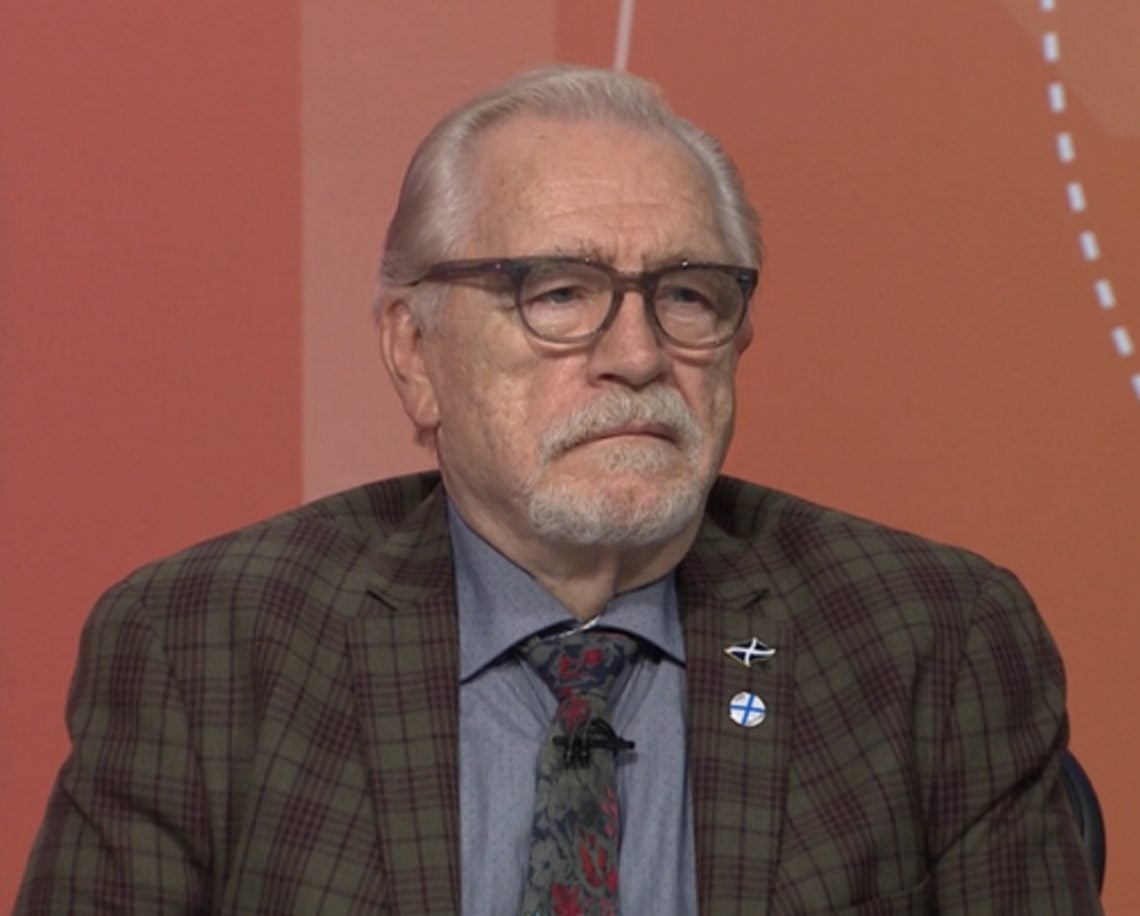
The 1991 movie Brian Cox refused to see in cinemas: “We played it the way we played it”

He’s really quite a grumpy bloke, Brian Cox, but who knows why. Maybe he’s annoyed that people keep mistaking him for a nice, softly spoken astronomer, or perhaps he’s just got too close to his fiery Succession character Logan Roy, but either way, he’s known for being on the irascible side.
Cox has also been a successful actor for a long, long time now, reportedly netting him in the region of about $15million, so he shouldn’t be too upset about that either. He’s been going so long, in fact, that you can be watching a really old black and white TV show from the 1960s, like Z Cars, and up he will pop, albeit as a young 20-something rather than the angry octogenarian we know and love these days.
He spent most of the following two decades on stage, winning two Laurence Olivier awards and working with the Royal Shakespeare Company, while often making appearances on British TV movies and miniseries. Then, in the mid-1980s, he started to make some appearances in Hollywood movies, one of which saw the first onscreen incarnation of a serial killer who would go on to be one of the most famed and feared in cinema history.
Cox landed the part of Hannibal Lecter in 1986’s Manhunter, an adaptation of Thomas Harris’ 1981 novel Red Dragon, in a film directed by Heat’s Michael Mann. While Cox’s Lecter is still behind bars in the movie, he gives a very different performance to Anthony Hopkins’ famed, Academy Award-winning one in The Silence of the Lambs five years later, but it’s a performance that has gained more and more fans in the decades since.
Manhunter bombed on release, bringing back just half of its budget of around $15m, but similarly, Mann’s film has been reassessed over the years, with the directing, cinematography and acting all faring much better with modern critics than they did 40 years ago.
Cox, meanwhile, was so close to his version of Lecter that he couldn’t bring himself to go and watch the newer film where he lived in London when it came out in 1991.
He explained this aversion to The Hollywood Reporter, saying, “Because people knew that I was the other Hannibal, and I was worried about them saying, ‘You’re comparing Hannibal Lecters’ and all that. But we played it the way we played it. Tony [Hopkins] decided to take it down another route. And of course, Tony’s was a huge success, and he got the Oscar, and he made a lot of money out of it. I made something like ten grand.”
Although Cox then headed back to England to do more theatre, his breakthrough in Hollywood wasn’t long in coming. He began to appear in some major movie releases in the mid-1990s, like Mel Gibson’s Braveheart, Rob Roy with Liam Neeson, Keanu Reeves’ ill-fated Chain Reaction and then Wes Anderson’s glorious second film Rushmore in 1998.
Over the next 25 years, he became a reliable character actor in the US, moving into superhero fare like the X-Men movies and acclaimed thrillers like David Fincher’s Zodiac in 2007. The hit black comedy Succession came along in 2018 and brought him a huge new audience. He would take home the Golden Globe for ‘Best Actor in a TV series’ in 2020 for his role as Logan Roy, among three other nominations plus three Emmy nods.
