


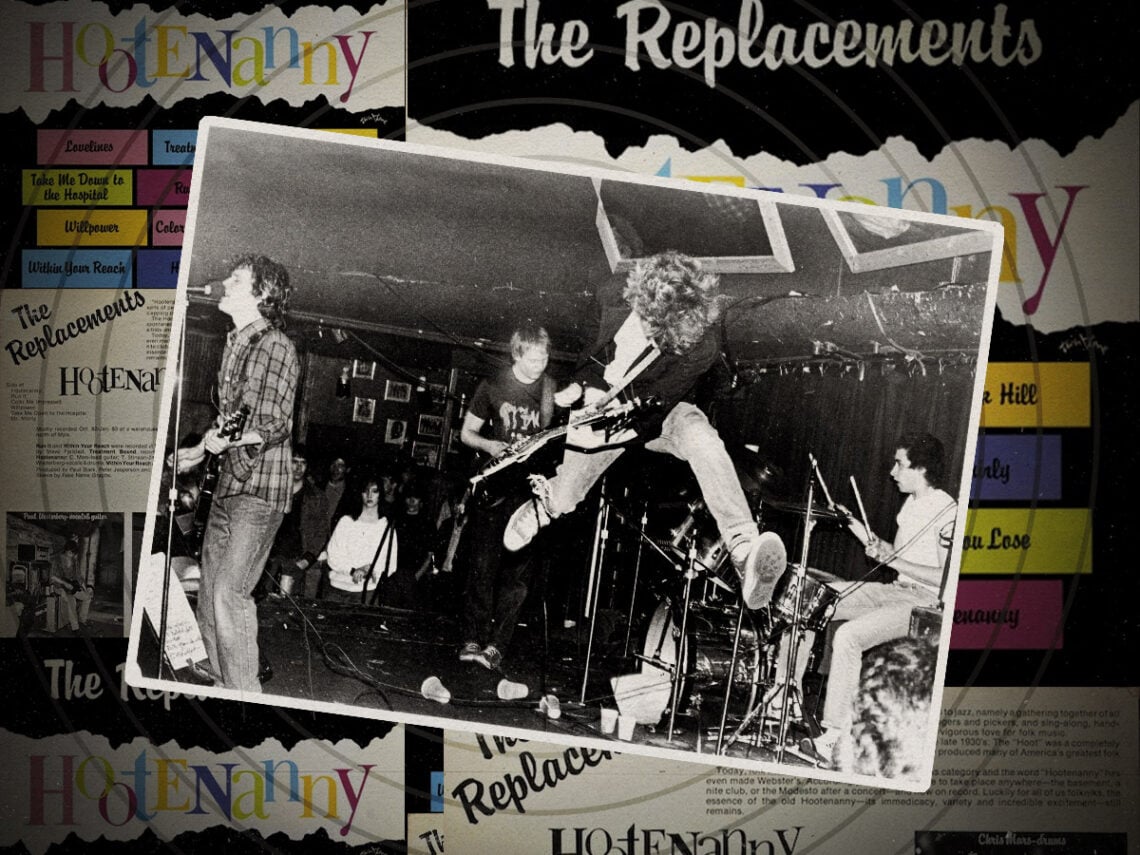
“Unafraid”: The moment The Replacements truly became The Replacements

Bob Mould, former member of that other legendary Minneapolis post-punk outfit Hüsker Dü, once remarked that if you were to see The Replacements play live on ten different occasions, “One of them you’re going to think they’re the greatest band that ever walked the face of the earth, and the other nine might degenerate into drunken covers”.
It was best to press your luck and hope you got the one good show, Mould said, because otherwise “you’re gonna walk away scratching your head”.
The roundabout point of his analysis was that The Replacements were effectively their own worst enemies; fully capable of all-time greatness, but rarely focused, disciplined, or sober enough to deliver the goods consistently. The band’s frontman and songwriter, Paul Westerberg, freely admitted that his initial motivation for playing music was a total cliché: he wanted to impress girls.
“I had no other choice,” he said, “I had no skill, and it was a way to get out of having a job”.
The magic that later developed around this band, however, and part of what gives them such a magnetic appeal for songwriters across generations, is the reluctant hero arc of Westerberg’s story; how his childish desire to just be a punk and avoid adult responsibilities ultimately sent him down the proverbial path of self-discovery.
“To me, Paul Westerberg sounded like he never wanted to be a songwriter,” Jakob Dylan said in 2004, reflecting on the man who probably influenced the music of The Wallflowers a lot more than Jakob’s own dad did.
He noted, “He just wanted to be engulfed in this rock and roll outfit and make a lot of noise, play songs by the MC5 or something. Then one day it just dawned on him that he had this way of writing things that maybe he did or didn’t want to do.”
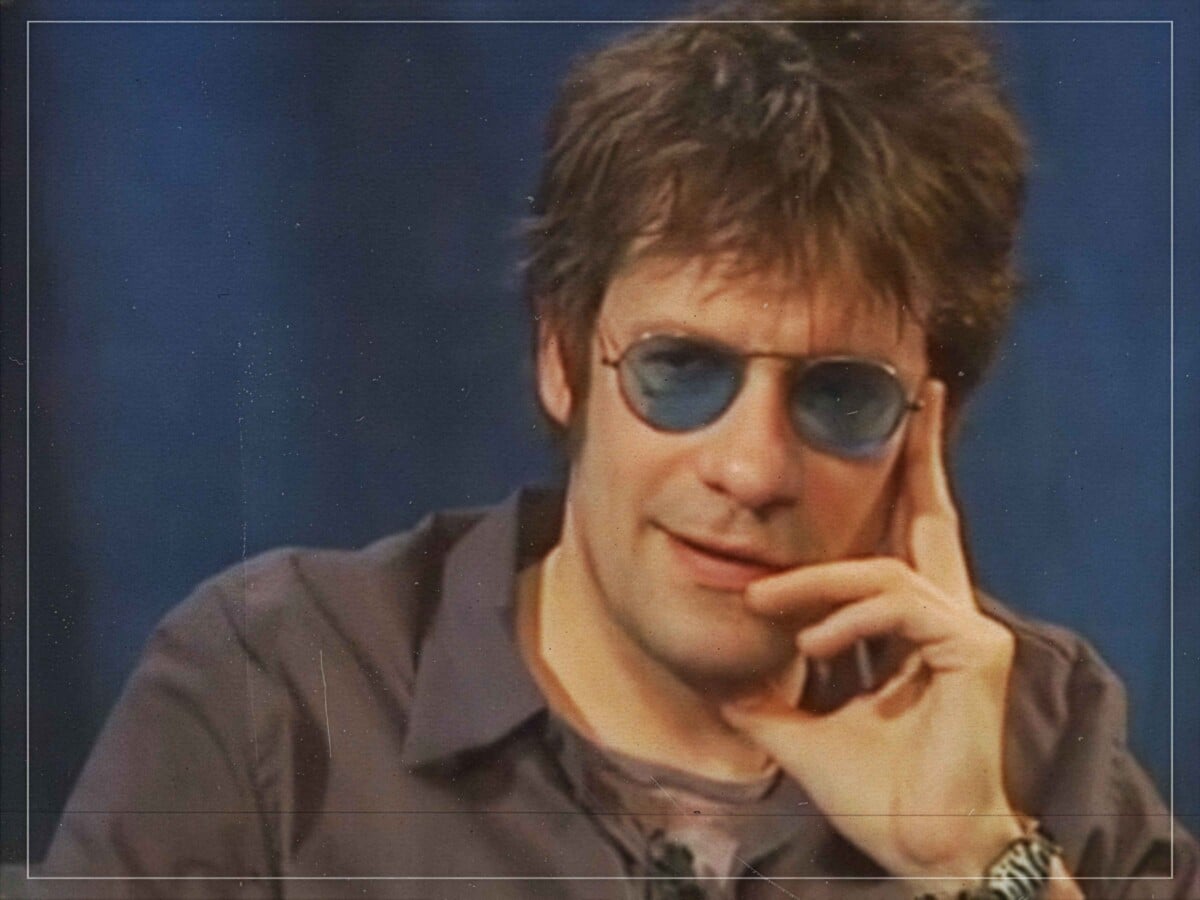
Most of the other guys in the Replacements grew up listening to straightforward ‘70s rock and prog bands like Aerosmith, Ted Nugent, and Yes, but from the time he quit his janitorial job and started performing with the band in 1980, Westerberg was hell-bent on deconstructing them into a visceral hardcore group: aggressive, loud, unhinged, unpredictable. A flyer for one of their early shows in Minneapolis underscored their sound as “low class rock”, as if Westerberg were almost overcompensating for the sophisticated melodies likely already percolating in his mind.
“One of the standing jokes in the band is that we’re not musicians, and we’re sorta proud of that, in that we don’t wanna be,” Westerberg later said, as quoted in Jim Walsh’s 2007 oral history, The Replacements: All Over But the Shouting, “It’s like, we can try to play music and try to play it tight, but we just don’t have any fun.”
This attitude famously produced one of The Replacements’ first original songs of note, ‘I Hate Music’, a straightforward Clash-meets-Ramones punk song in theory, but unavoidably something more, as Westerberg’s confident delivery and Bob Stinson’s inspired, rockabilly-ish guitar solo suggested the exact opposite of their protestations.
When their debut album, Sorry Ma, Forgot to Take Out the Trash, was released on Twin/Tone Records in 1981, the implication, again, was that the band themselves were the garbage. While the goal was to bring the recklessness and energy of their live shows into the studio, Westerberg and his cohorts were also, perhaps unconsciously, trying to colour within the established lines of whatever an authentic punk rock record was supposed to be five years into the genre’s loose existence. Almost every track was two minutes or less, and the pacing was balls to the wall.
One exception on both fronts was ‘Johnny’s Gonna Die’, a Television-esque art-punk ballad of sorts, over three minutes long and moody in tone, enabling Westerberg to dig into a character study (a sad assessment of one of his fading heroes, Johnny Thunders) while the Stinson brothers stretched out and Mars maintained more of a Ringo beat. Whether they were proud of it yet or not, there was clearly more going on here than snotty attitudes and middle fingers.
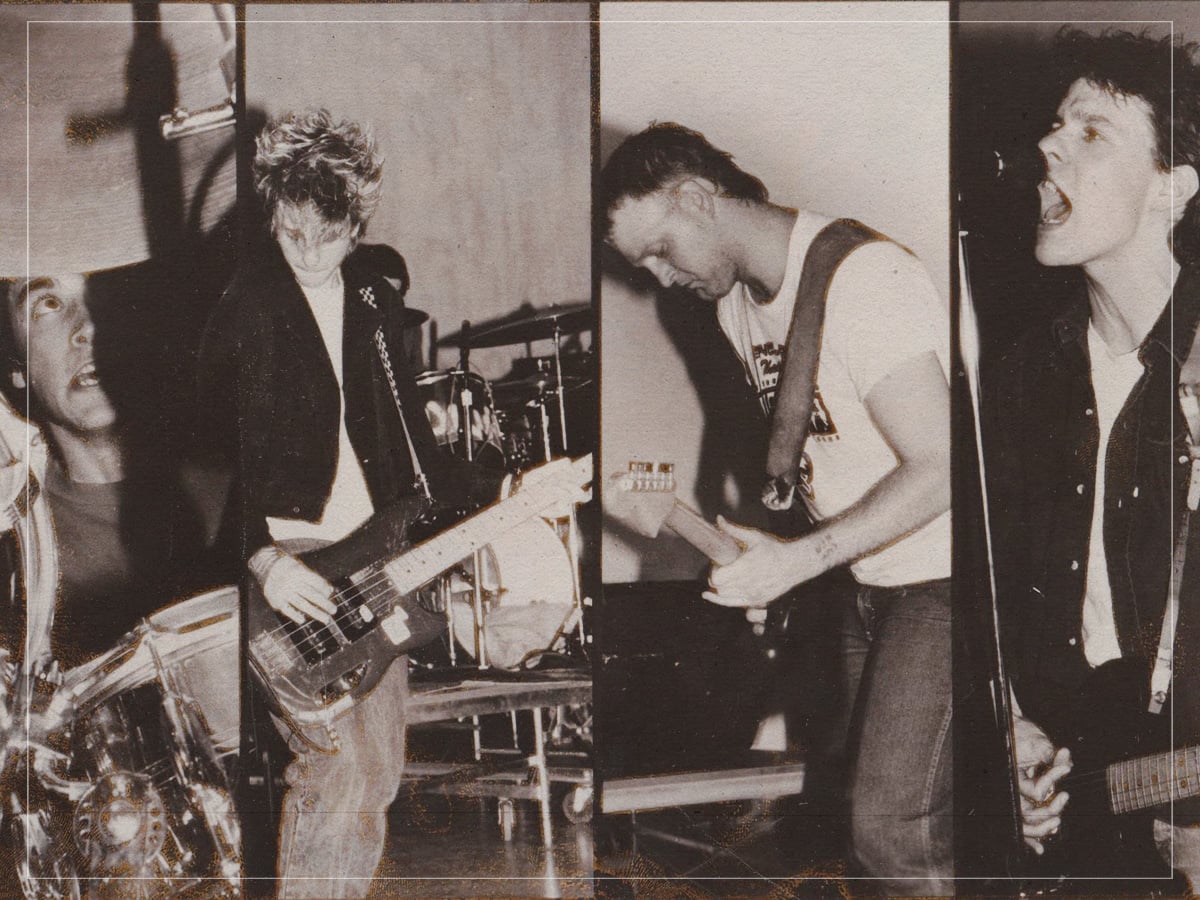
The next record, the 1982 EP Stink, featured a cover sleeve with the band’s name directly above the title, once again communicating the idea that ‘The Replacement stink!’ In other words, despite any rumours to the contrary, you won’t be finding any lovely or thought-provoking tunes here. Westerberg, still just 22 years old, was happy enough sticking to the sort of topic his audience liked best: “Fuck school, fuck school, fuck my school!” goes the chorus to ‘Fuck School’.
“I need a god damn job, godammit!” Westerberg proclaims on ‘God Damn Job’.
These records hold up really well as early hardcore artefacts, still great for blowing off steam, whether you’re in a pit or just remembering being in a pit while training on your exercise bike. Once The Replacements returned to the studio for the next full-length album, though, the idea of cranking out another batch of id-based teenage angst wasn’t gonna cut it anymore.
“I guess Hootenanny is the one where we came to the decision, or, I did, at least, that this loud/fast stuff is not going to get us anywhere,” Westerberg explained to Billboard in 2008, “That was the height of the hardcore movement, and we were on tour, and we were not the loudest and the fastest, and I figured, ‘Well, we can’t win that way, so we’ve got to go the other direction, and tap the other vein of our influences and stuff’.”
Westerberg was perfectly happy to concede defeat to Black Flag on hardcore merits, as he had already seen plenty of his earlier influences, particularly The Clash, move well beyond their original loud/fast blueprints. Joe Strummer, however, had never claimed to ‘hate music’, tongue-in-cheek or otherwise.
Recording engineer Paul Stark, who was also one of the co-founders of the Twin/Tone label, was tasked with trying to wrangle the increasingly substance-reliant and belligerent Replacements during the sessions for their second LP Hootenanny, trying his best to get the four boys focused for several minutes at a time and open-minded about trying to sound like a proper rock and roll band.
“Bob Stinson came to the [Hootenanny recording sessions] with three beers in him,” Stark later recalled, “and we realised his lead guitar playing was best between his fifth and seventh beer, and after the seventh he was worthless. If he hadn’t had the four, he was worthless as well. That was a six-month period during his life that that was true; it probably wasn’t true before then, and it probably wasn’t true after that.”
Considering that Let It Be and Tim would be released in the next two years and solidify their legacy, Hootenanny is very clearly the ‘transitional’ record in their catalogue; a bit of a messy hodge-podge of different styles, ranging from murky REM Murmur style numbers (‘Willpower’, ‘Buck Hill’) to Beatles references (‘Mr Whirly’), rockabilly (‘Take Me Down to the Hospital’), and country-folk experiments (‘Treatment Bound’). The moments of clarity on the record, or at least the ones that suggest Westerberg’s leap to the next tier as a legit anthem scribe, are the fist-pumping ‘Color Me Impressed’ and the heart-on-the-sleeve ballad ‘Within Your Reach’, complete with a slinky, unpunky synthesiser line.
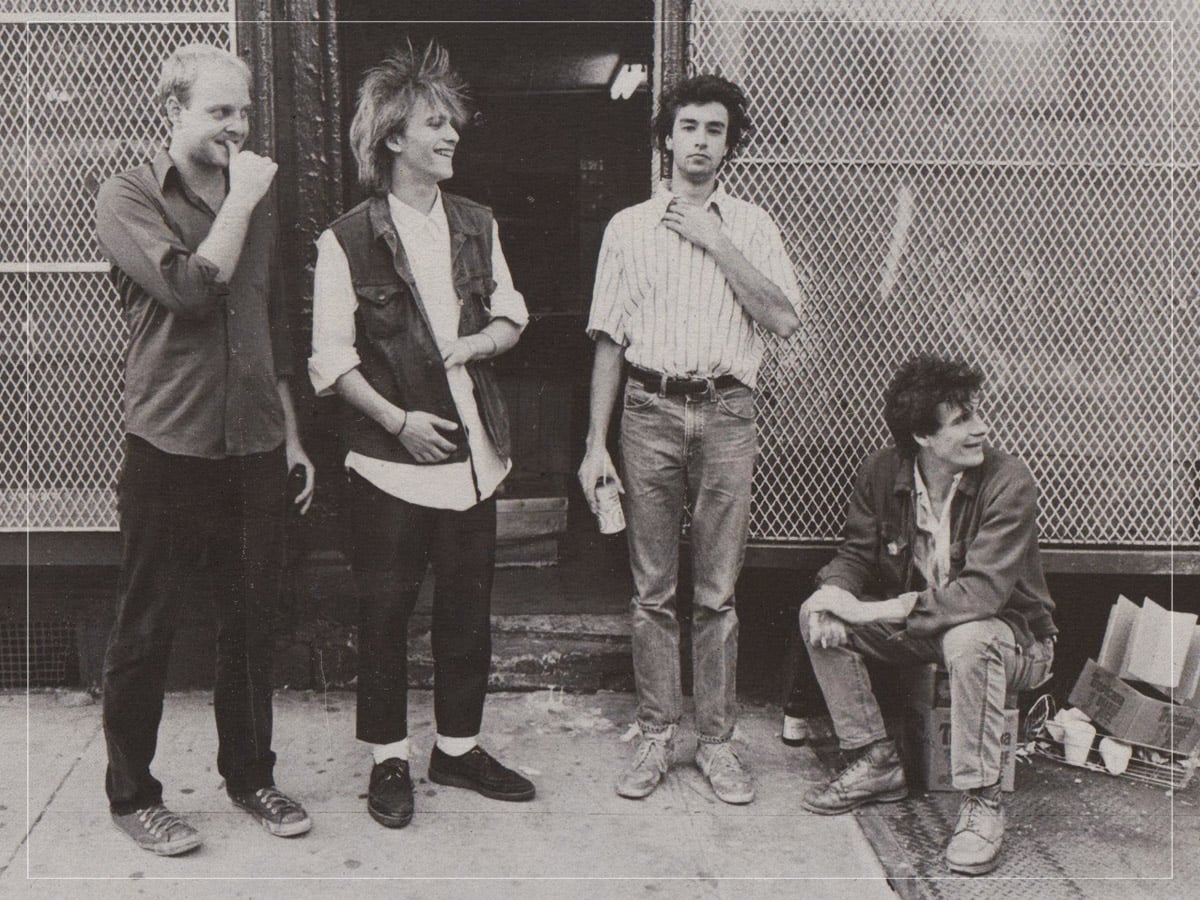
“Not that Hootenanny is my favourite record, but Hootenanny was probably the one where we first started to become unafraid to do things,” Westerberg said on the album’s 25th anniversary. “You know, we listened to all kinds of different music. It wasn’t like we listened to hardcore in the van. I mean, we listened to all kinds of pop music, and folk and Dylan and Hank Williams, and a little bit of jazz came later. So we just started playing the stuff we liked.”
Hootenanny is also the point where a lot of critics began to take the band seriously, and where their own career expectations began to evolve. Shortly after finishing the record, during an East Coast tour, they stopped by CBGB in New York to play what doubled as a showcase gig for some major label execs. There was a genuine hope, despite the uncoolness of ‘selling out’, that Warner Brothers might offer them a deal, giving them loads of resources that the tiny Twin/Tone could not. Rather than playing a great set of their best songs, though, The Replacements apparently “didn’t feel like it” that night, according to Westerberg, resulting in one of the drunken, terrible gigs Bob Mould warned about.
“We went up there, we did what we wanted to do,” Westerberg told the Village Voice the next day, “And so [the label executives] figure, ‘They’re a small-time bunch of amateurs’. That’s one way to look at it, and that’s partly true. But I think it’s also the spirit that makes rock exciting and immediate.”
Hootenanny was a commercial failure, and its fantastic follow-up, 1984’s Let It Be, failed to make any mainstream waves, as well. After that, The Replacements did at least convince a larger label, Sire, to give them a chance, but their loyalty to the ‘spirit’ of rock always remained a commercial hindrance for some reason, as incredible Westerberg songs that should have been radio-ready ‘80s classics, ’I Will Dare’, ‘Androgynous’, ‘Bastards of Young’, ‘Swingin Party’, ‘Can’t Hardly Wait’, ‘Alex Chilton’, all failed to chart.
“I guess in the Midwest, since you’re sheltered from the Coast, if you don’t get success right away, you sort of tend to hang on to the real,” Westerberg told LA Weekly back in 1984, seemingly already at peace with his cult status, elaborating, “Just the love for the music and the realisation that there’s really nothing else you can do. There’s less glamour, obviously, in the Midwest, and I think that’s true to the spirit of rock and roll. It’s not show biz.”

Never Miss A Beat
The Far Out Punk Newsletter
All the latest Punk content from the independent voice of culture.
Straight to your inbox.