


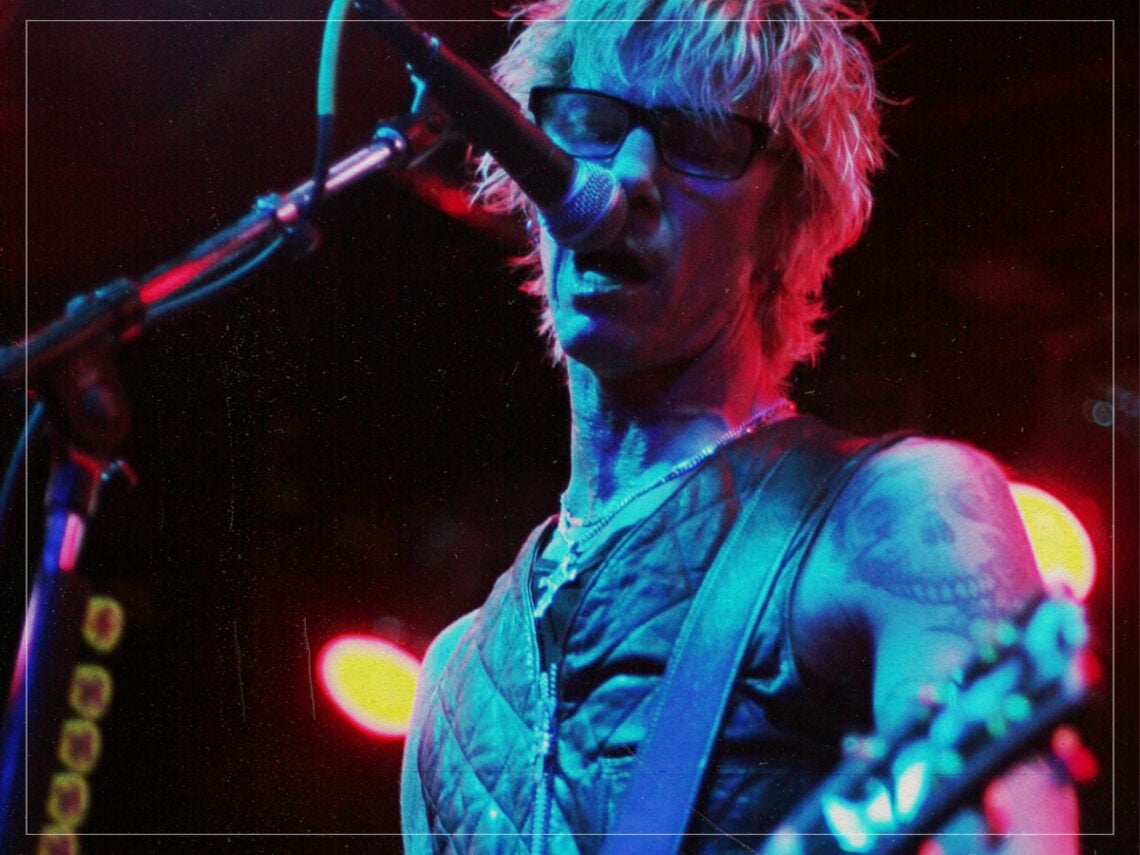
The 1982 album that saved Duff McKagan’s life: “This record was huge to me”

Every artist has those few albums on which to hang their hat. Even though it’s easy to get influenced by any piece of music that comes across one’s eardrums, there will always be those few pieces of work that stick with you from the moment you hear them until the day you die.
Although Duff McKagan may have been known for providing the low end to some of the most blazing hard rock imaginable, one of his biggest inspirations came from pop music.
When working at the back of Guns N’ Roses, though, McKagan quickly turned himself into one of the most melodic bass players in the rock scene. While Slash may have been the star of the show every time he turned in one of his classic guitar solos, McKagan created hooks on the bass, from the opening few notes of ‘It’s So Easy’ to the sing-along bass line at the start of ‘Sweet Child O’ Mine’.
McKagan was born and bred in punk rock for all of his sense of melody. When first picking up a bass guitar, McKagan was indebted to the biggest names in the punk underground, learning his first song when working out the notes to the Dead Boys’ ‘Sonic Reducer’.
At the same time, another significant change occurred when McKagan was finding his feet in the early 1980s. As much as punk rock may have ruled the underground, a young up-and-coming artist named Prince was starting to bring his unique blend of pop, rock, funk and soul into the mainstream out of Minneapolis.

While Prince had spent much of the late 1970s working on building his brand in the local scene, 1999 was the moment when he started to rule the world, becoming a darling of MTV with videos for songs like the title track and ‘Little Red Corvette’. Even though McKagan was known for rocking the CBGB merch at the time, he was blown away by what he was hearing on 1999.
For someone so deeply rooted in the raw immediacy of punk, falling for a record like 1999 might seem unexpected at first glance. But the appeal wasn’t really about genre. It was about feel. Prince had a way of building songs that moved with purpose, where every instrument had its own voice while still serving the groove. For McKagan, who was beginning to understand the role of the bass beyond just keeping time, that kind of musicality opened up an entirely new way of thinking about his place in a band.

It also showed him that accessibility didn’t have to come at the expense of identity. Prince’s music was polished, sure, but it was never anonymous. There was attitude in every note, a sense of personality that cut through the sheen. That balance between instinct and precision would end up echoing in McKagan’s own playing later on, where even the simplest basslines carried a sense of swagger that felt just as indebted to funk and pop as it did to the chaos of punk.
When talking about the album later, McKagan would say that the album gave him the drive to get out of his Seattle home and venture to the big city, telling Louder, “This record was huge to me. At that time, I was still living in Seattle, and heroin had decimated my whole scene – my girlfriend, my roommate, guys in my band – and this record was an escape for me. Everyone has that one record that ‘saved their life’, and 1999 made me realise that I had to leave Seattle to be a musician and gave me the courage to do it”.
Although McKagan arrived in the middle of the hair metal scene, his musical brethren in Guns N’ Roses were about to turn the entire scene on its head. Creating songs that served as a diary of their life on the streets, Appetite for Destruction would be informed by McKagan’s upbringing, featuring tunes with a slight shred of hope left over from Prince’s influence.
McKagan’s infatuation for ‘The Purple One’ didn’t stop once he became famous, either, eventually going to see him on tour in between legs of the band’s Use Your Illusion tour cycle. Guns N’ Roses may look like the epitome of hard rock, but McKagan’s taste in music was always about more than the standard hard rock riff.
