


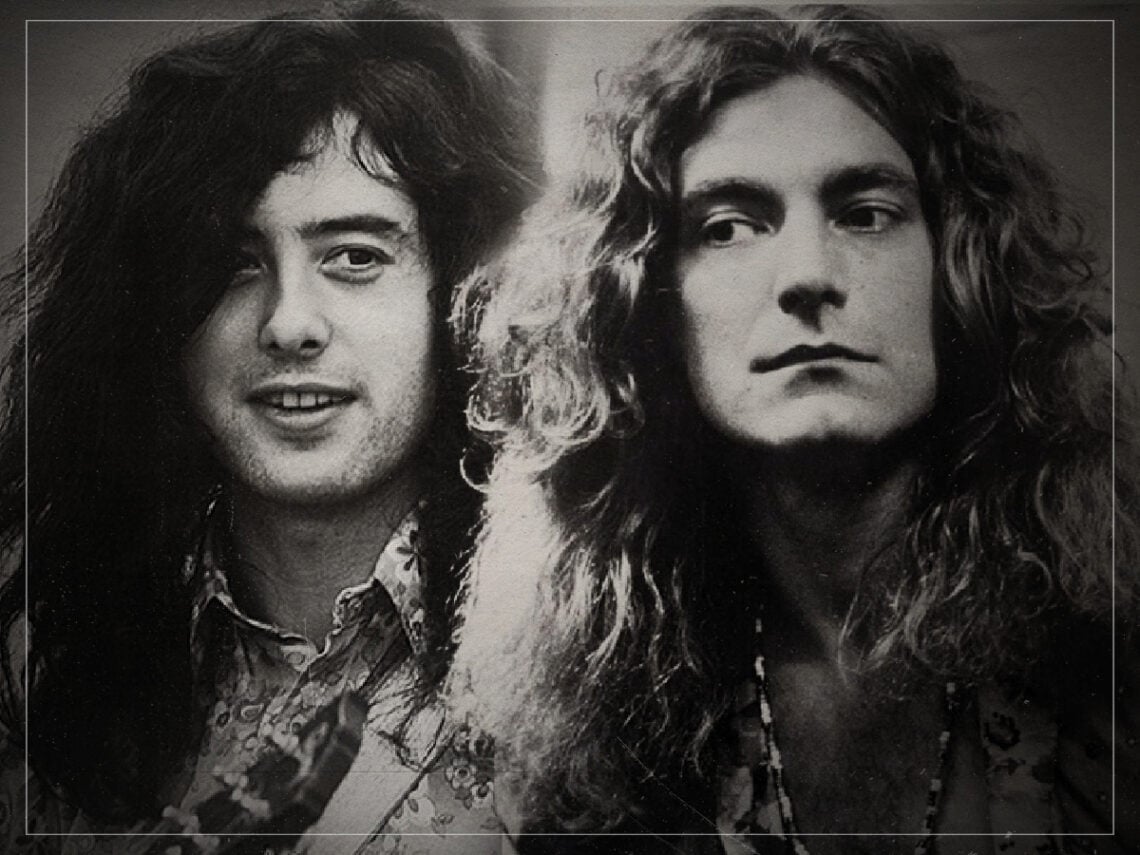
The 1975 album Jimmy Page and Robert Plant both called their greatest work: “The Zeppelin feel”

How does one accurately judge the kind of magic that Led Zeppelin had?
It’s easy to point to individual songs to prove why they are great, but even if you showed someone ‘Whole Lotta Love’ or ‘Stairway to Heaven’, that’s practically a drop in the bucket for what the supergroup could do together whenever they played. They had a lot more to offer, and Jimmy Page and Robert Plant felt that a lot of their truly legendary performances didn’t come until years after the fact.
Then again, Plant was the one who was always a bit more lenient towards Zeppelin’s prime whenever he started working on his solo career. John Bonham cast a tragic shadow over many of Zeppelin’s finest moments, and even though Plant loved the idea of paying tribute to his old friend on occasion, he never wanted to be defined by the same kind of person that he was when he was working on his greatest ‘Percy’ moves.
If you look at where rock and roll has gone since then, though, it’s not like the world collectively forgot about what early Zeppelin was like. This was the beginning of hard rock for a lot of people, but whereas most people go back to the band’s untitled record for the definitive Zeppelin experience, Physical Graffiti was where they were finally at the peak of their powers, making their best work.
Granted, there’s no real era where Jimmy Page wasn’t at the top of his game, but he remembered Graffiti as being the moment where everything fell into place exactly the way it was supposed to, saying, “Physical Graffiti is master musicians in the point of communion. Just listen to what we could do, playing together in the right environment. Boom! How about that?” He’s well within his rights to be a bit biased, but it’s not like he doesn’t know what he’s talking about compared to everyone else.
The double album is practically a one-stop shop for everything that Zeppelin was good at. There are the quiet parts of their tunes that get a lot more priority when Page breaks out the acoustics, but there are also some songs that take what they started with the blues and burst it wide open on tracks like ‘In My Time of Dying’.
And while Plant does have a bit of a love-hate relationship with a song like ‘Stairway to Heaven’, he felt that everything the band epitomised back in their prime could be found in the song ‘Kashmir’, saying, “I wish we were remembered for ‘Kashmir’ more than ‘Stairway to Heaven’. It’s so right; there’s nothing overblown, no vocal hysterics. Perfect Zeppelin. It was so positive, lyrically. It’s the quest, the travels and explorations that Page and I went well off the beaten track… That, really, to me, is the Zeppelin feel.”

Practically half of the track list on the record is about everyone working to the best of their ability on every tune, but there were also some tunes that didn’t even seem to have a genre to begin with. ‘Ten Years Gone’ is still one of Zeppelin’s finest tracks, but even after breaking down the doors for hard rock, there’s a good chance that they couldn’t have made that kind of tune when they were still hashing things out on their debut.
They needed a bit more experience to be able to make something this grandiose, and in doing so, they made the kind of album that defined what rock and roll could be up until that point. Everyone else had tried to try and match what the titans of rock had done before, but in one album, Zeppelin proved why they deserved to be in the same conversation as people like The Beatles and The Stones, no matter what the critics had to say.

Never Miss A Beat
The Far Out Led Zeppelin Newsletter
All the latest stories about Led Zeppelin from the independent voice of culture.
Straight to your inbox.