


The 1972 movie Marlon Brando starred in but couldn’t understand: “I have no idea what that picture was about”

Actors aren’t required to have an intimate knowledge of a movie’s themes, motifs, and undercurrents before showing up on set, and even though Marlon Brando was one of the all-time greats, it took him years to even try and make sense of what one of his starring roles was supposed to be about.
Of course, the fact the two-time Academy Award winner spent great stretches of his career reading his lines from cue cards being held up from behind the camera because he couldn’t be arsed learning them speaks volumes to his levels of investment, but he was still one of the best when he could be bothered.
The period on either side of The Godfather turned out to be a definitive one for Brando, with the transformative thespian in danger of being written off as past his sell-by date before he and Francis Ford Coppola offered a timely reminder of his gifts through the iconic part of Vito Corleone.
There were still questions over whether it would be a fleeting renaissance or if Brando was back for good, and opinion began veering towards the latter when his next feature arrived. Releasing nine months after Coppola’s seminal crime drama, Bernardo Bertolucci’s Last Tango in Paris earned him another Oscar nomination for ‘Best Actor’.
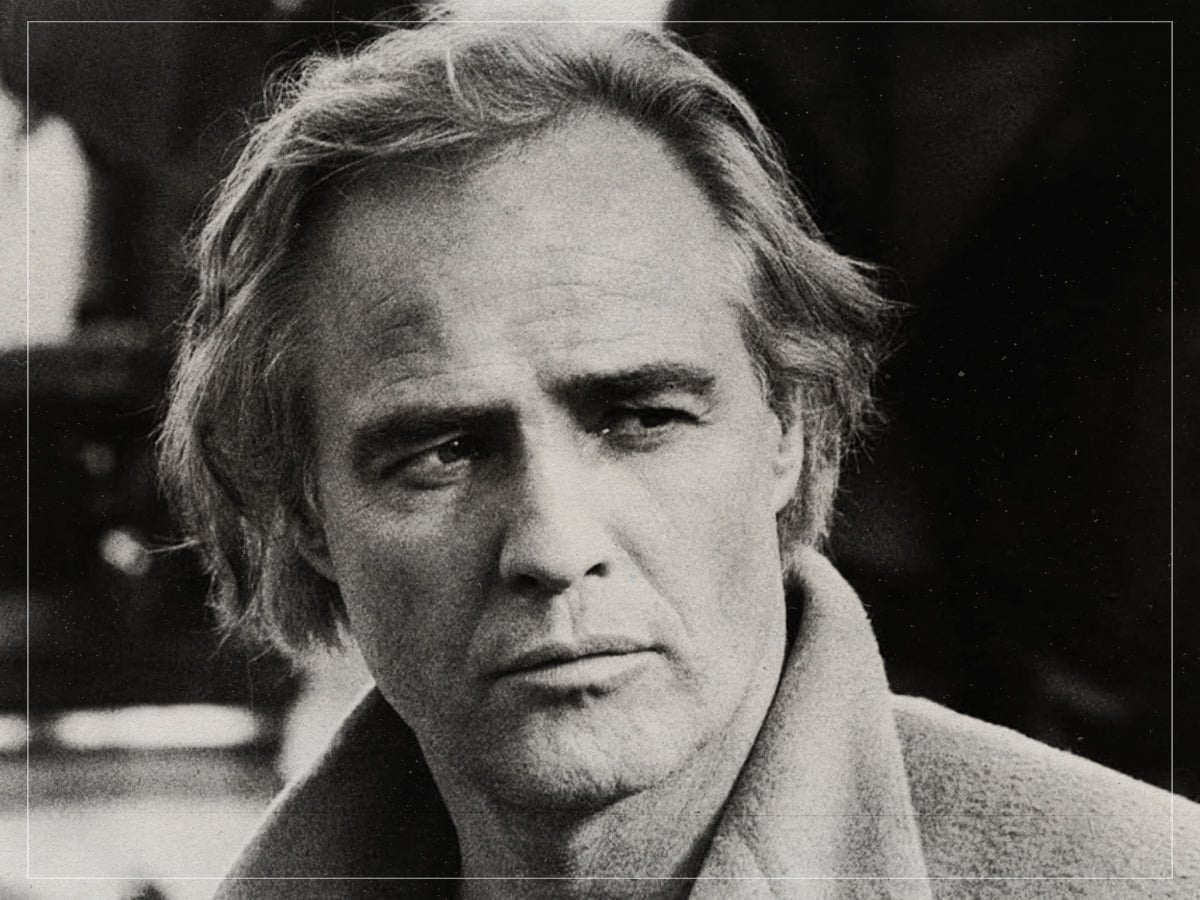
The explicit film was hugely controversial at the time and for years after, even if getting slapped with the dreaded X-rating didn’t hinder its ability to thrive at the box office. Story-wise, it’s about two people engaging in a clandestine relationship based entirely on sex and nothing more, but scholars and analysts were happy to pull apart the layers of Last Tango in Paris to find its real meaning.
That appetite for interpretation wasn’t unusual where Bertolucci was concerned. His films frequently blurred the boundaries between psychology, politics and sexuality, encouraging audiences to project their own ideas onto the images rather than arrive at a single, definitive conclusion. Last Tango in Paris became one of his most dissected works precisely because it seemed to resist any straightforward explanation, inviting decades of competing readings from critics and academics alike.
Brando, however, had little patience for treating cinema like a puzzle with one correct solution. Throughout his career, he was often more interested in instinct than intellectualisation, preferring to respond to characters emotionally instead of constructing elaborate theories about them. That made him an oddly unreliable guide to one of the most analysed films ever made, but also an unusually honest one.
If there was one person who shouldn’t have been asked those questions, then it was Brando, who admitted to Rolling Stone he hadn’t the foggiest. “I don’t think Bertolucci knew what the film was about, and I didn’t know what it was about,” he said. “He went around telling everyone it was about his prick!”
Was Last Tango in Paris really a cinematic ode to Bertolucci’s meat and two veg? Maybe, maybe not, and Brando wasn’t capable of answering either way. “I have no idea what that picture was about,” he confessed. “I mean, most pictures are the extensions of people’s fantasies.” This one might have been, even if Bertolucci’s dong makes for an odd source of inspiration.
It took Brando three whole years to even take a guess, and even then, he wasn’t entirely sure. “I didn’t know what it was about,” the star mused once again. “It was about a man desperately trying to find some meaning in life, full of odd symbols. He dies in a self-conscious way, in a fetal position. It’s a mythological tale; it doesn’t happen in real life.”
That’s about the best he could come up with, and while mileage may vary on the accuracy of Brando’s summation, mythology made flesh sounds a damn sight better than saying Last Tango in Paris is about Bertolucci’s bellend.
