


The 1965 obscurity Pete Townshend thinks every music fan should hear at least once

Arguably, one of the most influential guitarists of his generation, Pete Townshend, brought a wealth of visceral technique to the electric guitar when he and The Who burst onto the scene in the mid-1960s.
While the image of Townshend thrashing his strings and then separating them from the fretboard with an axe-like chop to the concrete below is burned into the fabric of rock and roll, it often belies his unique songwriting ability and keen ear.
In fact, he grew to lament the band’s instrument destruction a little further down the line. After all, it was spiritualism he craved in music more so than anarchy, although the 1965 album he adores has a hint of both.
Undoubtedly, Townshend had a sharpness to everything he did. That same cutting edge wasn’t reserved for his on-stage playing, nor just his on-stage instrument smashing, but in interviews, too. The guitarist has often been quoted as tearing down his contemporaries and has never really found too much admiration for those with whom he, Roger Daltrey, John Entwistle and Keith Moon came up. But by the same token, when it comes to the rare exceptions, he’s usually quite effusive with his praise.
Though you may not call Sun Ra, the cosmically inspired jazz musician and composer, one of The Who’s most adjacent counterpoints, the album The Heliocentric Worlds Of Sun Ra arrived around the same time that The Who exploded onto the music scene. The 1965 album is one album that Townshend thinks everybody needs to hear before they die. It’s a powerhouse record that not only delivers on artistic intent but provides a basis from which one’s own creativity can flourish.
A mercurial LP, Sun Ra does some of his finest work on this compilation record, which accurately documents the free-form jazz that emanated from the band. The back cover describes it as an “album of compositions and arrangements by Sun Ra played by Sun Ra and his Solar Arkestra.” At 35 minutes long, it is a vibrant and quick injection of what made Sun Ra so desirable.
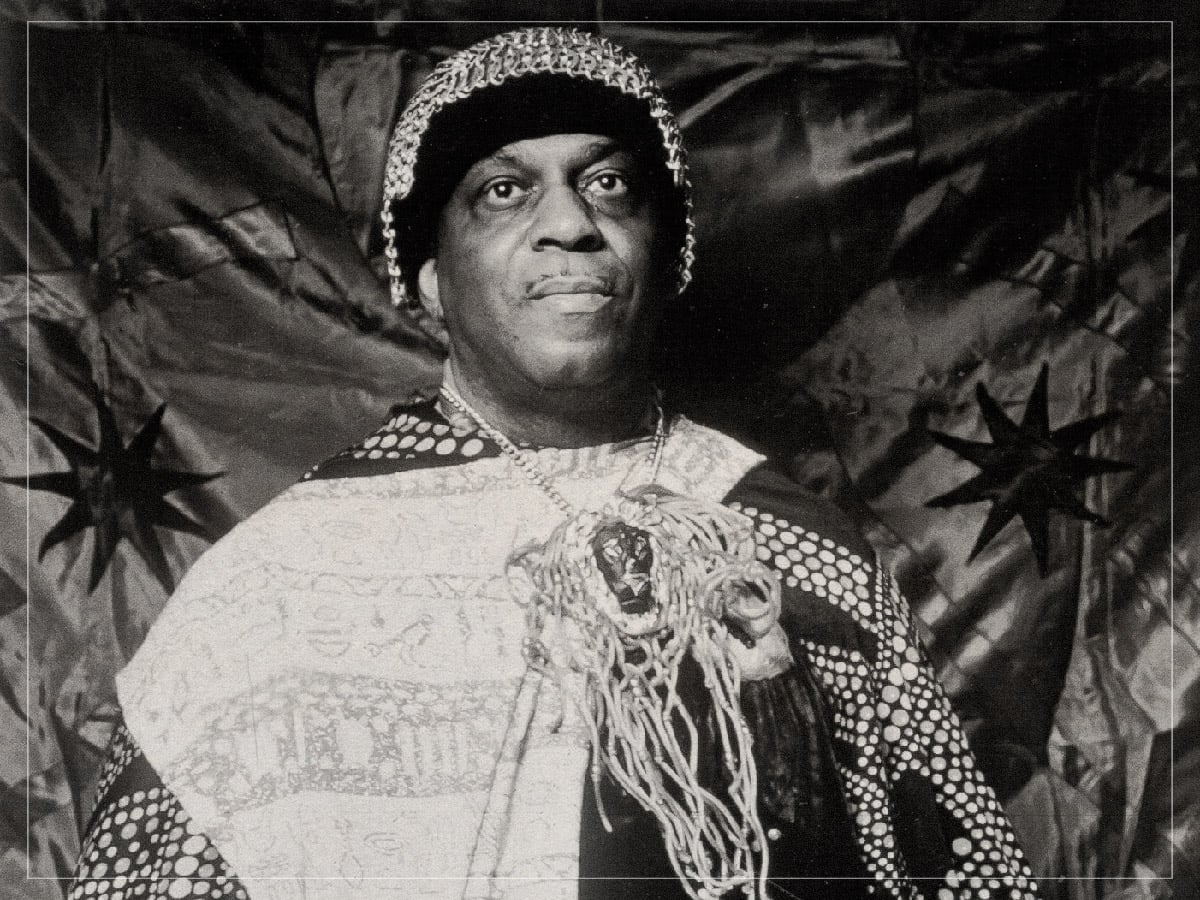
Marshall Allen, performing Piccolo on the album describes what it was like working with such a character, “Sun Ra would go to the studio and he would play something, the bass would come in, and if he didn’t like it he’d stop it; and he’d give the drummer a particular rhythm, tell the bass he wanted not a ‘boom boom boom,’ but something else, and then he’d begin to try out the horns, we’re all standing there wondering what’s next.”
Adding: “I just picked up the piccolo and worked with what was going on, what mood they set, or what feeling they had. A lot of things we’d be rehearsing, and we did the wrong things, and Sun Ra stopped the arrangement and changed it.” This was always his modus operandi. He didn’t have much time for stuffy convention.
He continued: “Or he would change the person who was playing the particular solo, so that changes the arrangement. So the one that was soloing would get another part given to him personally. ‘Cos he knew people. He could understand what you could do better so he would fit that with what he would tell you.”
It was a type of creation that perhaps appealed to Townshend, whose own experimental thinking saw him and The Who provide some expansive rock moments, especially their rock operas. Speaking with NME, Townshend recalled his baptism of fire when discovering Sun Ra.
“I got really into that sort of way-out avant-garde jazz, but you couldn’t find his record anywhere”.
Hungry for a copy to study and enjoy, Townshend continues, “So, one day I was in a jazz shop in Chicago – which I think is where Sun Ra came from – and I said, ‘have you got any Sun Ra?’ The guy says, ‘Yeah, all his stuff.’ I said, ‘Give me everything.’ ‘Everything?’ ‘Yeah.’ He comes back with 250 albums. Most of which I’ve still got in that room over there, still in the shrink-wrap.”
He’d hit the jackpot. The album’s freeform mix of complex spiritualism and punky anarchy, in it’s own weird way, perfectly aligned with his vision for The Who. While Townshend proposed that rock ‘n’ roll helped you “dance all over” your problems, Sun Ra proclaimed a similar point. “First of all I express sincerity,” the jazz master said.
“There’s also that sense of humor, by which people sometimes learn to laugh about themselves.”
Sun Ra added, “I mean, the situation is so serious that the people could go crazy because of it. They need to smile and realize how ridiculous everything is. A race without a sense of humor is in bad shape. A race needs clowns.”
With the rare jewel of a Pete Townshend compliment in our hands, it must mean that Sun Ra is worth his weight in gold, and if you’ve ever been curious, now is the time to jump on in and lose yourself in some far-out jazz. There aren’t many musicians you should definitely listen to when sharing their recommendations, but The Who’s Pete Townshend could well be one of them.

Never Miss A Tale
The Far Out Classic Rock Newsletter
All the latest Classic Rock content from the independent voice of culture.
Straight to your inbox.