


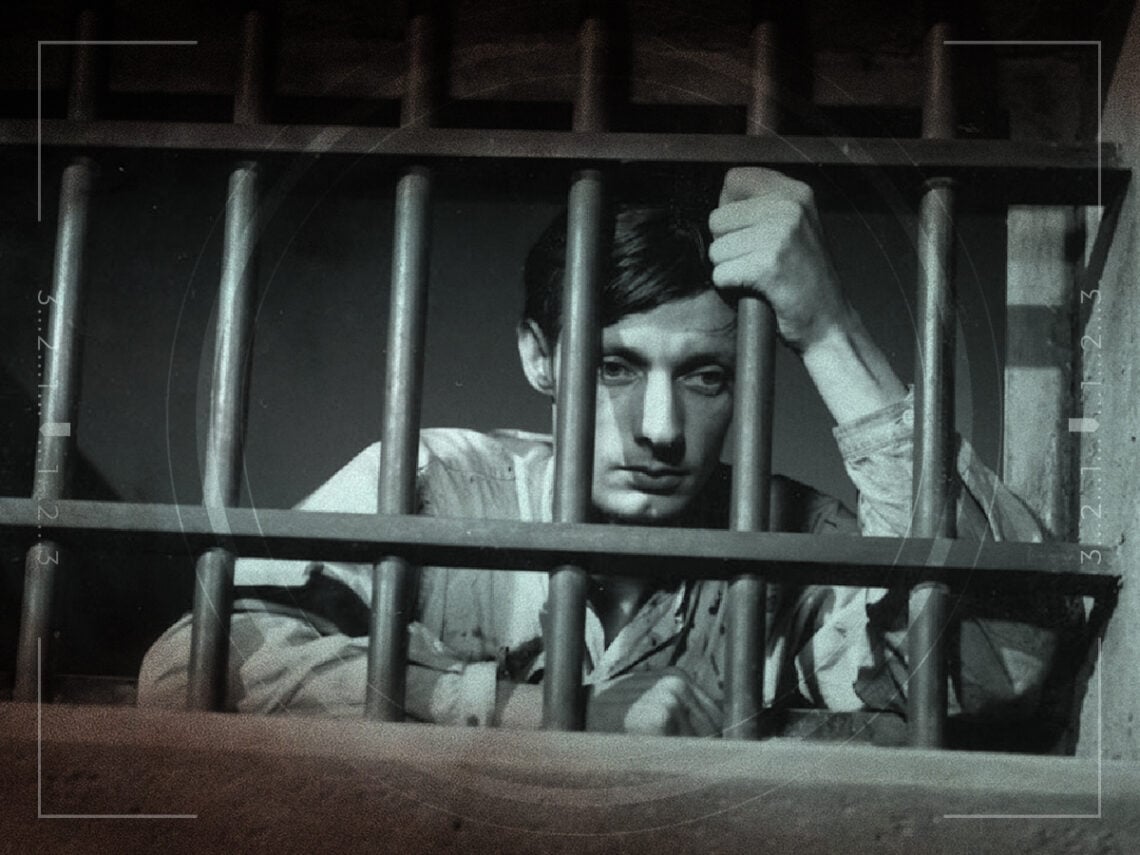
The 1950s French prison movie that rivals ‘The Shawshank Redemption’

For over 30 years now, there has been one movie that stands as the very definition of a prison film, topping not just genre charts but lists of the greatest films ever made.
Frank Darabont’s The Shawshank Redemption is without doubt tinged with magic, full of career-high performances, redemption, claustrophobia, personal struggles and human behaviour at its worst and best.
But nearly three decades earlier, a prison film was made in France that has all those same elements in place, that is equally thrilling, even darker in nature and contains all the inventiveness and heartstopping “will he make it?” drama of the Stephen King adaptation.
Directed by acclaimed French filmmaker Robert Bresson, 1956’s A Man Escaped takes place in Nazi-occupied France during WW2, as a young member of the resistance is bundled into a car by German forces, badly beaten and locked up in a military prison with hundreds of his countrymen. Bresson wastes no time in setting up the movie, just as the prisoner, played by Francois Leterrier, doesn’t delay in attempting to find his way out of the heavily guarded jail, stating in the opening narration: “As for myself, I was determined to escape at the first opportunity.”
While each day he hears his conspirators machine gunned to death outside his tiny window, soon he begins to find ways to get messages in and out of his cell, in addition to small donations, objects he can ingeniously fashion into tools in order to try to find a way out. As the days and weeks tick by, his fellow prisoners, aware that he plans to escape, begin to grow impatient, unaware of what he has put in place, but also knowing that any kind of leak could result in the violent death of not just him, but anyone he speaks to.
Bresson keeps the tension ramped from the first to the last; an almost complete lack of music means every stray footstep made is heart-stopping, every noise that Leterrier’s character makes seems to echo around the prison and could alert the nighttime guards at any moment. Watching the film, you are aware that you probably haven’t breathed yourself in some time.
Escape plans are made and then abandoned, dry runs result in the deaths of brave volunteers, and then eventually Leterrier is presented with a new cellmate, a teenager whom he must decide to either bring in on his plans to escape or kill to stop him from breathing a word.
The finale is one that will have you digging your fingernails in and crossing everything, a masterfully directed 20-minute sequence that involves rooftop clambering, Nazi prison guards, grappling hooks thrown silently with a prayer and an unusual sense that you have no idea whether this will have a happy ending or not.
It’s likely that the almost unbearable realism and portrayal of what it was like for prisoners of war under Hitler’s soldiers comes from Bresson’s own experiences of being captured by the Germans and his insistence on using non-professional actors for many of the supporting roles in the film.
Aside from any future movies involving prison breakouts, A Man Escaped proved hugely influential in years to come for directors, with the likes of Christopher Nolan, the Safdie Brothers and Three Colours trilogy director Krzysztof Kieslowski all citing the film as an inspiration in their work. Esteemed critic Roger Ebert called it a ‘lesson in the cinema’. It is certainly on a par with, if not better than, The Shawshank Redemption.
