


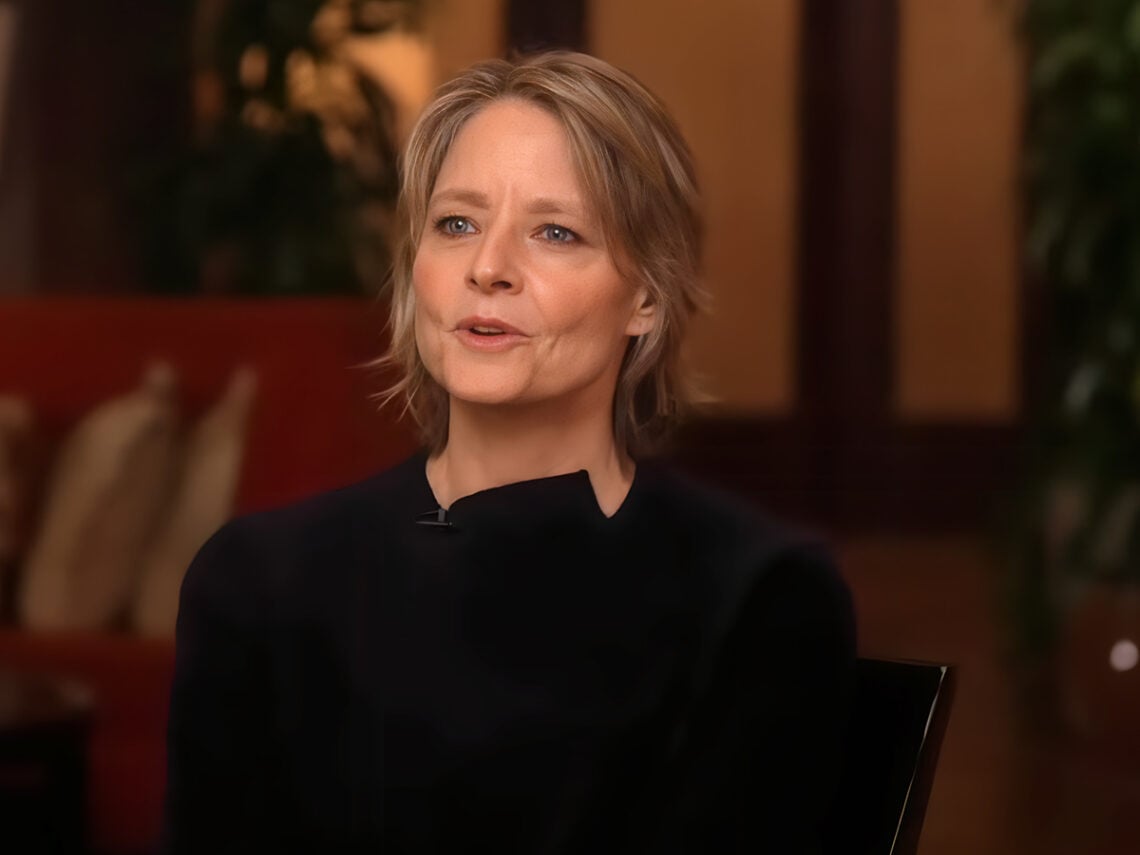
The 1930 censorship law that got an “insufficiently respectful” Jodie Foster movie banned from cinemas

Despite the fact that they have a propensity to do utterly stupid things and act like they are completely above the law, which occasionally they may well be, Britain is still quite fond of the Royal Family, with all its scandals, oversized ears and golden hats.
But not even hundreds of tea towels in your auntie’s kitchen can compare with quite how much Thailand likes its own version of the Royals, and for confirmation, just ask Jodie Foster.
Actually, don’t ask her because she’ll probably ask you how on earth you got her number, even before you can tell her how good Taxi Driver is, but rest assured that some years back she did indeed run foul of the Asian country’s worship of not just its current regime, but of a King that died more than 150 years ago.
To explain, the issues came about when Hollywood decided that it wanted to make another version of The King and I, the fourth in fact if you count a film in 1946, a musical in 1956, and a sitcom in 1972. Someone in America evidently really liked the story of King Mongkut of Siam and the schoolteacher Anna who became a schoolteacher to his (checks notes) 50 children.
The problems with Foster’s proposed 1999 version of the story, Anna and the King, began long before they had even begun filming. Originally the movie, which co-starred martial arts heartthrob Chow Yun-Fat was to be filmed in Thailand, but after the screenplay was submitted to the country’s Royal Palace it was rejected not once, but four different times, even after alterations were made to make it more ‘respectful’ to the long-gone King Mongkut, who lived between 1804 and 1868, meaning filming had to be moved to Malaysia instead.
Despite the studio execs promising that the movie “will in no way defame, demean, or offend the memory of His Majesty King Mongkut or his people”, that move cost Thailand some $23million in revenue, and things went from bad to worse from that point on. Once the romantic comedy, which included a part for a young future Harry Potter star in Tom Felton, had actually been made, Thai film censors banned all but 20 minutes of it and declared it “insufficiently respectful to the Thai monarchy”.
To be fair, they had some precedence for this: the 1956 Yul Brynner version had also been banned in the country, due to crimes as shocking as containing a scene in which the legendary King ate using chopsticks rather than a spoon. But the more modern effort apparently upset Thailand even further, with one member of the censorship board complaining, “The filmmakers have made King Mongkut look like a cowboy who rides on the back of an elephant as if he is in a cowboy movie. In one scene, Chow Yun-Fat pushes the king’s crown and his portrait down to the floor; that’s totally unacceptable.”

Marketing for the film was also roundly criticised for featuring Foster’s face more prominently than the King, and it seems one of the reasons that the Thai people were so up in arms was down to a 1930 law established in the country which prohibits anyone making a film involving the royalty of the 1800s from portraying the monarchy in a disrespectful way, punishable by up to seven years in prison.
Luckily for Foster and the rest of the crew, they never had to set foot in the country and so didn’t risk any time behind bars. In the end, the film received pretty mixed reviews on release, although it was nominated for two Oscars. It brought in over $100m at the box office, but most of that was swallowed up by a budget that swelled to more than $90m.
