


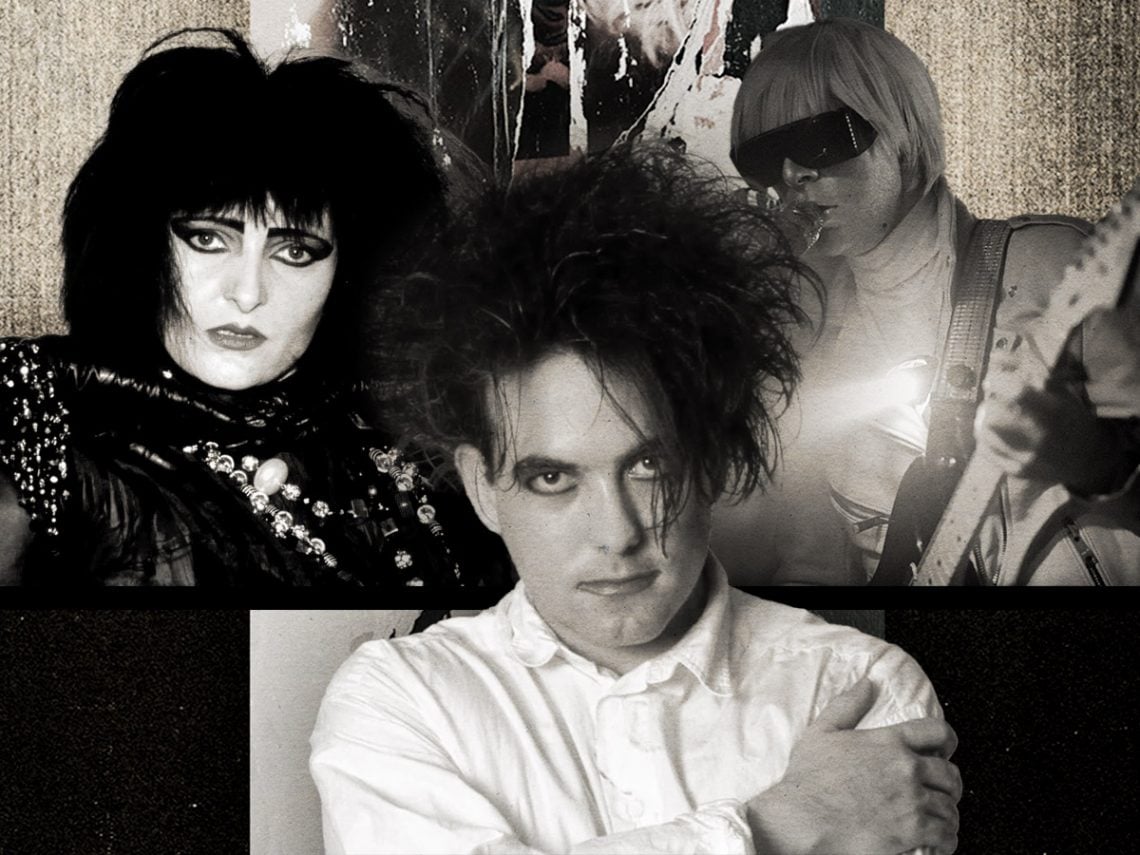
From The Cure to Drab Majesty: The 10 ultimate goth anthems

Since it first sprung up in the late 1970s, goth has been one of the most exciting yet polarising genres. Loved by those who ascribe to its aesthetic and core values, and more often than not loathed by artists who are revered as critical influences in its development, regardless of both these aspects, when it comes to the music, it is undeniable that it’s given us many classics, despite what the likes of Siouxsie Sioux and Robert Smith might say.
In the contemporary era, there are many offshoots from the goth genre, ranging from gothic metal to darkwave. Critics have noted that it was first born out of the original post-punk scene in Britain in the late 1970s, and since then, it has continued to go from strength to strength, taking on many guises and bringing many different artists under its wing.
Fusing the influences of gothic literature from authors such as Bram Stoker and Mary Shelley, it also drew on a myriad of weird and eerie themes that included B-movies, horror films, mythologies, romances and the everyday tribulations of living, as by all accounts, Britain in the 1970s was a terrible place to be. Furthermore, often there’s a subtle, tongue-in-cheek kind of humour imbued in the music, with New Yorkers Type O Negative the masters of this.
A truly fascinating genre, with much more to it than its detractors might claim, today we’ve listed ten of the ultimate goth anthems that fill the dancefloors of death discos worldwide.
The 10 ultimate goth anthems:
Bauhaus – ‘Bela Lugosi’s Dead’ (1979)
Although Siouxsie and the Banshees were the first from the post-punk scene to lay gothic foundations with their chillingly atmospheric debut album 1978’s The Scream, it was this 1979 masterpiece that really started to tie both the music and the aesthetic together. An extended, haunting piece infused with a dub rhythm, ‘Bela Lugosi’s Dead’ introduced Peter Murphy, Daniel Ash, David J and Kevin Haskins to the world in style, and rock was never to be the same again.
It’s a testament to the band that afterwards, they would continue to make an indelible impact on popular culture, with Peter Murphy even inspiring The Sandman character by Neil Gaiman, and Daniel Ash hailed as one of the most influential guitarists of the era. There are plenty of other choices for Bauhaus, but it’s hard to argue against this one here.
The Cure – ‘A Forest’ (1980)
The Cure frontman Robert Smith once told Rolling Stone: “I don’t think of the Cure as a goth band. I never have. I grew up in a world where goth hadn’t quite been invented in the way that we know and love it.” However, to many, The Cure are the ultimate goth band, and it can all be traced back to this ominous classic.
This could have quite easily have been ‘Charlotte Sometimes’, but ‘A Forest’ was the start of The Cure’s golden period, so that sealed it. Boasting one of Simon Gallup’s most iconic basslines, the song provides a sonic bridge between the minimal post-punk sound and the burgeoning goth style. With Smith singing about trying to escape the woods, it conjures images of Brothers Grimm tales and Robert Eggers’ The Witch, and is heavily imbued with a gothic sense.
Siouxsie and the Banshees – ‘Spellbound’ (1981)
A goth foot-stomper featuring one of guitar legend John McGeoch’s most significant performances, as well as one of the most atmospheric from frontwoman Siouxsie Sioux, wherein she sings about hearing laughter cracking through the walls, in this 1981 cut, you hear many of the most fundamental elements of goth laid out.
Added to the stellar work of McGeoch and Sioux, bassist Steve Severin’s pounding bassline and drummer Budgie’s tom-heavy work help to create a sound so dream-like but haunting that it leaves a profound mark on all those who hear it. Arguably the ultimate Siouxsie and the Banshees song, it confirms that the McGeoch era was their best.
Christian Death – ‘Romeo’s Distress’ (1982)
It would be criminal not to include American goth pioneers Christian Death on the list. Although the band wrote many influential pieces in their time, this track, taken from their debut album Only Theatre of Pain, is arguably their most significant.
Basically a straight-up punk song, there’s a heavy dose of atmosphere imbued within it. The band’s late frontman, Rozz Williams, shines, singing both about the KKK and six-fingered beasts, with it all topped off by one catchy chorus, and some spooky bells added in for good measure.
The Sisters of Mercy – ‘Marian’ (1985)
Again, many songs by The Sisters of Mercy vyed for a spot on the list, but the hypnotic sound of ‘Marian’ pips all else in their oeuvre, even the grooving ‘Lucretia My Reflection’.
Taken from the band’s 1985 debut album First and Last and Always, frontman Andrew Eldritch’s baritone does not get better than it does here, with him even singing the second half of the track in German, helping to augment the industrial intrigue of the song.
Singing about the titular woman calling across the water and being saved from the grave, there’s a gothic beauty here that appeals to the works of Stoker and Shelley, with Eldritch’s work made more effective by the presence of future Mission frontman Wayne Hussey’s 12-string guitar. Haunting, beautiful and mesmerising, this is goth at its finest.
Killing Joke – ‘Love Like Blood’ (1985)
Killing Joke have long been a contentious band among goths, with some believing they are a vital part of the scene and others arguing they’re not. I’d argue that they are indeed goth, even if they’ve managed to draw on a host of genres across their long and glittering careers. If the title of the song wasn’t enough to make you think that the English quartet were deserving of a place on the list, then this industrial-infused music will.
All the band shine here. Frontman Jaz Coleman’s vocals are incredibly rousing, Paul Raven’s heavy bass and drummer Paul Ferguson’s rhythm section is one of the most effective we’ve ever heard, and it’s garnished with one of Geordie Walker’s most coveted guitar lines, drenched in chorus. There’s a real chug about this song, and you can understand where the likes of Nine Inch Nails and Soundgarden took some of their cues.
The Mission – ‘Wasteland’ (1986)
After Wayne Hussey left The Sisters of Mercy, he formed The Mission, a real cult band who are still going today. The Mission did a lot for the development of the genre, even if they often get overlooked in favour of the likes of Bauhaus, Siouxsie and the Banshees, The Cure and The Sisters of Mercy.
Over their career, they would build on the more romantic, affected form of goth, which culminated in the ballad ‘Butterfly on a Wheel’, but long before that, they were producing more raw works that ranged from ‘Serpents Kiss’ to ‘Severina’. However, the pinnacle of their early period is ‘Wasteland’, the opener of their debut album God’s Own Medicine.
The track first cuts through the speakers with Wayne Hussey saying in his deep, gloomy drawl: “I still believe in God and God no longer believes in me”, which is quite possibly the most gothic thing ever. Then what ensues is one heady goth masterwork, with the introduction the most powerful on the list, driven by Hussey’s trademark 12-string work, with the tension then popping, and rumbling rhythm emerging, pulled along by Craig Adams’ criminally underrated bassline. There’s also an anthemic chorus, which is somewhat uncommon for the genre.
Swans – ‘Killing for Company’ (1995)
Although Michael Gira’s outfit Swans are often hailed as being the champions of post-rock and industrial, they are much more than that, and at points, they’ve been more gothic and more affecting than anyone else on the list.
Taken from 1995’s The Great Annihilator, ‘Killing for Company’ kicks off with a customarily industrial rumble before it descends into a floating rhythm coloured by Gira’s deep, ghost-like vocals. Velvet skin, hunger in the desert, and the line “every soul is interwoven”, certify this as a goth classic. Check out Gira’s booming vocals at the end; they’re straight out of Dracula’s playbook.
Type O Negative – ‘Haunted’ (1996)
A massively overlooked track, ‘Haunted’ from 1996’s October Rust is about as goth as you’re likely to get. Fittingly Haunting piano, sludgy guitar work and Peter Steele’s best vocal performance all comprise the piece, making it the perfect way to conclude the band’s masterpiece.
It’s punishing yet beautiful, everything that goth should be, and the gregorian chant and reverb-heavy whispers that Steele delivers as he proclaims, “I hate the morning”, are profound, sending the shivers down your spine. We miss you a lot Peter Steele.
Drab Majesty – ‘Behind the Wall’ (2017)
Los Angeles duo Drab Majesty are the 21st century’s masters of goth, fusing the form of rock with dream pop, shoegaze and darkwave. Their three studio albums are brimming with goth heavy-hitters, but the closer of their sophomore effort, The Demonstration, is the best.
Driven by a programmed drum beat, and boasting one of Andrew Clinco’s best-arpeggiated guitar lines, there’s melody and more visceral moments here, as well as lines about the afterlife and candelabra burning to send Clinco’s love to someone. The end is also a real treat, complete with the most goth-sounding synth line we’ve heard this century.
