


The 10 most underrated horror movies of the 21st century

Well-recognised as one of the most popular genres of all time, horror movies have long been graced with an adoring fan base who have praised such classics as John Carpenter’s Halloween, William Friedkin’s The Exorcist and Ridley Scott’s Alien for generations. But, such fans rarely stop at merely the most popular genre movies, with true horror lovers diving deep into the bargain bin to find the diamond in the filth.
Being a relatively cheap and easily accessible genre, the horror genre has always attracted independent filmmakers looking for a way into the industry with an innovative concept, leading to countless releases over the decades that have slipped under the radar of audiences. Whilst in the past, the likes of Andrzej Żuławski’s Possession, Peter Jackson’s Bad Taste and Brian Yuzna’s Society each lacked the necessary praise, even more horror flicks pass by unnoticed in contemporary cinema.
Most big-budget horror movies get pushed in the faces of the consumer, meaning the majority of underrated flicks tend to be the ones that have been independently funded. Such certainly goes for such honourable mentions as Ti West’s House of the Devil, Kevin Smith’s Red State, Lucky McKee’s May and Kevin Kölsch Dennis Widmyer’s Starry Eyes, with each of these movies offering something utterly distinctive to the contemporary genre.
Take a look at our full list of underrated horror movies below, where we discuss films from the likes of James Wan, Takashi Miike and Kiyoshi Kurosawa.
The top 10 most underrated horror movies:
10. All My Friends Hate Me (Andrew Gaynord, 2021)
Truthfully, Andrew Gaynord’s 2021 film All My Friends Hate Me is more of a comedy than a traditional horror flick, with the movie telling the story of Pete (Tom Stourton), a man who is equal parts nervous and excited about reuniting with his old university mates for a birthday weekend. There are no monsters, vampires, ghosts or bogeymen, instead, All My Friends Hate Me plays on the bubbling tension of social anxiety to ingenious effect.
Few films better tap into the discomfort of social awkwardness, well articulating one’s anxious internal monologue. ‘Have I changed since my youth?’, ‘Have I become less fun?’, ‘Do all my friends hate me?’. It’s a cracker.
9. Triangle (Christopher Smith, 2009)
There is indeed a strong cohort of horror fans who already know and love Christopher Smith’s Triangle, so this entry is for anyone who hasn’t already seen the overlooked sci-fi gem. Centred around Albert Camus’ book The Myth of Sisyphus, though not based on the novel, Smith’s film tells the story of a group of friends who set off on a sailing trip only to hit choppy waters and board a cruise liner with apparently no guests whatsoever.
An eerie sci-fi, fantasy-horror, Smith’s film is a carefully crafted thrill ride filled with genuinely spooky moments and impressive attention to detail that will keep you thinking long after the chaos has come to a close. Shout-out to Christian Henson for the original score too.
8. In Fabric (Peter Strickland, 2018)
Whilst Peter Strickland’s surreal 2018 horror movie In Fabric was praised by critics, we don’t think the film received enough love from fans of the genre. An entirely novel film in narrative and form, the story follows a cursed red dress which is passed from one person to the next during the busy winter season of a department store, with each of the garment’s victims falling for its ethereal allure.
Weighed a little heavier on the comedy side, thanks to several hilarious moments featuring the likes of Julian Barratt and Steve Oram, the film remains an utterly original piece of experimental horror that lodges itself in the brain of each and every person lucky enough to view it.
7. Malignant (James Wan, 2021)
We hate to sound like ‘one of those guys’, but we’re not entirely sure that people truly understood what James Wan was going for when he made Malignant in 2021. Penned by Akela Cooper, the same mind behind 2023’s M3gan, Malignant was supposed to be appreciated on the same level, playing off the same exploitation b-movie horror flicks of the late 20th century, and shouldn’t be taken at face value.
When seen as something of a schlocky horror, Malignant is a lot of fun, telling the story of Madison (Annabelle Wallis), a woman paralysed by visions of gruesome murders who discovers that her creepy imagination is far closer to the truth that she realises.
6. Lake Mungo (Joel Anderson, 2008)
Horror mockumentaries are no easy feat to pull off, with only a small handful of films having been able to create a competent final product. Aside from Eduardo Sánchez and Daniel Myrick’s Blair Witch Project, Joel Anderson’s 2008 movie Lake Mungo is one of the very best of its kind, following the tale of a young girl who drowns in a lake and sets off a chain reaction of strange events in Ararat, Australia.
Creating a palpable sense of dread throughout, Anderson’s film is crafted using ‘found footage’ sequences and talking head interviews, steadily building an eerie picture that builds to a thrilling climax.
5. [REC]² (Paco Plaza, Jaume Balagueró, 2008)
Everyone knows the first [REC] movie is a classic of contemporary horror, we even think it’s the best genre flick of the modern century, so why doesn’t its sequel, which is helmed by the very same filmmakers, get any love at all? Set immediately after the terrifying events of the first film, the follow-up starts exactly where the last one left off, tailing a medical officer and team of gun-wielding professionals as they venture inside the quarantine apartment block.
Just as tense as the first film whilst toying with the filmmaking craft with far more playfulness, if you’re a lover of Rec but never bothered to see the sequel, we’d highly recommend giving the follow-up a go.
4. The Borderlands (Elliot Goldner, 2013)
Elliot Goldner’s The Borderlands is the very definition of an underrated horror film, with the low-budget British movie possessing a rather generic plot on the surface. It all follows a team of Vatican investigators who head to a remote church in the Devon countryside to discover whether the claims of a supernatural disturbance are as true as the claims suggest. The result is a deeply unnerving and oddly authentic horror journey.
Led by a barebones cast and simple plot, Goldner makes the most of what he’s got, steadily building tension before releasing it in a final sequence that omits sweat-inducing paranoia and boasts a really neat use of practical effects.
3. Visitor Q (Takashi Miike, 2001)
The Japanese filmmaker Takashi Miike is known for creating some of the most sinister and idiosyncratic movies of modern cinema, helming Audition in 1999 before releasing both Ichi the Killer and Visitor Q in 2001. A curious horror film spiked with moments of dark comedy, the movie follows a troubled family whose life is disturbed by a weird stranger who confuses the delicate balance of their peculiar nature.
Entirely insane, calling Visitor Q a horror film feels like a disservice, it certainly doesn’t operate in the realms of the mainstream. Surreal, sickening and utterly bonkers, Visitor Q might not be an easy watch, but it is a strangely rewarding one.
2. We’re All Going to the World’s Fair (Jane Schoenbrun, 2021)
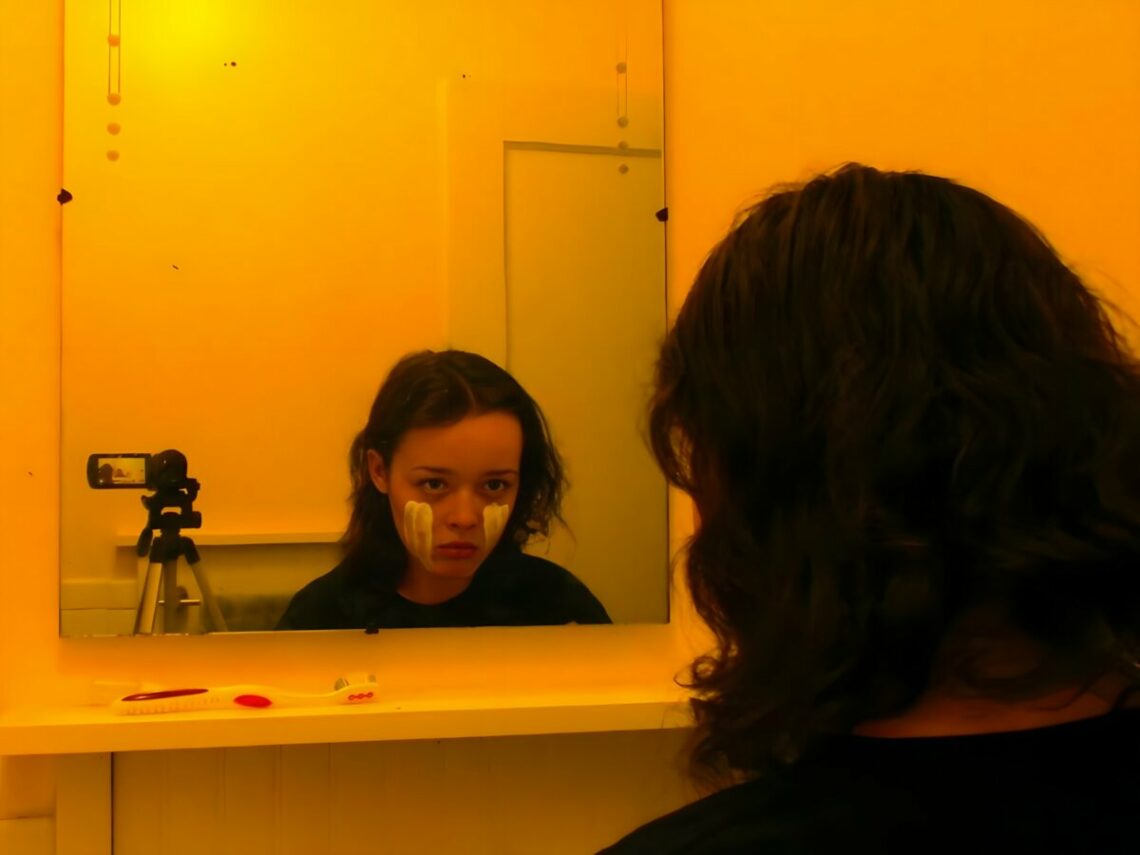
Making a movie about internet culture that doesn’t make you squirm in your seat and roll your eyes out of cringeworthy embarrassment is a tricky enough task, yet Jane Schoenbrun’s 2021 psychological horror flick We’re All Going to the World’s Fair may just be one of the greatest films ever made about the internet age. Inspired by the ‘Creepypasta’ videos that thrived in the early years of the internet, the low-budget film follows a young girl who takes part in a strange role-playing game that may or may not be altering her mental state.
Eerie and deeply unsettling, Schoebrun’s film is the perfect horror for the age of the internet, radiating the solitude, fear and anxiety that the platform can bring, forcing many to scour the web for meaning.
1. Pulse (Kiyoshi Kurosawa, 2001)
Speaking of films that perfectly sum up the digital age, our number one pick is the 2001 Kiyoshi Kurosawa movie Pulse and not the remake of the same name from 2006. From the same director as the disturbing psychological masterpiece Cure, Kurosawa’s Pulse is an equally unsettling journey that takes the viewer to the heart of the uncanny valley in its tale of an ethereal spirit who is trying to invade the world of the living through the internet.
It’s a novel concept brought to life thanks to the remarkable vision of the director, who frames the story as if it’s a paranormal tale that takes place in another dimension entirely. Spirits move with an eerie shuffle that almost appears human, and characters react in a way that is appropriate for the moment, creating a truly terrifying piece of cinema that will lodge itself in your brain long after you’ve seen it.
