


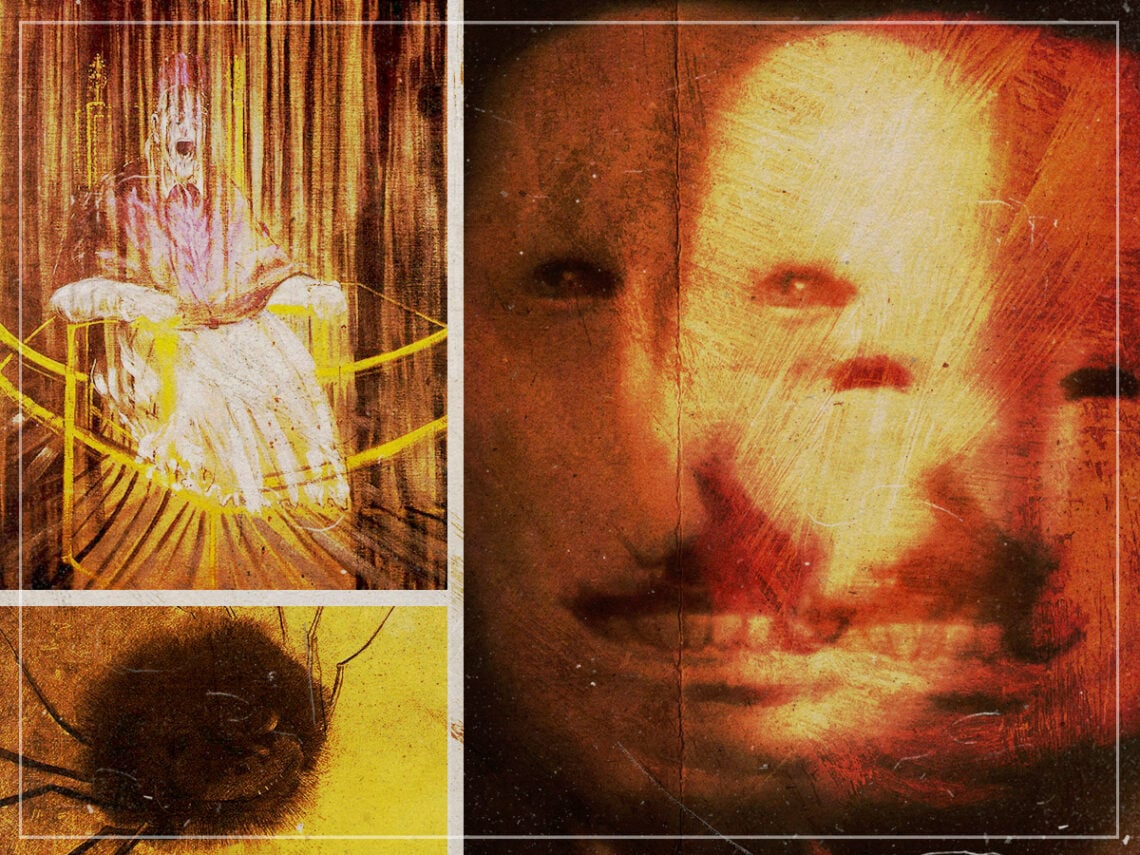
The 10 most horrifying artworks in history

Art is intrinsically beautiful, and its ability to touch people without a word said will always make it a potent cultural force, able to inspire and illuminate. But equally, art has always been a deeply introspective pursuit, and the results can often veer as far away from beautiful as one could imagine. A lot of this is wrapped up in the mythology of the artists themselves, who are too often considered tortured geniuses plumbing the depths of their despair and committing it to canvas.
The reality is that most of the darkest paintings ever completed look outward – not in. Throughout periods of massive upheaval and violence, art has always mirrored the world in which it was created. From the Iraq War to the current environmental crisis, art is a steadfast source of our world’s standing at the time it was conceived.
Even when artists look for inspiration in Biblical texts and folktales, that in itself reveals something of the inner workings of a specific time. A period’s moral attitudes and deepest fears can nearly always be found in the paintings that came out of it. As this list will highlight, what is considered horrifying changes as the years do, starting with mythical visions of Hell and ending with the modern horror of war.
Ranging from the existential to the mystical, all ten paintings below touch on universal fears. While monsters might be momentarily scary, these artworks aren’t scary because the creatures in them are – they’re horrifying because humans can be. Unspeakable violence, cruelty and fear touch all of these paintings, imbuing them with darkness only the human race is capable of.
The 10 most horrifying artworks:
10. The Smiling Spider – Odilon Redon
Throughout his career, Odilon Rendon had a fascination with fantastical images. In lighter versions of his work, this manifested in technicolour visions of a flying Pegasus or fields of flowers laden with idyllic butterflies. In the darker, more introspective series – particularly his charcoal sketches and lithographs, he drew weirdly haunting creatures, like the spider that smiles as it stretches its freakish, sticky legs.
Redon called his menacing creations “black things”, a fitting label for his nightmarish work. Eyes are often featured, looking like strange orbs in a sea of darkness. “One must respect black,” he once instructed, “because] nothing prostitutes it”. He went it to say the pigment wasn’t pleasing to the eye, nor did it awaken sensuality. “It is the agent of the mind far more than the most beautiful colour to the palette or prism.” That sentiment taps into what’s most horrifying about The Smiling Spider. It plays on pre-existing mental fears, somehow making spiders more terrifying in the process.
9. The Doré Illustrations for Dante’s Divine Comedy: 136 Plates – Gustave Doré
Gustave Doré didn’t only contribute to the art world with his illustrations but also literature. He was responsible for bringing some of the most haunting texts in human history to life, as he did when he drew artwork for Divine Comedy. The narrative poem, written by Dante Alighieri, follows a man as he travels the three realms of the dead, visiting souls in Paradise, Purgatory and Hell.
Doré created horrific imagery – emaciated bodies rose from open graves, cloaked figures loom, and men are beheaded. All the images are undercut with a Hellish fear, swirling religious symbolism and the trademark shading of Doré. His images seem like genuine snapshots of Hell’s seven circles; his drawings were so detailed they captured the essence of the underworld. Even his angels loom menacingly, and his illustrations remain a haunting display of Alighieri’s spectres.
8. Study after Velázquez’s Portrait of Pope Innocent X – Francis Bacon
In 1953, Francis Bacon completed Study after Velázquez’s Portrait of Pope Innocent X, the first in a series of 50 of Bacon’s reimaginings of Portrait of Pope Innocent X, a painting done by Diego Velázquez in 1650. The original portrait was regal, but Bacon’s inversion of it was horrifying, completely altering the palette and trapping the pope in an eternal scream, seemingly locked in beams of light resembling the electric chair.
Through a modern lens and with the knowledge of alleged sexual crimes, the implicit meanings of the terrifying version of the pope seem obvious. In his lifetime, Bacon was often asked why he revisited the painting, some 50 times over, and he argued it wasn’t for any other reason than to use a different colour than normal, saying it was “an excuse to use these colours, and you can’t give ordinary clothes that purple colour without getting into a sort of false fauve manner”.
7. Knight, Death and the Devil – Albrecht Dürer
One of three master prints by Albrecht Dürer, Knight, Death and the Devil, was a huge engraving infused with haunting symbolism that has been debated for years. Accompanied by a devilish figure and a goat, a knight rides a horse, which towers over even the beasts beside the knight. Aside from the composition and its monstrous creatures, the painting is horrifying because the Nazis co-opted it.
The horse and its rider were seen as icons of bravery in the face of evil, and in 1993, the mayor of Nuremberg presented Hitler with the original print, comparing him to a “knight without fear or blame, who as the Führer of the new German Reich, once again carried and multiplied the fame of the old imperial city of Nuremberg to the whole world”. That wilful misuse of Dürer’s imagery is made only more horrifying by the theory the artist himself was Jewish.
6. Medusa – Peter Paul Rubens
In Greek mythology, the world was unspeakably cruel to Medusa. She was raped in a sacred shrine and condemned to have her hair turned into snakes. If anyone looked at her, she would turn them to stone, which led to her beheading by Perseus, who used her severed head as a weapon. She is an enduring symbol of strength and female power. In Rubens’ time, she was thought to be a lucky symbol who could ward off evil.
But what makes Medusa so horrifying is how powerless she is. Vipers writhe around her severed head as she lies next to spiders and scorpions. Aside from the obvious horror of her wound, it’s the gape of her mouth in the face of yet more male cruelty that makes it haunting. Her eyes remain open, frozen in fear as they blink for the last time. Greek myths are violent by nature, but Rubens somehow elevates the horror even more.
5. The Nightmare – Henry Fuseli
Painted during the Enlightenment’s ‘Age of Reason’, Henry Fuseli’s The Nightmare was shockingly unique. It lacked the moral judgement typical of paintings at the time, instead depicting a scene with no real philosophical meaning. Fuseli instead looked to create something completely fictitious, essentially predating any concrete psychological theories on dreams and the subconscious.
Typical of painting at the time, the woman in white is the virtuous figure, the creatures appearing to her in her sleep painted in deep blacks and greens. The figure that sat on her chest was drawn from folklore tales of incubus’, who would lie on people in their sleep. This figure glares out at viewers, seemingly not concerned with haunting the woman but instead focusing his yellowed eyes on us – a haunting confrontation with what is essentially a sleep paralysis demon.
4. Hiroshima Smile 1 – Ken Currie
While most of the art world’s horrifying images come from the mythical, apocalyptic visions of the old masters, Ken Currie is one of the few contemporary artists capable of instilling the same sense of terror. While the art of old relied on Biblical horror and folk tales, Currie turned to real-world events to paint the consequences of war in grotesque detail.
2015’s Hiroshima Smile 1 is a devastating look at the injured face of a victim of the atomic bomb. With a mouth torn almost like paper and skin so pale the victim looks ghost-like, Currie’s subject sits almost between life and death, which effortlessly highlights not only the horror of the death toll but the continued devastation of nuclear war on survivors.
3. The Anguished Man – artist unknown
Nobody knows the origin of The Anguished Man or even if the supposed origin story is real. It’s been dubbed the most haunted painting in the world; an inherited piece said to have unleashed ghostly activity and nightmares in its current owner, Sean Robinson. He inherited the painting from his grandmother and eventually learned the artist had committed suicide soon after completing it, allegedly mixing the orange paint with his own blood.
Fakes started popping up for sale online, and Robinson was forced to make a statement explaining the severity of its haunting powers. “I can guarantee you that the original haunted painting is locked away in a secure location, and I have no intentions of selling it,” he said. “That could be dangerous, and it would not be wise for anyone to lay their hands on the painting [because] really strange things happen for people who are in the same room – or even in the same house with the painting.”
2. Saturn Devouring His Son – Francisco Goya
Undoubtedly one of Francisco Goya’s most disturbing works, Saturn Devouring His Son belongs to the ‘Black Painting’ series, so called because they were created at the end of Goya’s life, as he battled with apathy and paranoia about the true nature of mankind. In 1819, he’d bought a farmhouse to spend his later years in, which he initially covered in uplifting images. As his health began to worsen, he started to paint over them with terrifying visions that spoke to his own swirling fears of death. As his depression deepened and his paranoia became more acute, his paintings became more frenzied.
Saturn Devouring His Son tells the story of Saturn from Roman mythology, who ate his newborns after it was prophesied one of his children would overthrow him. Red flesh dangles from his mouth, his eyes piercing and wide, seemingly searching for the next imminent threat. Goya confronted his own mortality by tapping into fears of youth winning over the old, no matter how desperate they are to slow the march of time. Goya never discussed the painting, not even naming it in his hurry to scrawl it on his walls. It remains a haunting image, not only for its violence – but knowing how informed it was by Goya’s own decline.
1. The Scream – Edward Munch
The Scream is one of the most iconic and haunting pieces in all of art history, likely one of its most recreated, too. A paint-induced panic attack, the piece touches on universal themes of anxiety and dread. Colours converge but never blend seamlessly, giving the background an eery uncanniness that almost gives the sea a sense of motion. Munch’s use of colour adds to this visceral feeling of motion, the sky almost ablaze in a deep red, the screaming face sallow and sickly cream. Both elements were informed by a bizarre experience Mulch wrote about in his diaries.
In an 1892 entry, he wrote: “One evening I was walking along a path, the city was on one side and the fjord below. I felt tired and ill. I stopped and looked out over the fjord [water] – the sun was setting, and the clouds turning blood red”. He was paralysed by a feeling something was wrong.
“I sensed a scream passing through nature; it seemed to me that I heard the scream,” he recalled. “I painted this picture, painted the clouds as actual blood. The colour shrieked. This became The Scream.”
His expressionistic creation wasn’t horrifying in itself – it lacks the gore and Biblical undertones of the previous entries – yet it chimes with something we have all felt. That feeling something, somewhere, is off – and you can’t help by give in to your own horror.
