


The 10 most beautiful lyrics from Cocteau Twins

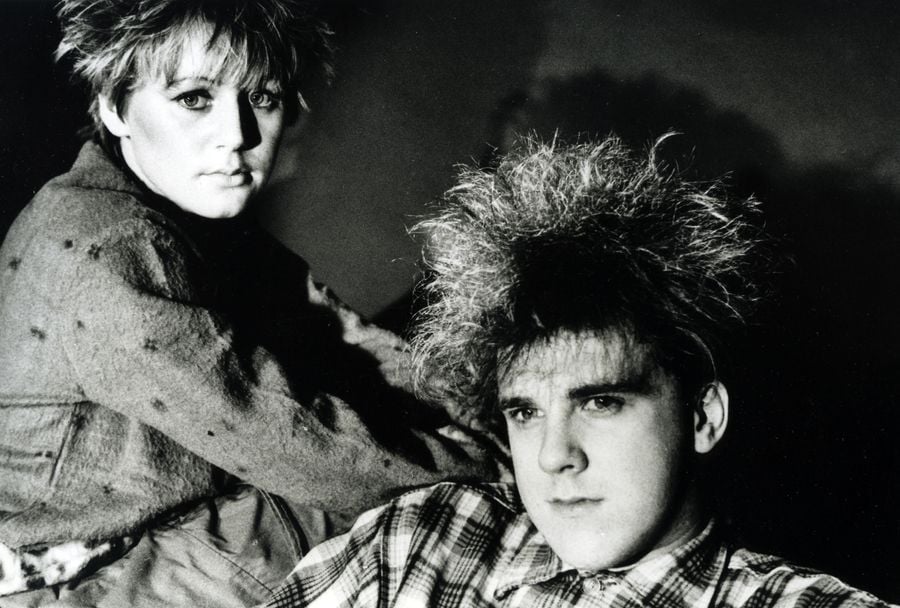
Scottish dream-pop band Cocteau Twins began making music in 1979, with Robin Guthrie on guitar and bass and Will Heggie on bass. However, it wasn’t until the pair met vocalist Elizabeth Fraser in 1981 and Simon Raymonde replaced Heggie in 1983 that the band as we know it came to be.
Known for their pioneering dream-like sounds, achieved by dousing the vocals and instruments in numerous effects, Cocteau Twins were active until 1997, leaving behind a legacy of nine albums and various compilation albums, EPs, and singles.
Their most successful album was Heaven or Las Vegas, which reached number seven in the UK Album Charts upon its release in 1990. The album thematically explored birth – Guthrie and Fraser’s child was born a year before its release – but also death, with Raymonde writing ‘Frou-Frou Foxes in Midsummer Fires’ the day after his father’s passing.
Despite the thematic intentions behind the band’s music, listeners often complain that Fraser’s singing is unintelligible – but this is mainly done purposefully. The term ‘glossolalia’ has become associated with Fraser’s lyrics. Referring to “the phenomenon of speaking in an unknown language, especially in religious worship,” the term is often associated with Modernist literature due to its use by the likes of James Joyce and Virginia Woolf.
Yet the use of glossolalia can also be identified in Fraser’s singing, who would often use “words that I’ve taken […] from a language that I don’t understand, and liking them and maybe making new words as well out of them”. Detailing further, she explained: “I mean I’ve got reams and reams of words that I don’t have a clue what they mean, but I wanted them because, I knew I’d be able to express myself without giving anything away”.
Despite the band’s lyrics being labelled as ‘gibberish’, further investigation can often prove otherwise (unless we’re talking about many of the tracks on Treasure). Fraser had a natural talent for combining beautiful phrases and images to create perfect lyrical accompaniments to the band’s sound, using her voice as an additional instrument to add even greater emotional depth.
The 10 most beautiful lyrics from Cocteau Twins:
10. ‘Blind Dumb Deaf’
“My mouthing at you/ My tongue the stake/ I should welt should I hold you/ I should gash should I kiss you”.
Appearing on their successful debut album Garlands, ‘Blind Deaf Dumb’ features a repetitive, metronomic riff that whirrs in the background as Fraser’s voice creates abstract sounds that melt into the moody soundscape.
Evoking gruesome romantic imagery, these lyrics are hauntingly beautiful – a perfect fit for the dark atmosphere of the track.
9. ‘Wolf in the Breast’
“Laughing on our bed/ I pretended us newlywed/ Especially when/ Our rough angel unleashed that head/ I feel perpetual“.
‘Wolf in the Breast’ appears on the band’s most successful album of their career – Heaven or Las Vegas. The album contains some of the band’s best songs, such as ‘Pitch the Baby’, ‘Cherry-coloured Funk’ and ‘Heaven or Las Vegas’.
Although ‘Wolf in the Breast’ isn’t the album’s greatest track, it jangles with the classic Cocteau Twins sound whilst giving Fraser’s lyrics space to be heard coherently. The repetition of “I feel perpetual” becomes the song’s beautiful mantra – both calming and hopeful.
8. ‘Evangeline’
“Sorrow for letting someone else define you/ Know who you are at every age/ What impression am I making?/ I see me as other people see me/ There is no going back/ I can’t stop feeling now/ I am not the same, I’m growing up again”
“I had to fantasise just to survive“.
‘Evangeline’ was featured on the band’s seventh album Four Calendar-Cafe, which marked a shift in Fraser’s vocal style that made her lyrics slightly more intelligible. Musically, the album fully dives into their signature dream pop style, with shimmering guitars and hazy beats.
Fraser’s angelic vocals sing of self-identity as she apologises to herself for letting other people define her. The final line is beautifully tender and melancholic, which matches the slow and misty soundscape the band create.
7. ‘When Mama Was Moth’
“The sunburst and the snowblind/ A chill of fluid right down my brook/ When mama was moth/ I took bulb form/ Body electric/ Writhe in vain”.
Fraser once referred to her vocals as “transcendent sounds. It’s all sound all the way through”. Her lyrics don’t often make perfect sense. Instead, we are left with words and sounds to guide us emotionally. ‘When Mama Was Moth’ achieves this brilliantly.
Taken from their 1983 album Head Over Heels, the slow thumping drum that opens the track instantly hypnotises, pulling the listener in further with ethereal sounds layered over a fuzzy guitar. Fraser’s ambiguous lyrics are the ideal accompaniment to the mysterious soundscape.
6. ‘Garlands’
“Garlands evergreen/ Forget-me-not wreaths/ Chaplets see me drugged/ I could die in the rosary/ I could die in your rosary”.
‘Garlands’, from the album of the same name, is an excellent example of Fraser using natural and religious symbols to convey emotions. A standout bassline carries the song, as a wailing guitar creates an undercurrent of slight panic and melodrama.
The repetition of “die in your rosary” in Fraser’s unique tongue is the song’s centrepiece, creating a darkly gothic religious image. For a short period, Cocteau Twins planned on having two singers, both Fraser and her friend Carol. Although this didn’t work out, Fraser wrote “Dear Carol, We shall both die in your rosary, Elizabeth” on the inside sleeve of Garlands.
5. ‘Half-Gifts’
“Intimacy is when we’re in the same place/ At the same time/ Dealing honestly with how we feel/ And who we really are/ That’s what grownups do/ That is mature thinking/ Well I’m still a junkie for it”
“I am still connected to nature and to my dreams for myself”.
From Milk and Kisses, ‘Half-Gifts’ showcases Fraser’s voice sounding even more celestial than usual, if that’s even possible. With gentle instrumentation almost evoking the sound of a merry-go-round, the track’s sentimental feel laments the breakdown of a relationship.
‘Half-Gifts’ is one of Fraser’s most accomplished lyrical achievements. She emphasises the importance of caring for herself, stating: “I still have a world of me-ness to fulfil/ I still have a life, and it’s a rich one even with mourning/ Even with grief and sadness”.
4. ‘For Phoebe Still a Baby’
“Little Phoebe/ Who I’ve never seen/ Had you asked, I’d be right out/ And maybe/ In a good time/ Phoebe, then I’ll tuck you in“.
Sung from the perspective of a mother anticipating the arrival of her child, it makes sense that Fraser gave birth to her daughter Lucy Belle just one year later.
The track appears on Blue Bell Knoll, and although Fraser’s vocals aren’t that easy to decipher, once you realise what she is singing about, the song becomes even more enchanting. Bursting with love for her unborn “angel”, ‘For Phoebe Still a Baby’ is a gorgeous lullaby.
3. ‘Pitch the Baby’
“I’m so happy to care for you/ I only want to love you and/ Slip me home as we seal us in”.
The band’s most accomplished work, Heaven or Las Vegas, is credited as one of the most influential dream pop albums of all time. One of its standout tracks, ‘Pitch the Baby’, seems to move in hazy, slow-motion, brought to life by a subtle yet poignant bassline.
Fraser’s voice is as smooth as ever as she declares her joy and love for her newborn child. Repeating the lines over and over, the meaning of each line flows through the song, melding with the instrumentation to create one joyous expression of emotion.
2. ‘Summerhead’
“Safe at last/ Seeing my thoughts in order/ Safe, fallen down this way/ I will be just what I am”.
According to the Cocteau Twins’ official glossary, a ‘summerhead’ is Anglo-Indian slang for “a parasol or sun umbrella”. Picking out words to create a feeling, the song’s title seems to reflect the optimistic, summery atmosphere of the music whilst also mirroring the lyrical theme of shelter.
Like much of Fraser’s lyrics, ‘Summerhead’ reminds the listener to be gentle with themselves, and a dreamy yet defiant guitar riff hammers this home. Ethereal and comforting, the song is a perfect blend of bittersweetness.
1. ‘Pearly Dewdrops’ Drops’
“Taciturn to pillow/ To try to turn to…/ First, though, I must die/ To rip asunder what he saw”.
Cocteau Twins’ highest charting single was ‘Pearly Dewdrops Drops,’ which reached number 29 on the UK Singles Chart and number one on the UK Indie Chart. The track’s nostalgic feel is echoed in the slow beating of Guthrie’s drum machine as Fraser’s incoherent vocals flutter above muted guitars.
However, the lyrics reveal a darker nature to the song, although their ambiguous nature leaves them open to interpretation. The image of “pearly dewdrops’ drops” could be a romantic way of describing her tears, yet this soft-sounding description is contrasted with the elusive idea that Fraser must “rip asunder what he saw”.
