

The Cure classic Robert Smith wrote feeling “utterly morose”
Read More


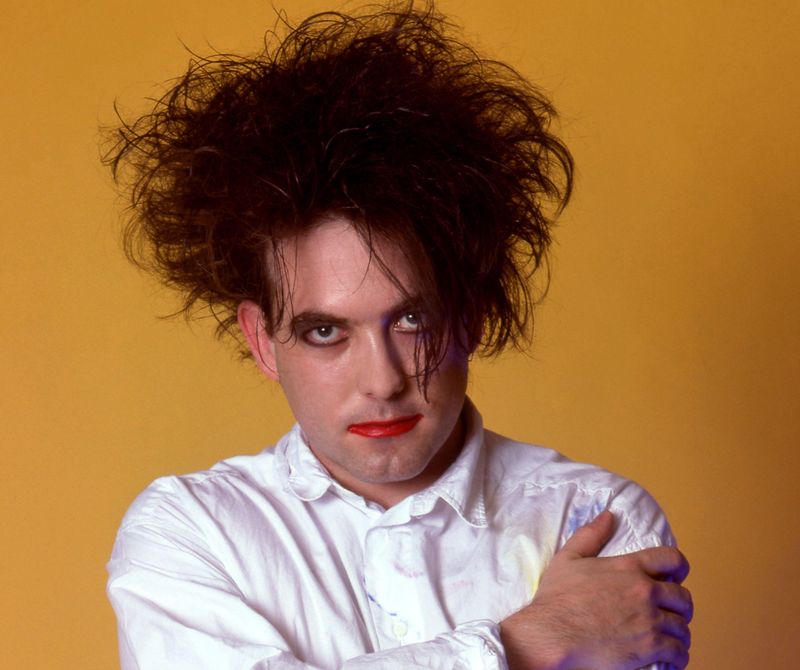
Mainly due to their aesthetic, The Cure have been labelled as goth throughout their career. However, frontman Robert Smith believes it’s an inaccurate judgement of the group and one that’s based entirely on their look rather than their sound.
The goth movement began making waves in the early 1980s, and before that moment, no name was attached to people who looked like Smith. The Cure had existed for several years before the subculture truly got underway, and Smith is seen as the forefather to the scene. However, the frontman believes his association with goth culture has been exaggerated beyond reality.
The term gothic rock derived from the late 1960s when it was first used in an American publication about The Doors. It grew in prominence over the next few years, but there was no scene or movement, and it was merely used to describe the darker side of rock music.
It wasn’t until the Batcave opened in Soho in 1982 that there was finally a hub for goths to meet up, and it became the scene’s epicentre. While Smith would regularly go to the venue, he feels it is unfair to lump The Cure in with the clan of bands who were born out of the goth takeover of the post-punk revolution.
Speaking to Rolling Stone, Smith explained: “I don’t think of the Cure as a goth band. I never have. I grew up in a world where goth hadn’t quite been invented in the way that we know and love it. And I was part of this subculture in as much as I went to the Batcave with [Steve] Severin”.
The singer added: “The Banshees were pretty much a goth band for a while. But even they really weren’t. But real goth bands were around — the ones that were part of that initial movement. They were goth bands, and I wasn’t. I was doing ‘Let’s Go to Bed’ when goth started. So we’d done Pornography and ‘Hanging Garden,’ and there’s a look and a kind of a vibe and an atmosphere, yeah. But was I responsible for goth? No. And if I was, I’d be very happy. But I wasn’t.”
While Smith might not be majorly responsible for goth, he concedes they played some role, albeit incidentally. He continued: “Inevitably, I think it had some kind of influence. ‘Cold’ from Pornography, I think, sounds gothic, in as much as you can say it’s got that particular sound. I’m aware we played a part in it, and I think that we’re part of the history of goth, without question, but like a footnote.”
He concluded: “The Cure just aren’t a goth band. When people say it to me, you’re goth, I say you either have never heard us play or you have no idea what goth is. One of those two has to be true because we’re not a goth band.”
While The Cure have some goth material, those songs only partially tells the story of the band’s identity, and Smith finds it a dismissive term which writes off the full spectrum of their talent.
