


The 10 best songs used in Taika Waititi movies

New Zealand-born filmmaker Taika Waititi has earned critical acclaim throughout his versatile career, blending comedy, drama and historical events to curate one of the most unique styles in Hollywood. The director’s versatile work reaches a distinct level of eccentricity and auteurship with every release, aligning him as one of contemporary cinema’s most influential creators.
Waititi’s movies showcase colour, dynamic characterisation, expressive plot concepts and complementary soundtracks that accentuate the former components. The director displays an understanding of how music can tell a story, communicate a character’s emotions, and create a visceral experience for the audience.
Whether it’s directing Marvel’s latest comic book adaptation inspired by Norse mythology, experimenting with a documentary style or charting coming-of-age experiences, Waititi knows how to light a climatic moment ablaze or settle a dramatic one through a good song choice. He outlines his options in correspondence with the plot foundation, picking out keywords matching tones to select the appropriate song or artist at the right moment.
Including mighty rock and roll moments, sentimental instrumentals and tributes to legendary music heroes, here are the top ten best songs used in Waititi’s movies.
The 10 best songs in Taika Waititi movies:
‘Golden Ticket’/’Pure Imagination’ – Walter Scharf (Thor: Ragnorak, 2017)
According to Entertainment Weekly, Waititi envisioned Thor: Ragnarok as “a cool bold, colourful cosmic adventure”, something he wished to embody through legendary rock band Queen’s work. However, Mark Mothersbaugh was hired to score the film, having been inspired by a video essay claiming Marvel movies were forgettable, hoping his score would change this idea.
Mothersbaugh carried the director’s vision of something colourful, adventurous and cosmic by covering ‘Golden Ticket’/’Pure Imagination’, Walter Scharf’s theme tune for Willy Wonka and the Chocolate Factory. The instrumental cover appears in a scene where Thor is captured by Valkyrie’s scrappers and brought to the planet Sakaar to meet the Grandmaster. The God, strapped into a chair, travels through a star-studded tunnel while the tune heightens the sensory experience.
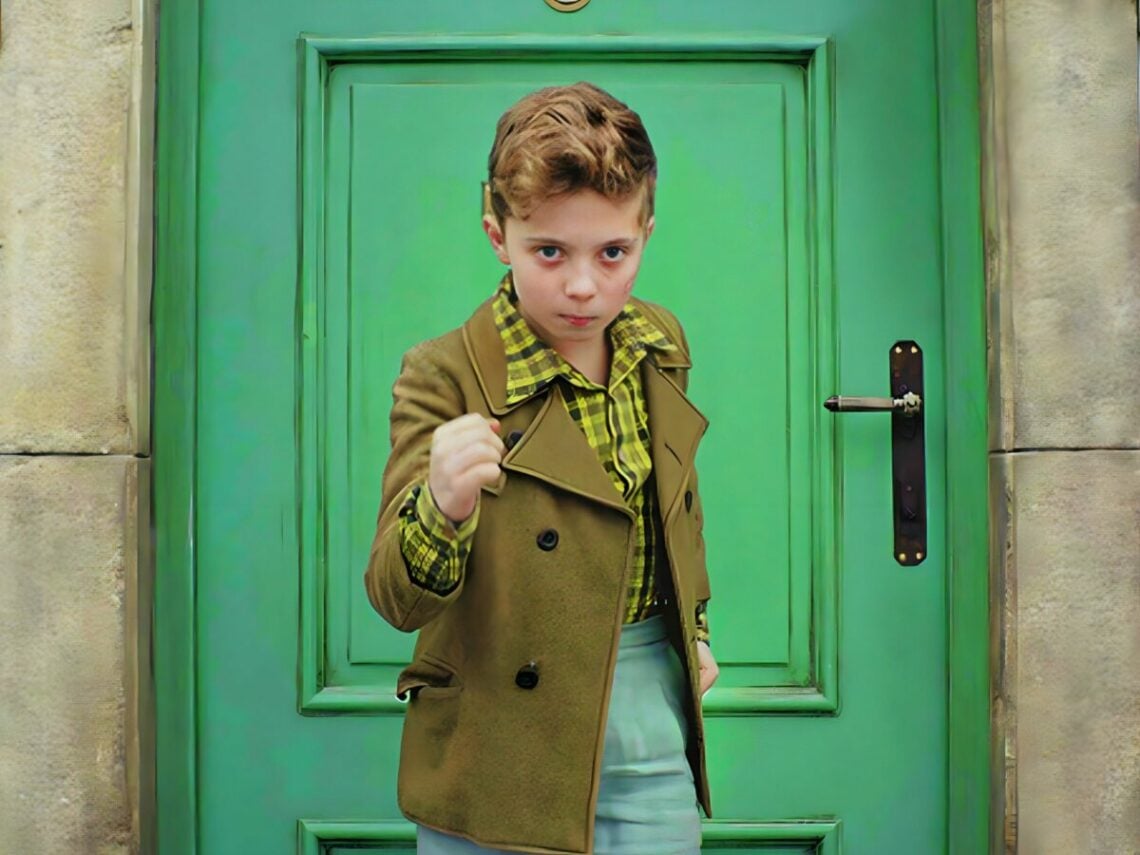
‘Heroes’ – David Bowie in Jojo Rabbit (2019)
Jojo Rabbit makes the brave yet dangerous artistic choice of taking a comedy route to depict Nazi Germany and the party’s horrific atrocities against humanity. The director’s juxtaposing tones of history and comedy capture a child’s perception of the historical backdrop, including innocence, naivety and longing for security.
The film’s ending communicates concepts of liberation, rejuvenation and celebration, amplified by the music choice. After he banishes his toxic imaginary friend, Jojo meets with Elsa outside, where she sees American soldiers and realises the Nazis have lost. The pair take the news in, then dance as David Bowie’s ‘Heroes’ sweetens the tone, capturing both children’s freedom.
‘Immigrant Song’ – Led Zeppelin (Thor: Ragnarok, 2017)
Thor: Ragnarok narrates the God of Thunder’s battle against his sister Helda, who seeks to awaken the Ragnarok to take down Asgard out of bitter revenge. Famously, the project stars the likes of Chris Hemsworth, Tom Hiddleston, Cate Blanchett, Idris Elba, Jeff Goldblum, and countless other blockbuster names,
Waititi recruits a number of classic rock power ballads to capture the film’s magnetic and electric energy and powerful character arcs; one pivotal song is ‘Immigrant Song’ by Led Zeppelin. The track, which was inspired by Norse mythology, represents a perspective of war imagined by Scandinavian culture, with the first instance of its use emerging in the opening scene as Thor escapes from Surtur. The second time is in the climactic battle as Thor, Valkyrie, Loki, and Hulk battle Hela on the bridge in Asgard.
During an interview with Cinemablend, Waititi shared how he used ‘Immigrant Song’ in a sizzle reel, which helped him find Thor‘s tone. He said: “I made the sizzle reel with tonally what I wanted it to be,” Waititi said. “I wanted to capture a road trip of people who had no business hanging out with each other. I put all that to ‘Immigrant Song’.”
The director added: “I was so surprised they hadn’t used it in the first two films. That song is basically about Thor. Just knowing the tone, knowing that it had to be playful and over the top.”
‘Komm, gib mir deine Hand’/’I Want to Hold Your Hand’ by Paul McCartney and John Lennon (JoJo Rabbit, 2019)
JoJo Rabbit features a brilliant cast, including the likes of Roman Griffin Davis, Rebel Wilson, Alfie Allen, Sam Rockwell, Scarlett Johansson and Waititi himself. This Oscar-winning historical comedy-drama follows a young Hitler Youth member who conjures up a comedic vision of Adolf Hitler as an imaginary friend. After discovering his mother is hiding a Jewish girl, the child finds his morals torn.
In the opening sequence, ten-year-old Johannes ‘Jojo’ Betzler joins the junior section of the Hitler Youth, ‘Deutsches Jungvolk’, having become heavily indoctrinated and brainwashed with Nazi ideals. As he runs through the streets declaring his love for the morally bankrupt dictator, the German translation of John Lennon and Paul McCartney’s ‘I Want to Hold Your Hand’ plays splintering from the startling truth of the scene in its uplifting and compassionate tone.
‘Lal Mori Pat’ – Igbal Jogi and Party (What We Do in the Shadows, 2014)
Waititi’s directorial collaboration with Jemaine Clement stars the director as an eccentric vampire who lives with members of his kind in Wellington. The comedic mockumentary also stars Clement alongside his castmates Jonathan Brugh, Stu Rutherford, Ben Fransham, and Jackie van Beek.
One scene that captures What We Do in the Shadow’s bizarre yet compelling humour sees Brugh’s Deacon erotically dance for Clemet’s Vladislav and Waititi’s Viago to ‘Lal Mori Pat’ by Igbal Jogi and Party, an Indian snake charm theme. Thanks to the movement and music, the scene is captivating, yet it executes a comical tone with actors breaking characters for a few moments.
‘Let’s Dance’ – M.Ward (Eagle vs Shark, 2007)
Waititi’s directorial debut stars Loren Horsley as a shy yet passionate girl who dreams of becoming a songwriter. She soon develops a crush on a geeky video game worker called Jarrod, played by Jemaine Clement, and what follows is an eccentric and unorthodox romance.
Eagle vs Shark employs the motif of claymation to represent the oddball couple at critical moments in their story. One scene sees a stop-motion animation of the couple’s sleeping bags during a trip moving around sluggishly before returning to an ordinary placement next to one another, soundtracked by M. Ward’s acoustic cover version of ‘Let’s Dance’. With barely any dialogue, it’s a scene that lets the music, images and tone speak for itself, communicating something touching yet sad as the couple share intense and heartfelt gazes.
‘Only Time’ – Enya (Thor: Love and Thunder, 2022)
When sharing his vision for Thor: Love and Thunder, Waititi revealed he wanted the music to reflect the same aesthetic of the film with its “bombastic, loud, colourful palette”, as reported by Geek Ireland. However, he provides a theme break for something a little more sentimental.
During one pivotal story moment, Korg summarises Thor’s eventful MCU timeline. ‘Only Time’ accompanies Korg’s narration of Thor’s past heartbreak, including the loss of Odin, Frigga, and Loki. Despite the tragic and sire undertones of Thor’s past, the use of music gelled with Korg’s comical narration captures the emotional weight with a liberating sense of humour.
‘Paradise City’ – Guns N’ Roses (Thor: Love and Thunder, 2022)
The 29th film in the Marvel Cinematic Universe stars Chris Hemsworth as Thor, the God of Thunder, alongside a host if names that propel the project to blockbuster levels with Christian Bale, Russell Crowe, and Natalie Portman all featured. Thor: Love and Thunder sees Thor trying to find inner peace following previous events but soon learns he must stop Gorr, the God Butcher, from destroying all Gods.
Fitting with the context of a new era for the MCU since Endgame, Guns N’ Roses track ‘Paradise City’ accompanies a montage that illustrates the New Asgard way of life since King Valkyrie came to the throne. Axl Rose’s lyrics align conceptually with New Asgard’s rising from the ashes following destruction and re-birthing into something new and utopian.
‘The Partisan’ – Leonard Cohen (Hunt for the Wilderpeople, 2016)
This adventure comedy stars Sam Neill and Julian Dennison as a father figure and foster son who, after retreating into the New Zealand bush, become the targets of a manhunt. Waititi wrote the screenplay as an adaptation of Wild Pork and Watercress by Barry Crump.
Leonard Cohen’s anti-Fascist anthem, ‘The Partisan’, narrates a conceptual sequence where imagery of characters and locations and editing take centre stage. A long shot executes a montage showcasing the duo and the hunters, made from a constant steady camera movement, suggesting that time and space are passing. The camera constantly turning captures the two groups equally, providing a thorough representation of the hunt and accurately depicting the area.
‘Stoned Haircut’ – The Phoenix Foundation (Boy, 2010)
Boy stars James Rolleston, Te Aho Aho Eketone-Whitu, and Waititi in a coming-of-age tale about a New Zealand youth who finds that his father is far from the heroic adventurer he’s imagined the man to be. To cope with the challenges of growing up, Boy enjoys hanging out with friends and dreaming of the music icon Michael Jackson.
One scene sees Boy invite some girls to accompany him to a Michael Jackson tribute act where the impersonator dancers perform the King of Pop’s timeless trademark moves in slow motion as The Phoenix Foundation’s song ‘Stoned Haircut’ plays. The band, based in New Zealand, captures the country’s earthly and energetic nature through their indie rock sound. The song amplifies the scene’s wonder from the children’s perspective, tossing everything into a dream-like state as assisted by the editing. The sound may contrast with Jackson’s legendary music, but the contextual narrative and themes set everything into place.
