


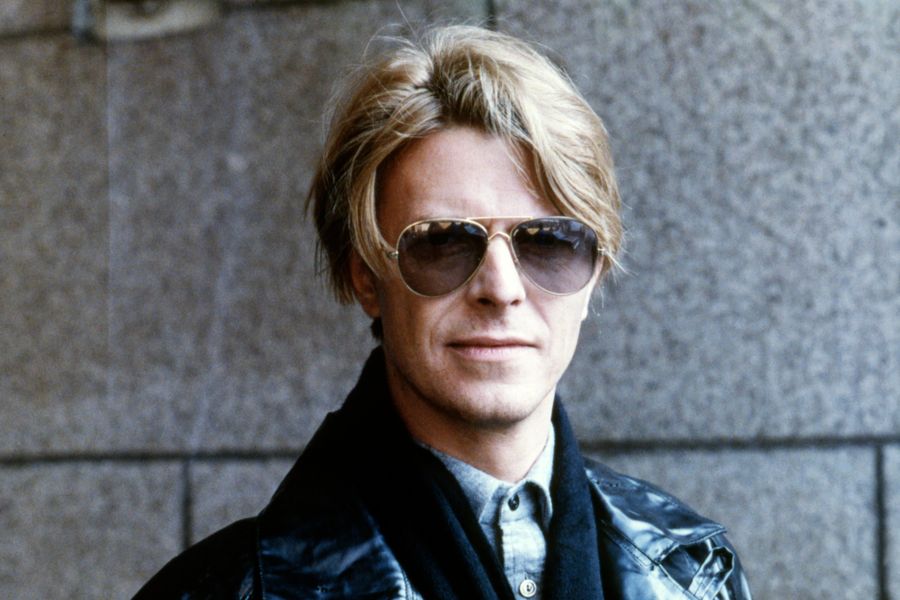
Cover to Cover: Every song on David Bowie album “Heroes” covered

David Bowie was on a remarkable roll by the time 1977 rolled around. After having saved his career from the abyss of one-hit wonder-dom thanks to iconic albums like Hunky Dory and The Rise and Fall of Ziggy Stardust and the Spiders from Mars, Bowie proceeded to juggle genres and styles, changing his guise and personas along the way. By the time he hit the late 1970s, he was strung out and dangerously addicted to cocaine. It was time to get up and get out to somewhere he could clean up.
So Bowie, along with friend and collaborator Iggy Pop, uprooted from Los Angeles and moved out to West Berlin. Bowie had used the Hansa Tonstudio for the tail end of his Low sessions, but he settled into the ancient guildhall on a more permanent basis for his follow-up, “Heroes”. Around him were a murderer’s row of collaborators, including producer Tony Visconti, guitarist Robert Fripp, ambient pioneer Brian Eno, and his trusty rhythm section of Carlos Alomar, George Murray, and Dennis Davis.
“Heroes” unfolded quickly, with most songs using first takes of backing tracks and vocals. Fripp was given free rein to improvise over the basic rhythm tracks, while Bowie withheld the writing of lyrics until the very end of the recording process. Random chance and experimentation were embraced, supported by Eno’s Oblique Strategies card set. Bowie crafted and completed “Heroes” in just two months, quickly putting together an extensive tour behind it.
Although it fared well critically, “Heroes” was only a modest commercial success. In the United States, the album only peaked at number 35 on the Billboard Album Chart and became Bowie’s worst-selling album since Hunky Dory. But in the years since its release, “Heroes” has taken on an important place in Bowie’s catalogue, representing a strangely moving sense of optimism amidst some of Bowie’s darkest recordings. When Bowie passed away in 2016, “Heroes” started to solidify its reputation and the artist’s definitive album.
The influence of “Heroes” is widespread, so much so that all ten of the album’s tracks have been covered by peers and admirers across the decades. The album’s title track is an obvious favourite for covers, but the album’s deeper cuts have also been embraced by musicians and fans. Here are some of the best covers that show the continuing influence of “Heroes”.
Every song on David Bowie album “Heroes” covered:
Deliverance – ‘Beauty and the Beast’
Bowie spread his music across genres and countries, never settling for just being a pop star or a rock musician. Everyone loved Bowie, even god-fearing Christian metal musicians. American band Deliverance might have worshipped Jesus Christ, but they were also smart enough to worship another god in the form of David Bowie. Their reverence is coated all over their groovy cover of ‘Beauty and the Beast’.
Momus – ‘Joe the Lion’
David Bowie had a hand in shaping bands well beyond his initial heydey. If you’ve picked up an instrument at some point in your life, you’ve likely tried to bash out a Bowie song. Eclectic writer and singer Momus has quite a varied background, pulling in influence from the likes of Britpop and J-pop. But he’s also grounded enough to know how important Bowie is, and his cover of ‘Joe the Lion’ spices up the track with a hazy arrangement.
Peter Gabriel – ‘Heroes’
Everyone and their mother has covered ‘Heroes’. You’ve probably sung along to ‘Heroes’ at some point in your life. It very well could be Bowie’s most popular and universal song, and the number of cover versions easily ranks in the hundreds. Take your pick as to which version you prefer, from Nico to Blondie to Billy Preston to Oasis. Personally, I gravitate toward Peter Gabriel’s orchestral version from the 2010 album Scratch My Back.
Philip Glass – ‘Sons of the Silent Age’
Some people love “Heroes”, and then there’s composer Philip Glass, who loved “Heroes” so much that he adapted the entire album into an orchestral symphony. It’s lush and extravagant, especially for someone as traditionally minimalist as Glass, but it’s a beautiful ode to a classic album nonetheless. Glass’ version of ‘Sons of the Silent Age’ is a sprawling take on the original, with only the basic construction of the original track remaining.
Lloyd Miller and Dean Jones – ‘V-2 Schneider’
Bowie’s music is surprisingly durable in just about any setting. Although he was never afraid to cover the more lurid side of humanity, Bowie could also be embraced by generations of all kinds. So when jazz musicians Lloyd Miller and Dean Jones submitted their contribution to the compilation Let All The Children Boogie Down: A Tribute to David Bowie, they decided to adapt the mechanical whirs of ‘V-2 Schneider’ for listeners of all ages.
hYrtis – ‘Sense of Doubt’
Do you want to hear a theremin version of ‘Sense of Doubt’? What a ridiculous question: of course you do! Once you get passed the album’s title track, “Heroes” starts to get less frequently covered. You have to dig deep to find versions of ‘Sense of Doubt’, but they’re out there. Appropriately, French musicians hYrtis’ take on the track is pretty far out, but also strangely beautiful.
Dylan Howe – ‘Moss Garden’
Side two of “Heroes” favours a dark ambience over traditional songs, and no song is a better example of Bowie’s more non-traditional leanings than the instrumental ‘Moss Garden’. Eno’s influence can be felt most directly on the track, which incorporates oriental instrumentation to create a light mood. It’s the perfect track to take into the world of jazz, and Dylan Howe (son of Yes guitarist Steve Howe) has a wonderfully open version of the track.
Philip Glass – ‘Neuköln’
Bowie was always more focused on music first. He was a composer in the traditional sense, often leaving the writing of lyrics and melodies to the very last minute. Oftentimes, he simply left them out altogether. “Heroes” ends with two consecutive instrumentals, and the second of the two, ‘Neuköln’, finds Bowie alternating between synthesizer and saxophone. It’s a dark and difficult piece, so we’re going to turn it back over to Philip Glass to add a more refined sense of beauty to the track.
British Electric Foundation – ‘The Secret Life of Arabia’
As “Heroes” reaches its final track, the darkness begins to lift in favour of world music and futuristic sounds. Not willing to go out on an instrumental, Bowie lifts up and adds some psychedelic silliness to the end of the album. The Human League offshoot British Electric Foundation has a wonderfully wonky version of the track, featuring Associates lead singer Billy Mackenzie on the microphone.
