


The 10 best songs by Tears for Fears

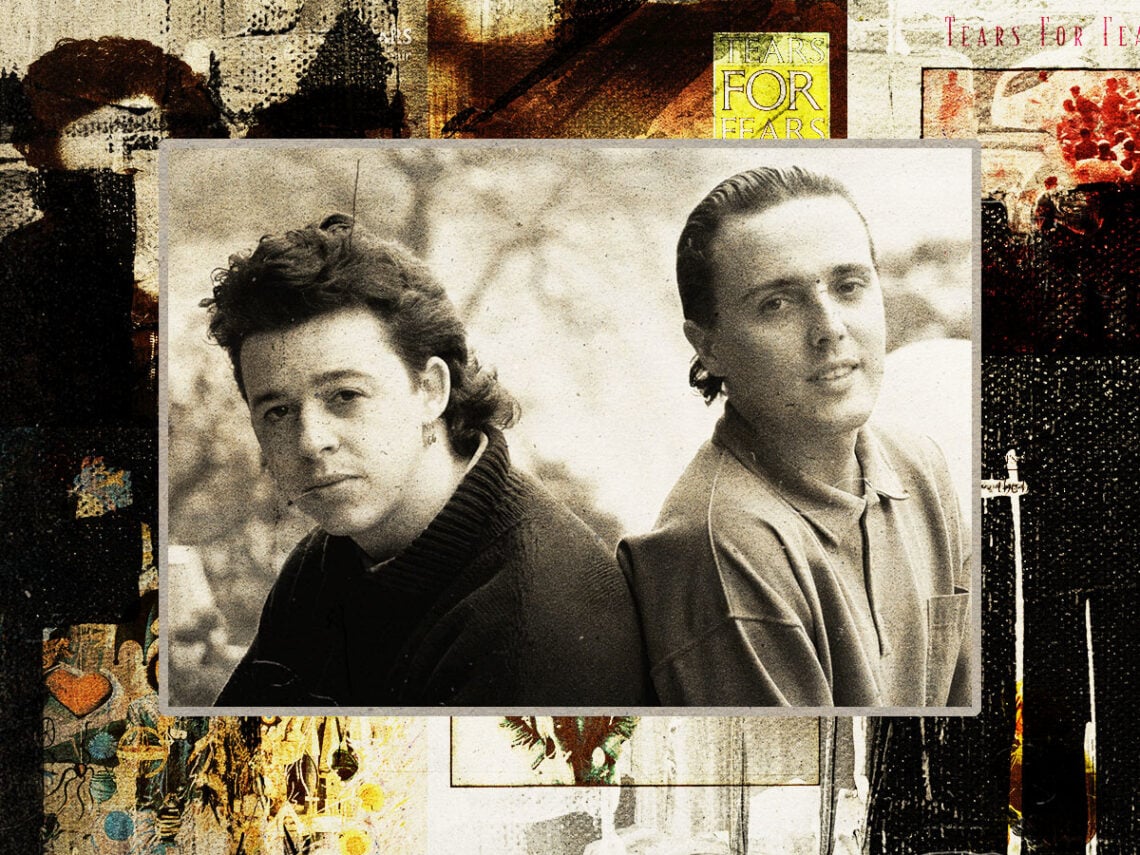
1980s Britain produced many successful groups, with Bath outfit Tears for Fears one of the most prominent. Formed in 1981 by Roland Orzabal and Curt Smith after their mod-influenced group Graduate ended, they bridged new wave with the era’s penchant for ‘Big Music’ and a genuinely artistic disposition. This seamless fusion of the elements meant they achieved international success fast after breaking through with cuts such as ‘Mad World’ and ‘Pale Shelter’. Questions about which genre they fit into have abounded for decades, but it’s a redundant conversation. In a testament to Orzabal and Smith’s efforts, their rich sound is best described as Tears for Fears.
The duo’s debut album, The Hurting, arrived in 1983 after two years of drip-feeding fans expansive songs. The record went to number one on the UK Albums Chart, with the first three singles of ‘Mad World’, ‘Change’, and ‘Pale Shelter’ all breaking into the top five on the country’s singles chart.
Tears for Fears then built on the promise of their debut with a second album, 1985’s Songs from the Big Chair, which reached number one on the US Billboard 200, going platinum on both sides of the Atlantic. One of the era’s defining bodies of work, it produced the number one cuts ‘Shout’ and ‘Everybody Wants to Rule the World’, two heady pieces that straddle the line between rock and pop adroitly, supplemented by profound political lyrics. Whilst this formula is quintessentially 1980s, it’s timeless in these instances. Accordingly, tracks like these appeal to dads and teenagers, something only the true greats achieve.
The long-awaited third album, The Seeds of Love, arrived in 1989. Although it failed to replicate the soaring heights of its predecessor, it was still a critical and commercial success, with the title track a transatlantic top-five smash. However, the relationship between Orzabal and Smith began to fracture around this time. After touring the album, the pair acrimoniously split in 1991. Orzabal then kept the band’s name and released two albums: 1993’s Elemental and 1995’s Raoul and the Kings of Spain.
Orzabal and Smith reconciled in 2000, and the new millennium would see the pair take off where they left off, with Tears for Fears re-energised. They released Everybody Loves a Happy Ending in 2004, followed by 2022’s The Tipping Point, a record nearly a decade in the making. Their latest offering was their highest chart peak in 30 years, breaking into the top ten in the US and numerous others. It appears that Tears for Fears aren’t going anywhere, and given the brilliance of their latest album, it can only be a good thing.
Find the ten best Tears for Fears songs below.
The 10 best Tears for Fears songs:
10. ‘Elemental’ – Elemental (1993)
This cut is from when Orzabal was steering the Tears for Fears ship on his own. Although Smith was nowhere to be seen during this chapter, Orzabal kept things moving and brought the group into a new decade and creative area. This album and song see the band’s expansive predilection mixed with modes of the day, such as baggy and dance, and it works.
A typically powerful vocal performance from the Tears for Fears creative director is ballasted by an attitude-laden guitar line during the chorus, a baggy beat, and an appropriately stylistic bassline. The wah pedal also has a welcome appearance, which instils this one with ample funk.
9. ‘The Tipping Point’ – The Tipping Point (2022)
The modern Tears for Fears. It’s almost as if their penchant for electronics, grasp of the studio and striking lyrics were waiting for the contemporary era. If not, they certainly helped usher it in. Despite its anthemic nature, though, there’s a profoundly melancholic story underpinning this track, with the introspective ambient beat in the introduction suggesting this. Then, when the groove cuts through the mix, and Orzabal and Smith sing in unison, “You know that I can’t love you more”, it reaffirms that this song has a deeper meaning than you’d expect.
The track was written by Orzabal with long-time collaborator Charlton Pettus and was built out of a “haunting backing track idea”, as the frontman told Rolling Stone. The song’s sad nature was inspired by one of the worst things a human can experience, the death of a loved one. In this case, it was the 2017 death of Caroline, Orzabal’s wife of 35 years. It deals with the conscious denial of his wife’s fate after being informed by the doctors, although he subconsciously knew the inevitable was coming.
It might be a mournful piece, but it’s excellent.
8. ‘Suffer the Children’ – The Hurting (1983)
The list wouldn’t have had legs to stand on if we didn’t include this cut. Along with ‘Pale Shelter’, this song was one of the two demos that secured the band’s first record deal with Phonogram in 1981.
‘Start of the Breakdown’ from The Hurting did stake a solid claim, with the bassline one of the best in their oeuvre. However, ‘Suffer the Children’ has to be on here. The way the song slowly builds up in the introduction, the nostalgic sounding bend of the synth, and the guitar solo; it’s quintessential Tears for Fears. Fittingly, it was the first song Ozabal and Smith wrote after they left Graduate.
Smith recalled: “‘Suffer the Children’ was the first song we did together when we left Graduate. It was our very first experimentation with sequencers and drum machines, with a guy called David Lord, who worked with Peter Gabriel and different people down in Bath. So that was actually the first song we did as Tears For Fears.”
7. ‘Advice for the Young at Heart’ – The Seeds of Love (1989)
‘Advice for the Young at Heart’ is such an underrated cut. You hear flecks of what Tame Impala have become in this piece. The track has a warm lounge-esque vibe inspired by the jazz-oriented rhythm and upright-sounding bass. However, there’s so much more to it than just these elements. There’s how it builds, the soulful chorus, and keyboardist Nicky Holland’s ethereal vocals, amongst other sonic delights. You hear the pair’s mod influence on this track via the subculture’s penchant for blue-eyed soul.
When discussing ‘Advice for the Young at Heart’, Orzabal said: “The song expresses a desire to grow up and get things together – to let go of the past. I think it’s just an awareness of getting older, that’s what it stems from. And also an awareness that certain aspects of you aren’t getting older.”
6. ‘Woman in Chains’ – The Seeds of Love (1989)
You cannot ignore the power of ‘Woman in Chains’, the second single from The Seeds of Love. It might be a 1980s ballad, but there is much about it to grab the attention and perhaps even bring a tear to the eye of those listening in a bluer moment. The repetitive jangle of the guitar, the way Orzabal and Smith dovetail with Oleta Adam’s vocals, or even the ridiculous key change at the end, it’s one of the most full-bodied pieces the band configured when they were ruling the world. It’s so ’80s, in fact, that it even features Phil Collins on the drums. The band wanted the “big drum thing from ‘In the Air Tonight'”, and that’s what they got. It might be less iconic, but arguably, it’s even better.
Whilst Orzabal explained that the song was inspired by feminist literature during an interview with Melody Maker around the time of release, speaking to Louder in 2021, he clarified what it was really about. The feminist theme remained but was much closer to home than initially believed. He said: “It was really about my mother. At one point in her life, she was a stripper. She and my father ran an entertainment agency from a council house in Portsmouth. So she would go out to strip, and my father would send a driver out with her to spy on her. If she talked to another man, when she came back he would beat her up. So it’s about domestic abuse.”
5. ‘Pale Shelter’ – The Hurting (1983)
Another early classic from Tears for Fears, ‘Pale Shelter’ is right up there in terms of their best. A kaleidoscopic moment, it is layered to perfection. It boasts much atmosphere, prominent electronic textures and one hell of a vocal melody from Smith. The band’s second single, two versions exist, with the original titled ‘Pale Shelter (You Don’t Give Me Love)’, released in early 1982. While the song did not see chart success at the time of release, it became a top 20 hit in Canada and broke into the UK’s top 75 when reissued in 1985.
Starting life on the acoustic again, it began as a sequence of just two chords. Almost writing itself, the rest of the song – music and lyrics – were then composed in a single morning. If it wasn’t already clear, the band were on heat during this period.
4. ‘Everybody Wants to Rule the World’ – Songs from the Big Chair (1985)
For a period of time, many thought that Tears for Fears couldn’t possibly top the majesty of ‘Shout’. Accordingly, they were ecstatic when it was followed by ‘Everybody Wants to Rule the World’. Another piece that fuses lyrical themes of power and corruption – in keeping with the spirit of the time – with intelligent songwriting that dances between anthemic and narcotic, it had everything required to certify the duo as one of the most successful of the era.
When the nostalgic opening melody chimes through the speakers and is replaced by the “shuffle” groove, you know you’re in for an absolute delight. “Welcome to your life / there’s no turning back” is one of the most astute lines Orzabal’s produced and a strong contender for one of the greatest openers in history. The minimalist melodies of his guitar are also delectable. A song that triumphs in managing to convey the sun, no matter what time of year, it’s a masterwork.
Interestingly, per an account by the late Joe Strummer, frontman of The Clash from 1988, he was in a restaurant when he encountered Orzabal after the song was released. He told the Tears for Fears man, “You owe me a fiver”, as the title of ‘Everybody Wants to Rule the World’ was taken from the first line of the middle eight in The Clash’s ‘Charlie Don’t Surf’. According to the punk legend, Orzabal reached into his pocket without protest and gave him the money, seemingly confirming that this was the case.
3. ‘Head Over Heels’ – Songs from the Big Chair (1985)
After all these years, ‘Head Over Heels’ has never lost its potency. Here, the vocal melodies are mightier than they were on their first batch of songs, with the bassline heavily grooving and the studio used more like an instrument. ‘Head Over Heels’ is a flawless piece of ’80s rock, with the textures dovetailing to create a sensory delight.
‘Head Over Heels’ was conceived almost two years before it was released in 1985, as part of a segue with ‘Broken’, the stand-alone B-side to ‘Pale Shelter’. As the two pieces share the same motif, ‘Head Over Heels’ would be sandwiched between two parts of ‘Broken’ in the live setting, a brilliant decision reflecting the competence of Orzabal and Smith.
2. ‘Mad World’ – The Hurting (1983)
‘Mad World’ is one of Tears for Fears’ most famous flourishes. This layered masterclass remains one of their greatest moments. There is so much to love about it, whether it be the automated pace, the atmosphere of the synths or those brief, freak-out trumpets that periodically burst through the mix.
Remarkably ‘Mad World’ was written on an acoustic guitar by Orzabal, aged 19, when he was inspired to write a new wave track in the style of Duran Duran’s ‘Girls on Film’. He attempted to record the vocals several times, but after he suggested Smith sing, he said: “Suddenly, it sounded fabulous”. Even more surprising is that ‘Mad World’ was initially intended to be the B-side for ‘Pale Shelter’, but the label insisted it be a single. No doubt the band are now glad for that intervention.
Ozabal would later say of the track: “That came when I lived above a pizza restaurant in Bath, and I could look out onto the centre of the city. Not that Bath is very mad – I should have called it ‘Bourgeois World’!”
1. ‘Shout’ – Songs from the Big Chair (1985)
It had to be number one. It still makes me angry that James Corden and Dizzy Rascal butchered ‘Shout’ for the England national team during the 2010 World Cup, despite it being for a just cause. Regardless of intentions, you simply cannot beat the magic of Tears for Fears’ original. One of the most gothic pieces in their back catalogue, the way in which they seamlessly melded industrial and synthpop into a pulsating mass was game-changing. It paved the way for the likes of Drab Majesty and Cold Cave.
A political anthem, it gradually builds to a climax, with the layers around 3:50 all melting together, never failing to make the hairs stand to attention. And how can we forget the solo? Whilst unbelievably of its era, it remains irresistible and doesn’t feel out of place.
As you might have guessed, Orzabal wrote the song in a simple way. He explained: “The song was written in my front room on just a small synthesiser and a drum machine. Initially, I only had the chorus, which was very repetitive, like a mantra. I played it to Ian Stanley, our keyboardist, and Chris Hughes, the producer. I saw it as a good album track, but they were convinced it would be a hit around the world.”
