


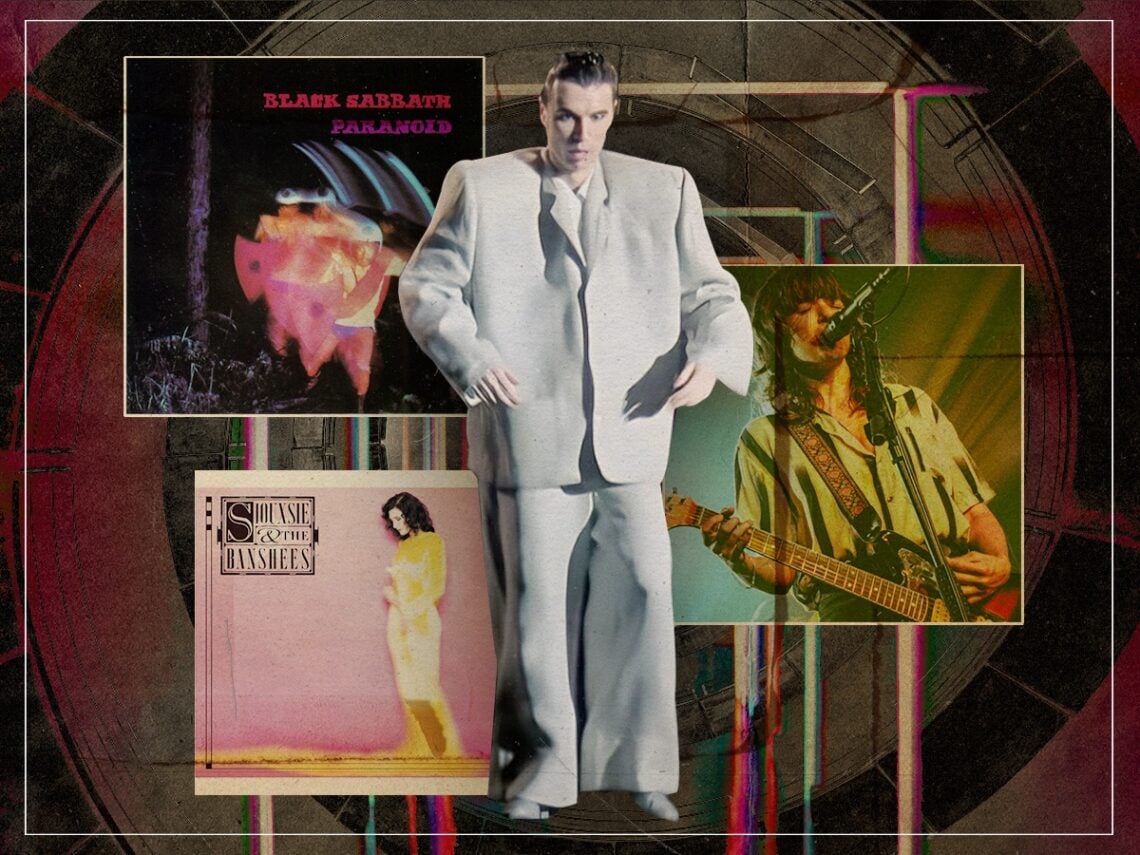
From Black Sabbath to Talking Heads: The 10 best songs about paranoia

The darker emotions of the human mind have long served as a powerful source of inspiration in music, with paranoia being no exception. Though it is one of the most unsettling and distressing emotions we can experience, its presence in music resonates deeply because it mirrors a universal, albeit uncomfortable, aspect of life. The pervasive sense that something isn’t quite right and that someone or something is out to get us is an experience that many find all too familiar.
At least, that’s the crux of it in a broader sense, but the term encompasses an ostensibly endless list of different states, contexts, and cultural factors, including mental health challenges, societal unrest, personal living conditions, marginalisation and oppression, the impact of substances, and so on. But the whispers of doubt—the ones that make you question your very reality—is something that most of us, at one point or another, will feel creeping at the edges of our consciousness.
This is precisely why the concept has become a fascinating area of study: some of the greatest rock bands have tackled paranoia and the way it manifests inside the anxious mind, while others have incorporated its various nuances, touching upon the impact of war, prejudice, mortality, insidious entities, and the more troubling aspects of schizophrenia. Because it is a universal aspect of human existence, paranoia is a constant that traverses genres, becoming anthems for and about those grappling with mistrust and fear.
Whether blurring the line between reality and fiction or serving as a helpline for those experiencing the endlessly tormenting claws of the state itself, these songs offer an eye-opening look at the comfort and discomfort of collective and individual anxieties, providing both a mirror and a release. As the king of schizophrenic-fuelled psychedelia, Roky Erickson once said, “You finally find your helpless mind is trapped inside your skin. You want to leave, but you believe you won’t get back again.”
The best songs about paranoia:
‘Life During Wartime’ – Talking Heads
In Talking Heads‘ anxiety-ridden ‘Life During Wartime’, David Byrne sings of a bleak future overcome by the perils of technology where the government’s inability to control the digital age’s shortcomings has caused many to be living, quite literally, in turmoil. Rather than incorporating the title into the lyrics like most of the band’s hits, ‘Life During Wartime’ inadvertently tackles the subject with dilapidated imagery of “a place where nobody knows”.
During this time, Byrne drew inspiration from a book he read about computer crimes, choosing to repackage futuristic paranoia as a fictional man who struggles to come to terms with leaving the comfort of his own solitary for the uncertainty of the outside world. “A lot of [technology is for your convenience – but as more information gets on file it’s bound to be misused,” the musician explained in 1979. But ‘Life During Wartime’ extends far beyond representing the dangers of computers; it also incorporates these anxieties into Byrne’s distinctive delivery and its fast-paced, nervy sound.
‘Elevator Operator’ – Courtney Barnett
Unlike the previous entry, Courtney Barnett‘s unusual ode to the absurd, ‘Elevator Operator’, tells a story that blends the mundane with the surreal. The song recounts a peculiar experience in which a friend of Barnett’s found herself sharing an elevator ride with a stranger, heading to a rooftop she enjoyed for its view. As they ascended, the stranger became increasingly paranoid and suspicious of Barnett’s friend, sensing that something was amiss.
The stranger, feeling the mounting tension, grew concerned that this person might be suicidal. This sense of urgency led her to try and talk the stranger down, illustrating how paranoia can distort perceptions and escalate a situation that initially seemed ordinary. “She tried to talk him out of it,” Barnett told Vulture. “It’s a few seconds of being in an elevator together. How had she totally concocted this story?”
‘Fear (Of The Unknown)’ – Siouxsie and the Banshees
Straight off the seminal Juju lies ‘Fear (Of The Unknown)’, one of Siouxsie and the Banshees‘ more brooding, haunting melodies about existential dread and the anxiety that accompanies facing the unknown. Most of us understand the potential pitfalls of stepping into uncharted territory, but this song viscerally recreates the exact feeling with its arrangements, particularly with the echo-laden production, which adds an effective layer of suspense to its overall mood.
Interestingly, the original version of the song was an uptempo dance track. However, once it was remixed, it incorporated a more house-leaning feel and a darker, more sinister edge. Its tempo impressively doesn’t distract from the subject matter, instead adding a layer of gothic charm to its broader feel. “Do you ever have the strange sensation when you’re standing mighty tall,” Siouxsie Sioux sings, “To jump from 17 floors and crash into freefall?”
‘Don’t Turn Your Back’ – Blue Öyster Cult
It would have been incredibly easy to include Blue Öyster Cult‘s playful ode to paranoia, ‘(Don’t Fear) The Reaper’ in this lineup, but somehow ‘Don’t Turn Your Back’ feels more fitting here. Perhaps it’s the immediately haunting intro leading into an equally haunting guitar progression or the ways the vocal gets straight to it, warning the dangers of turning your back, but ‘Don’t Turn Your Back’ taps into something we all feel spine-tingly about from time to time—mortality.
“Don’t turn your back,” the band warns, “You’ll never know when it’s your turn to go.” However, more than just a playful face-off with the idea of death, the song also incorporates more comprehensive sources of paranoia, like “intuition”, “superstition”, your “jealous neighbour”, the “dogs who hound you”, and friends who may not be exactly who they say they are. Although overshadowed by Fire Of Unknown Origin‘s ‘Burnin’ For You’, Buck Dharma once regarded this as the best-hidden gem in the band’s catalogue, which likely explains why it has been a sleeper hit for so long.
‘Lullaby’ – The Cure
Another slightly off-kilter entry, Robert Smith’s beautifully haunting ode to childish horror, ‘Lullaby’, marks one of The Cure‘s all-time favourite songs, not just because of the way it navigates the darker aspects of our once-impressionable nights, but the ways paranoia is inside it lurking like a long-ignored shadow. In this song, our villain is disguised in many ways, almost like a shape-shifter, the constant kind who is “looking for the victim shivering in bed”.
Our haunting figure “creeps closer” as the song’s gorgeous arrangements craft a false sense of security as Smith sprinkles in the type of poetic lyricism fated to linger in your mind for all time, including, “Don’t struggle like that or I will only love you more.” There’s pure fear, and then there’s paranoia in the nightmarish sense, which manifests in this case as the image of a spider “on candystripe legs” which is equally terrifying and inescapable.
‘Afraid of Everyone’ – The National
With growing cultural fears about imminent war-like threats, it’s normal to overthink the possibilities of what might happen should societies break out into devastating conflict. With ‘Afraid of Everyone’, The National took this notion a step further by tapping into familial fear and the idea that, given the scope of increasing civil unrest, one day we might have to plan to protect those we love.
“That song is trying to figure out where you’re going to go when there’s a calamity like a civil war or something,” Matt Berninger explained to The Quietus. Expanding on this to Spinner, he added: “‘Afraid of Everyone’ is anxiety and paranoia and not knowing how to deal with it. [It’s about] desperately wanting to defend yourself and your family from the chaotic forces of evil, and you don’t even know what they are, or who’s right or who’s wrong and what to believe.”
Despite Berninger usually veering away from writing about family in his music, this venture felt particularly poignant due to his commitment to authenticity. He might not want to sing about family in the conventional sense, but the broader perspective he incorporated into ‘Afraid of Everyone’ felt bigger than his reality and more of a reckoning with the idea that it’s impossible to switch off to the outside world when it’s in such dire straits.
‘Destroyer’ – The Kinks
One of the greatest, most quintessential songs about paranoia, ‘Destroyer’ is The Kinks‘ ode to the ultimate troubled mind, the one that feels he is constantly being watched and finds difficulty trusting anyone because of it. Give The People What They Want saw The Kinks focusing largely on the sensationalist and scandalous nature of the American media and how it detrimented the unsuspecting mind of the civilian. In ‘Destroyer’, the protagonist grows increasingly paranoid due to the flooding of information he is constantly subjected to, causing him to spiral uncontrollably.
‘Destroyer’ was also a reference to their previous hit, ‘Lola’, with a reference to ‘red’ (amphetamine) under his bed and a “little yellow man” who haunts his mind. The unreliable touch he holds on reality leads him to an unexpected liaison with ‘Lola’, but his drug and media-fuelled overstimulation causes him to conspire against his stranger friend, unable to separate fact from fiction.
‘Season of the Witch’ – Donovan
As folk-rock kicked a new wave of psychedelia into gear, Donovan was poised and ready to lead the charge. ‘Season of the Witch’ captures something not all musicians were privy to at the peak of the 1960s counterculture movement—the idea that hope was fickle and not everything seemed as good as they were selling it to be. Of course, during this time, hope and peace only rose from the ashes of disillusionment, with the promise of unitedness in the face of adversity feeling as good a reason to be optimistic as any.
However, during this time, Donovan viewed the scene with greater clarity, and the scepticism of his outlook was filtered in the song through images of witchy magic and the occult. This, coupled with its timeless appeal, made it one of the defining songs about era-specific paranoia. “There was a feeling, even then, that all was not perfect in the Garden of Eden,” he said during an interview with Mojo in 2011. “Dealers were moving into bohemia and hard drugs were on the fringes. The song was also prophetic. It was about the bust, although of course I couldn’t know that then.”
‘Paranoid’ – Black Sabbath
It wouldn’t be an appropriate list of paranoia-themed songs if Black Sabbath‘s opus didn’t feature. ‘Paranoid’ is not only one of the most iconic Black Sabbath songs but one that captures the concoction of depression, existential anxiety, and mental health struggles that threatened to define the crux of the metal genre during its more aggressive moments.
As the title suggests, the subject matter is tackled head-on, with Ozzy Osbourne’s vocals giving the song an almost disaffected tone, contrasting with the intensity of the music and adding to its dark atmosphere. Geezer Butler once admitted he didn’t know the difference between depression and anxiety, which is ideal given the confusion that emits from the lyrics, including, “People think I’m insane because / I am frowning all the time”.
‘Where Is My Mind?’ – Pixies
Pixies always excelled at crafting music with surreal, dreamlike qualities, but they did so by factoring in the burdened realities of contemporary life and the contradictory, abstract-like environments we often find ourselves in. ‘Where Is My Mind’ is slightly more open to interpretation than the other songs here, but its lyrics broadly explore themes of disorientation, detachment, and a fractured sense of reality.
Inspired in part by Black Francis’ experiences scuba diving in the Caribbean, the song conveys a sense of losing touch with one’s surroundings and self. It captures a sense of unease and mental disarray, resulting in an atmosphere that almost feels as though you are caught in a confusing loop where the message or direction is unclear.
