


The 10 best movies under 90 minutes

After a long day at work, the thought of watching a movie over the length of 90 minutes can feel extremely daunting. Although some of the greatest films ever made clock in at well over two hours, such as 2001: A Space Odyssey (2 hours and 19 minutes) or The Godfather (2 hours and 55 minutes), there are plenty of movies less than 90 minutes of the same calibre.
Although a short film or a 90-minute flick might give the impression that the director has less time to develop their ideas, plenty of skilled filmmakers have proved this to be false. The challenge of a shorter runtime gives directors the opportunity to refine their ideas and squeeze as much as they can out of the medium. Thus, many masterpieces have been made that are less than an hour and a half long.
Some of cinema’s finest filmmakers, such as Agnes Varda and Ingmar Bergman, often created films that total no more than 90 minutes, proving that impressive pieces of filmmaking can be made without extensive hours of filming.
From Bergman’s landmark film Persona to Jonathan Glazer’s 2000 crime comedy-drama Sexy Beast, here are ten films that clock in at 90 minutes or less.
The 10 best movies under 90 minutes:
Before Sunset (Richard Linklater, 2004)
Acting as the second instalment in the Before trilogy, Richard Linklater’s Before Sunset takes significant inspiration from the conversation-heavy films of French auteur Eric Rohmer. After nine years, we are reunited with Before Sunrise‘s Jesse (Ethan Hawke) and Celine (Julie Delpy), who also reunite after almost a decade of absence. Initially spending the night together in Vienna, Before Sunset takes the couple to Paris, where Jesse is finishing up a book tour. French native Celine uses the opportunity to reconnect with Jesse, and the film sees the two walking and talking across the romantic city streets.
Clocking in at just 80 minutes, Before Sunset is a charming film that engrosses its audience through Jesse and Celine’s effortless chemistry. The script was co-written by Hawke and Delpy, whose naturalistic dialogue makes it hard to believe that their characters are not real people whose conversations have been interrupted by the presence of Linklater’s camera.
Black Girl (Ousmane Sembène, 1965)
Recently making its way onto the Sight and Sound list of the greatest 100 movies of all time, there has never been a better time to watch Ousmane Sembène’s seminal Senegalese movie, Black Girl. Entering the list at number 95, the film is well deserving of its place, telling the story of a young black girl from Senegal who travels to an entirely different continent to become a servant in France.
Gaining critical attention upon its release, it wasn’t until the 21st century that Black Girl would be celebrated for its powerful statements that address the effects of colonialism and racism in Africa and Europe. Now part of the Criterion Collection, the 65-minute movie is a must-watch for any cinephile looking to brush up their knowledge of African cinema.
Breathless (Jean-Luc Godard, 1960)
French cinema enjoyed a flourishing, frenetic time of great change in the 1960s, with the New Wave movement redefining national cinema for a new generation. Integral in such change were the likes of the late François Truffaut, Alan Resnais and Jean-Luc Godard, with each filmmaker providing an innovative piece of national cinema. Breathless was one of Godard’s greatest-ever movies and a definitive text of the French new wave that would go on to sculpt the future of 20th-century cinema.
Using cinema like an artist uses a canvas, Godard’s curious flourishes and spontaneous frissons of joy came to life in Breathless, a film that follows a small-time thief who steals a car, murders a policeman and tries to persuade an American journalist to run away with him.
Cleo from 5 to 7 (Agnes Varda, 1962)
Although male directors largely dominated the French New Wave movement, Agnes Varda proved that women could create innovative cinematic works, too. Using a distinctly feminine viewpoint, Cleo from 5 to 7 remains one of the period’s most outstanding achievements. The film follows Corinne Marchand’s Cleo, a self-obsessed pop singer anxiously awaiting the results of a medical test which will determine whether she has cancer. As Cleo meets friends, goes shopping, watches street performers and practices her songs, Varda questions the role of women in society. Reckoning with her mortality, Cleo is forced to confront what is truly important for her to live a happy life.
The director uses unique cinematic techniques such as switching from colour to black-and-white film, breaking the fourth wall, handheld camera movements and extreme close-ups, aiding Varda’s exploration of Cleo’s mental state. Varda’s film highlights the need for women to constantly perform, making a powerful statement on 1960s French society from a perspective unable to be harnessed by her male contemporaries.
Daisies (Věra Chytilová, 1966)
Věra Chytilová’s avant-garde surrealist feminist comedy Daisies is a landmark of the Czechoslovak New Wave movement that blossomed in the 1960s. The director describes the film as “a necrologue about a negative way of life,” using unconventional formal techniques to criticise hegemonic ideals such as capitalism and excessive consumerism. Daisies follows two girls, both named Marie, who portray Chytilová’s satirical stereotypes of femininity. The film takes an anti-patriarchal approach – at one point representing the women as marionette dolls to point out the way men treat women as play objects rather than humans. Chytilová even sprinkles in phallic images of severed sausages to take a lighthearted jab at male dominance.
Daisies is one bizarre psychedelic trip of a movie that runs for just 76 minutes. Yet the film packs plenty of rebellion and experimentation into its run time, so much so that upon its release, it was pulled from many major cinemas for its anti-establishment attacks.
Eraserhead (David Lynch, 1977)
Surrealist genius David Lynch released his debut feature, Eraserhead, in 1977, after years of production. Inspired by Franz Kafka’s The Metamorphosis and Nikolai Gogol’s short story The Nose, as well as fears of fatherhood, Lynch penned the screenplay for his film in the early 1970s. Furthermore, the director’s experience of living amongst “violence, hate and filth” in Philadelphia aided the creation of the desolate industrial backdrop of the film, which is central to its bleak mood. Jack Nance plays Henry Spencer, who is left to care for a deformed baby resembling an alien creature. Eraserhead set the tone for Lynch’s future career, introducing audiences to his bizarre yet entrancing world.
Upon the film’s release, which is notable for its intricate sound design, critics had mixed opinions. However, the film found popularity in underground midnight movie circuits and is now widely considered a masterpiece. If you’ve not seen Eraserhead, at just 89 minutes long, we highly encourage you to delve into Lynch’s mesmerisingly absurd movie.
My Neighbor Totoro (Hayao Miyazaki, 1988)
The iconic Japanese animation house Studio Ghibli enjoyed a remarkable year in 1988, releasing the impactful war drama Grave of the Fireflies and the fantasy masterpiece My Neighbour Totoro in the space of 12 months. Presenting a story rich in colour that embraces the simple, quiet and magical wonders of young life, My Neighbour Totoro perfectly encapsulates Ghibli’s ethos, understandably going on to become one of the studio’s most significant commercial successes.
Representing the harmony between humans and nature, the story follows two girls who move to the country with their ill mother, where they enjoy adventures with the magical spirits of the forest who live just outside their doorstep. Coming in at just 86 minutes, the film makes for easy cinematic escapism.
Persona (Ingmar Bergman, 1966)
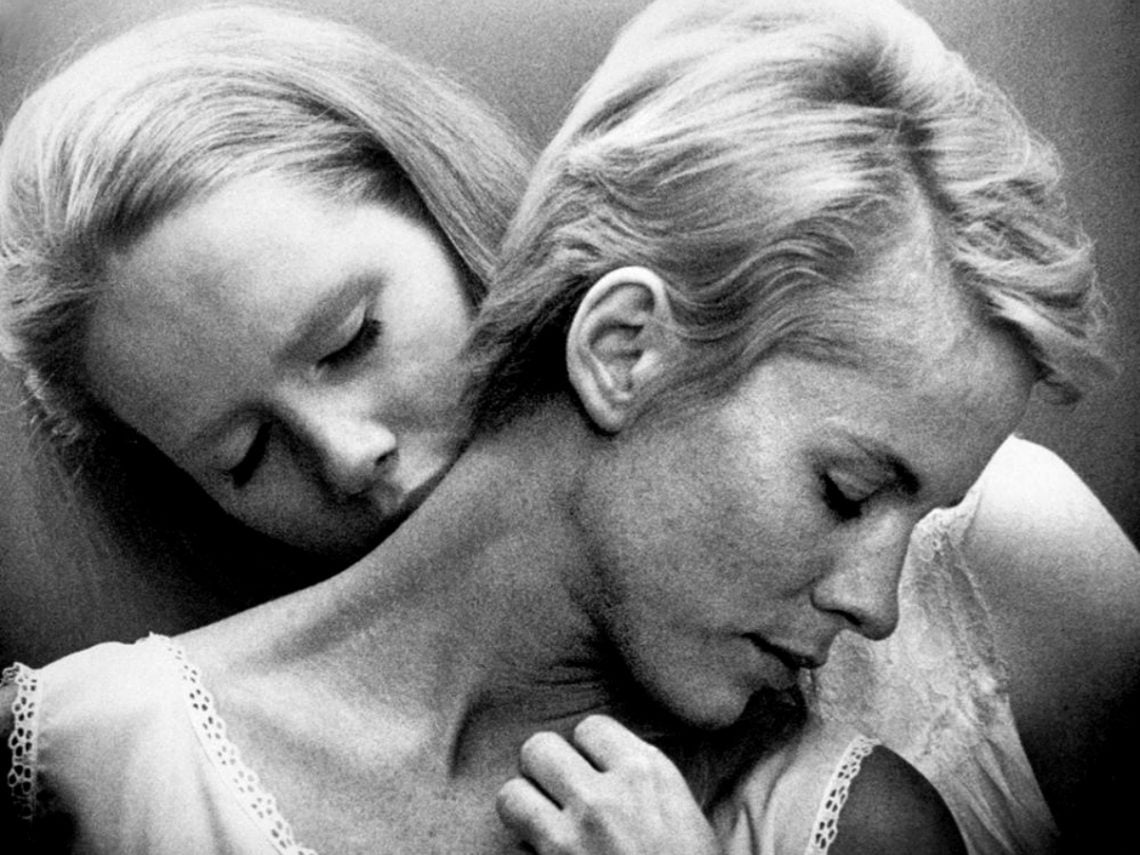
There’s no doubt that the Swedish filmmaker Ingmar Bergman is one of the most important minds in 20th-century European cinema, with the poetic auteur helping to inspire fellow directors Martin Scorsese, Stanley Kubrick and more. Of all his iconic movies, which include Wild Strawberries, The Seventh Seal and Fanny and Alexander, his 1966 masterpiece Persona may be his very best.
The dramatic thriller tells the story of a nurse who is put in charge of a mute actress, only to find that their two personae are slowly melding together. Starring Bibi Andersson and Liv Ullmann, the iconic Swedish classic is a challenging but brief watch at just 85 minutes long.
Sexy Beast (Jonathan Glazer, 2000)
Jonathan Glazer became known as one of the most exciting contemporary filmmakers when Under the Skin was released in 2013, but to fans of the British director, he had long been impressing in the industry. After working on music videos with the likes of Massive Attack, Blur and Radiohead, Glazer made his very first feature film at the turn of the new millennium, creating Sexy Beast in 2000.
Starring Ray Winstone, the strange crime flick follows a brutal London gangster named Don Logan (Ben Kingsley) who attempts to get a retired safecracker named Gal (Winstone) out of retirement for one last job. Clocking in at 89 minutes, Sexy Beast is a thoroughly enjoyable watch that quickly blasts through its runtime.
The Texas Chainsaw Massacre (Tobe Hooper, 1974)
Tobe Hooper’s The Texas Chainsaw Massacre is one of the most iconic slasher movies of all time. The film follows a group of young people who fall victim to the terrifying, power-tool-wielding Leatherface and his ‘family’. Hooper employed largely non-actors and used a small budget to create his film, which ended up being highly profitable, grossing over $30 million in the U.S. Regardless, The Texas Chainsaw Massacre was banned in many countries due to its graphic scenes of violence and torture. Nonetheless, the film has become one of the most influential horrors of all time, inspiring a whole franchise of sequels, remakes, video games and more.
At just 83 minutes, Hooper manages to fill his movie with an astounding amount of gross imagery, tense chases, and brutal scenes of violence. Yet the film helped to pave the way for the horror genre to be used as a vehicle for social and cultural commentary, not just cheap thrills. The Texas Chainsaw Massacre has rightly earned its spot as one of the greatest horror films ever made, and if you haven’t seen it before, with such a short runtime, there’s no excuse not to.
