


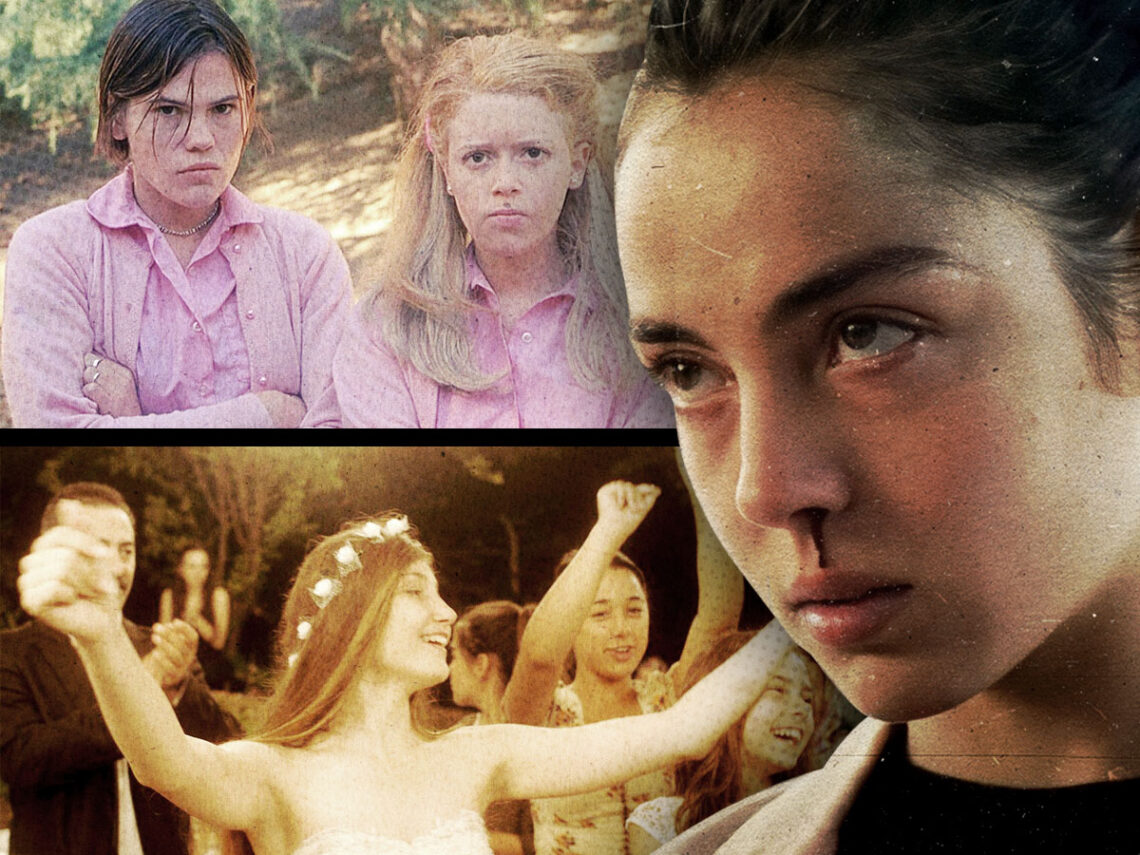
The 10 best movies about girlhood

Unfortunately, for decades, cinema has predominantly prioritised the voices of men. It wasn’t until the 1980s that teenage girls were given more screen time, with the popularity of John Hughes’ teen flicks giving the coming-of-age genre credibility. However, Hughes’ films were highly flawed and failed to tap into any real understanding of girlhood, despite most of his coming-of-age films, such as Sixteen Candles and Pretty in Pink, being led by a female character.
The 1990s and early 2000s gave rise to comedies led by teenage characters, such as Clueless and Mean Girls, designed to capture the American high school experience. Whilst these films certainly have their own merits, these films follow privileged, white, middle-class, straight teenage girls, thus failing to accurately represent the scope of girlhood that really exists. Furthermore, these films, designed to appeal to a mass audience, fail to dig deep into the harsh and often disturbing realities of being a young girl.
Luckily, the past two decades have seen an influx of directors, mainly female, dedicating their time to exploring the complexities of growing up. Their works deal with hefty topics, such as class, race, and sexuality, as well as themes of domestic and sexual assault, bullying, social isolation, and even war. Films that depict such vital topics are incredibly important, not only for teenage girls to identify with but for others to understand the difficulties that being a young girl can bring.
From Andrea Arnold’s thrilling exploration of an isolated working-class girl, Fish Tank, to Jamie Babbit’s pastel-coloured queer classic But I’m A Cheerleader, here are ten of the best coming-of-age movies about girlhood.
The 10 best movies about girlhood:
Fish Tank (Andrea Arnold, 2009)
After winning an Academy Award for her 2005 short film, Wasp and the Cannes Jury Prize for her debut feature, Red Road, Andrea Arnold returned with arguably her best work, Fish Tank, in 2009. The film follows Mia (Katie Jarvis), a socially isolated 15-year-old girl who lives on an east London council estate with her neglectful mother and precocious little sister.
Lonely and disillusioned, Mia finds solace in the company of her mother’s boyfriend, Conor (Michael Fassbender). Yet their relationship quickly turns inappropriate, and Arnold portrays Mia’s pivotal summer of innocence lost with great sensitivity. She weaves astute class analysis with an exploration of male abuse of power, resulting in a captivating coming-of-age tale.
Girlhood (Céline Sciamma, 2014)
French director Céline Sciamma created an unofficial trilogy of coming-of-age films between 2007 and 2014, beginning with Water Lillies, before 2011’s Tomboy and 2014’s Girlhood. All are excellent coming-of-age tales, yet Girlhood stands out for its representation of black teenage girls living in a deprived neighbourhood outside of Paris. Sciamma intended to use her privilege as a successful white director to spotlight characters she believed to be underrepresented in French cinema. She scouted actors from the streets and allowed them to help shape their characters into realistic depictions of young French black youth.
According to Sciamma: “I wanted to give a fuller picture of what it means to be a woman in modern-day France and of the multitude of identities that exist. I looked to give centre-stage to girls that aren’t paid attention but are just as modern and French.” Girlhood explores gender, race and class with precision.
Fat Girl (Catherine Breillat, 2001)
Fat Girl is perhaps the most brutal film on this list, yet one that feels utterly essential to understanding the plight of girlhood. Directed by Catherine Breillat, a champion of the New French Extremity movement, Fat Girl, also known as À ma sœur!, follows Anaïs, an overweight young girl holidaying with her family by the French seaside. Whilst Anaïs is desperate to lose her virginity, claiming that doing so with a stranger would be good enough for her, Elena, her attractive older sister, wants to save the moment for someone she loves.
However, the pair’s holiday becomes incredibly transformative, with Breillat capturing teenage coming-of-age in the most harrowing of ways. Fat Girl is intense viewing, garnering much controversy upon its release. But that is Breillat’s point, and Fat Girl uncovers the darkest moments of girlhood, morphing this coming-of-age tale into one of horror.
Pauline at the Beach (Eric Rohmer, 1983)
French auteur Eric Rohmer began his Comedies and Proverbs series in 1981 with The Aviator’s Wife, focusing his attention on female protagonists. In the third entry, Pauline at the Beach, Rohmer takes us to the coast of north-western France, where 15-year-old Pauline is holidaying with her older cousin Marion. At the beach, they meet Marion’s pathetic ex-lover Pierre, a domineering and sexually-obsessed man named Henri, and a local boy called Sylvain. Throughout Pauline’s holiday, she discovers the destructive follies of love and realises that adults can be equally as immature as adults.
Rohmer’s comedic romp through the French seaside is visually stunning and excellently written and performed. Whilst Henri’s sliminess drips from the screen, Pauline is always loveable as she navigates her way through a landscape of vulgar and desperate men.
Welcome to the Dollhouse (Todd Solandz, 1995)
Todd Solandz’s Welcome to the Dollhouse presents us with one of cinema’s most underrated and charming outsiders, Dawn Weiners. An outcast at school and home, awkward and gawky, Dawn spends her time trying to win the affection of her older brother’s high school heartthrob friend, escaping the taunts of the main bully Brandon, and slicing the heads of her sister’s Barbie dolls.
Infused with black humour, Welcome to the Dollhouse captures the loneliness of not fitting in, suggesting that not adhering to the ideal female beauty standards can be detrimental – even when you’re 12. The film tackles hefty topics, such as sexual assault and paedophilia, with honesty and awareness of their weight, making Welcome to the Dollhouse a fascinating coming-of-age tale like few others.
But I’m A Cheerleader (Jamie Babbit, 1999)
Painted in bright pinks, purples, blues and greens, entering the campy world of But I’m A Cheerleader is endless fun. However, Jamie Babbit’s queer classic is a landmark entry into the LGBTQ+ movie canon, which, especially regarding lesbian representation, is relatively sparse. Through the candy-coloured outfits and set designs, Babbit pokes fun at strict gender norms, often subverting colour theory to highlight the flimsiness of traditional stereotypes.
Regarding the film, Babbit said: “I always wanted to tell a movie about a girl who embraces her lesbianism, but she doesn’t ride off on a motorcycle at the end. She’s still a cheerleader, girly girl at the end — and just separating the idea of gender from sexuality.”
Mustang (Deniz Gamze Ergüven, 2015)
Deniz Gamze Ergüven released her powerfully moving debut feature film Mustang in 2015, depicting the complicated lives of five orphaned sisters. The film opens with the sisters enjoying the sunny day with some local boys, playing with them in the sea. However, this event sparks outrage in their conservative Turkish community, and the girls are forbidden from leaving home. Soon enough, their family arranges for them to be married off, much to the dismay of the young girls.
Mustang is equally beautiful and tragic, highlighting the strength of sisterhood. Ergüven explores society’s bizarre obsession with female purity with attentiveness, resulting in an intelligently-crafted study on femininity and bravery.
Raw (Julia Ducournau, 2016)
Julia Ducournau uses body horror to convey the terrors of coming-of-age in her debut feature Raw, starring Garance Marillier. Described by the director as “a modern ancient tragedy about too much love,” from start to finish, Raw taps into the dark underbelly of repression. The film follows Justine, a young first-year veterinary student and vegetarian. After an initiation ceremony, which forces Justine to try meat for the first time, she develops an intense craving for human flesh.
Raw is a genre-bending exercise in filmmaking, incorporating humour and typical teen issues with horrifyingly graphic scenes of Cronenbergian body horror. Yet you can’t look away from Ducournau’s coming-of-age masterpiece, marking her as one of France’s most prominent new cinematic voices.
Persepolis (Vincent Paronnaud, Marjane Satrapi, 2007)
Set during the 1979 Iranian Revolution, Persepolis, named after the historical city of the same name, follows Marjane ‘Marji’ Satrapi, a young girl who watches the events of this transformative period unfold. However, once the hated Shah is overthrown, Marji experiences the new Iran’s equally oppressive ideals firsthand. She struggles with depression as the repressive government takes its toll on her well-being.
The beautifully animated film was adapted from Marjane Satrapi’s autobiographical graphic novel of the same name. Persepolis is both funny and heartbreaking, weaving humour with tragedy and imaginatively exploring the complex coming-of-age experience against a backdrop rarely depicted on screen.
The Florida Project (Sean Baker, 2017)
Sean Baker’s pastel-coloured coming-of-age tale The Florida Project follows a six-year-old girl named Moonee, who lives with her single mother in a budget motel near Disneyland, unable to afford a trip to the magical theme park. To fend off homelessness, Moonee’s mother sells knock-off perfumes to tourists and engages in prostitution, often sleeping with men whilst Moonee sits in the bath. Baker lets Moonee and her friends lead the film, exploring the empty corridors of the motel as if they’re part of Disneyland’s Haunted Mansion.
The Florida Project is profoundly empathetic, spotlighting the difficulties of making ends meet without an ounce of judgement. Brooklynn Prince gives an incredible performance as Moonee, and the end scene is enough to make the coldest-hearted person shed a tear.
