


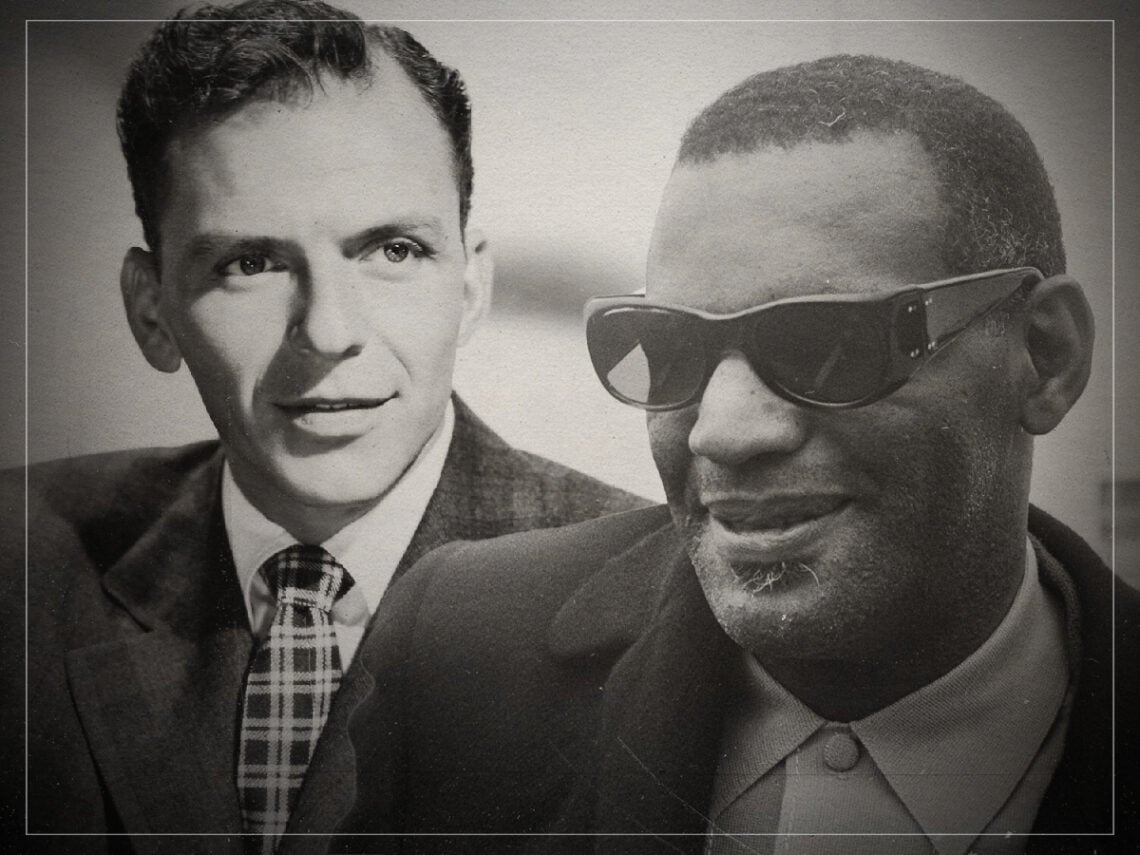
‘That’s Life’: The song Frank Sinatra prevented Ray Charles from singing

Frank Sinatra really was the perfect musician to become a mega star in the 1950s.
Buoyed by this new sense of post-war optimism, artists created music that ultimately mirrored that idea. There was no room for the nuance and rebellion of later movements like punk and psychedelic rock; instead, it was all about jubilation through the expression of either 12-bar blues or big band music à la Frank Sinatra.
His charming baritone and winning grin combined to make him the perfect orator for this new era of artistic optimism. In essence, he represented everything the ‘American Dream’ sought to advertise: wealth, opportunity and crucially, good looks. Which, when paired with cinematic hits like ‘My Way’ and ‘Fly Me To The Moon’ made for a bona fide mega star.
It meant that Sinatra had somewhat of a chokehold on songs of a certain ilk. Songs made with a big band in mind, and whose lyrics were straightforward yet inspiring, were swiftly offered to Sinatra, for he had the characterful performing ability to turn them into something else. Take ‘That’s Life’ for example. It seems almost impossible to imagine the big band stabs and vocal drawl to be performed by anyone but Sinatra.
Despite being anything but, he yet again somehow embodies the underdog spirit of the song’s subject line and inspires the listeners to ignore the negativity and not let anything stop them from achieving their dreams. It was Sinatra, who sat very comfortably in his wheelhouse.
But there was an alternative universe in which this song didn’t actually belong to the famous crooner. No, if you listen to the song once more, and pay close attention to the organ chords that introduce the song, it might give you a good idea of who almost took it from his clutches.
That’s right, the soulful icon Ray Charles almost took control of ‘That’s Life’ and made it one of his own hits. When Dean Kay penned the track, it was Charles’ voice who initially came to mind, and so he tried pitching it to him. Instead, it found its way to two relatively unknown singers named Marion Montgomery, who recorded it first, and then OC Smith.
When Sinatra caught wind of Smith’s rendition on the radio, he requested that Nancy secure the rights to the song so that he could record what is now an iconic version of the song.
“Under U.S. Copyright Law, because the song had been recorded, it was freely available for anyone to record subject to paying the full statutory royalties to the copyright owner,” Kay explained. “In an attempt to forestall anyone else from cutting the song before the Sinatra record was released, the publisher immediately sent people all over town to pick up demos and lead sheets that had been delivered to producers and artists.”
“Ray Charles’ office was one of the stops,” Kay added. “We were told that Ray was planning to cut the song but he was so upset by the demo being taken away from him he never got around to it.”
Sinatra did what he does best, which is take the template of a song provided to him and elevate it into something characterful and captivating with his own style of performance. But nevertheless, I’m sure there is a Ray Charles version that could have been just as much, if not more, of a cultural impactful song.
