


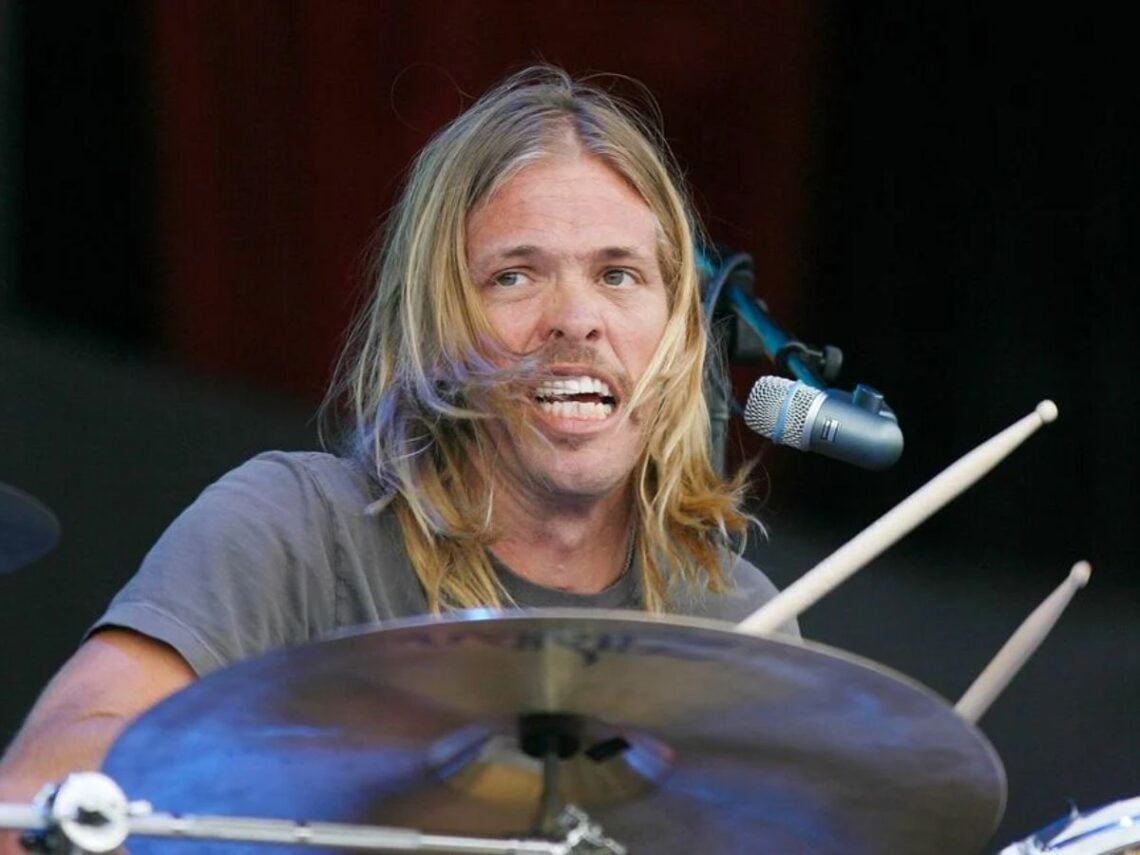
Taylor Hawkins on the song that improved Foo Fighters: “Worked on everything without beating the hell out of it”

The Foo Fighters have always stood tall as one of the strongest pillars of modern rock music over the past 30 years, which is quite remarkable when you consider the amount of tragedy that has been thrown their way in that time. Of course, that sadly includes the late, great Taylor Hawkins, whose sudden tragic passing almost three years ago shook the band to their core and tested their very foundations.
However, it was in areas of such stark bleakness that Hawkins himself realised what the golden energy of the Foo Fighters really was, and in that spirit, it seems only right that Dave Grohl and Co. have continued on as a salute to his legacy. Yet before all that came to be, there was one particular moment that Hawkins recognised as a turning point for the band, both in a deeply personal sense and from a sonic perspective.
The 2005 album In Your Honor was significant in a number of ways, not least because it features one of just two songs in the band’s entire back catalogue where Hawkins takes the pole position as lead vocalist over Grohl. However, it was the resonance of the record’s closing track, aptly titled ‘The Last Song’, that Hawkins viewed as a poignant reckoning of the band’s past and future.
He said: “It’s what ‘Breakout’ [a single from a previous album, There is Nothing Left to Lose] should have sounded like. A lot of things on this record, to me, are what a lot of old past songs should have sounded like. With this record, we worked on everything without beating the hell out of it, just getting the best, most intense, energetic performances.”
While ‘The Last Song’ was clearly an epiphany from a sonic standpoint, there was also reason to believe that it marked the closing of a chapter for frontman Grohl in his personal influences on the Foo Fighters’ work. Fans roundly believe that this was Grohl’s farewell to Kurt Cobain as it was the final track he has ever been believed to have written about his Nirvana bandmate, whose suicide in 1994 the Foo Fighters was borne out of.
In this light, although many an album closer can take an emotional turn, ‘The Last Song’ was loaded with gravitas for the band that felt like their roots were being compartmentalised, as it was finally time to face the road ahead. For Hawkins, this did, in no uncertain terms, improve the sonic quality of their output; perhaps a weight had been lifted in a way that allowed Grohl to be freer from the shackles of grief.
Naturally, life has a way of bringing these poignant moments back around in times that can feel tough to bear. Indeed, the fact that Taylor Hawkins voiced these thoughts about the band’s future when he would not live to see it out fully himself is an emotionally charged sentiment, but it just shows what greatness the Foo Fighters carried both in their history and in their midst. The story may be heavy, but the legacy of both Hawkins and Cobain is completely electric.
