


Tame Impala’s Jay Watson gets back to basics with new GUM album ‘Saturnia’: ”There’s little reprieve from the wall of sound”

While lockdown brought unproductive angst and uncertain futures for many, for Jay Watson, it saw the birth of his sixth solo record under the alias GUM. As a solo artist and an integral part of Pond and Tame Impala, Watson undeniably possesses an innate understanding of psychedelic rock, but in his latest creation, Saturnia, he delves deeper into the genre’s intricacies and infuses it with fresh doses of cosmic vitality.
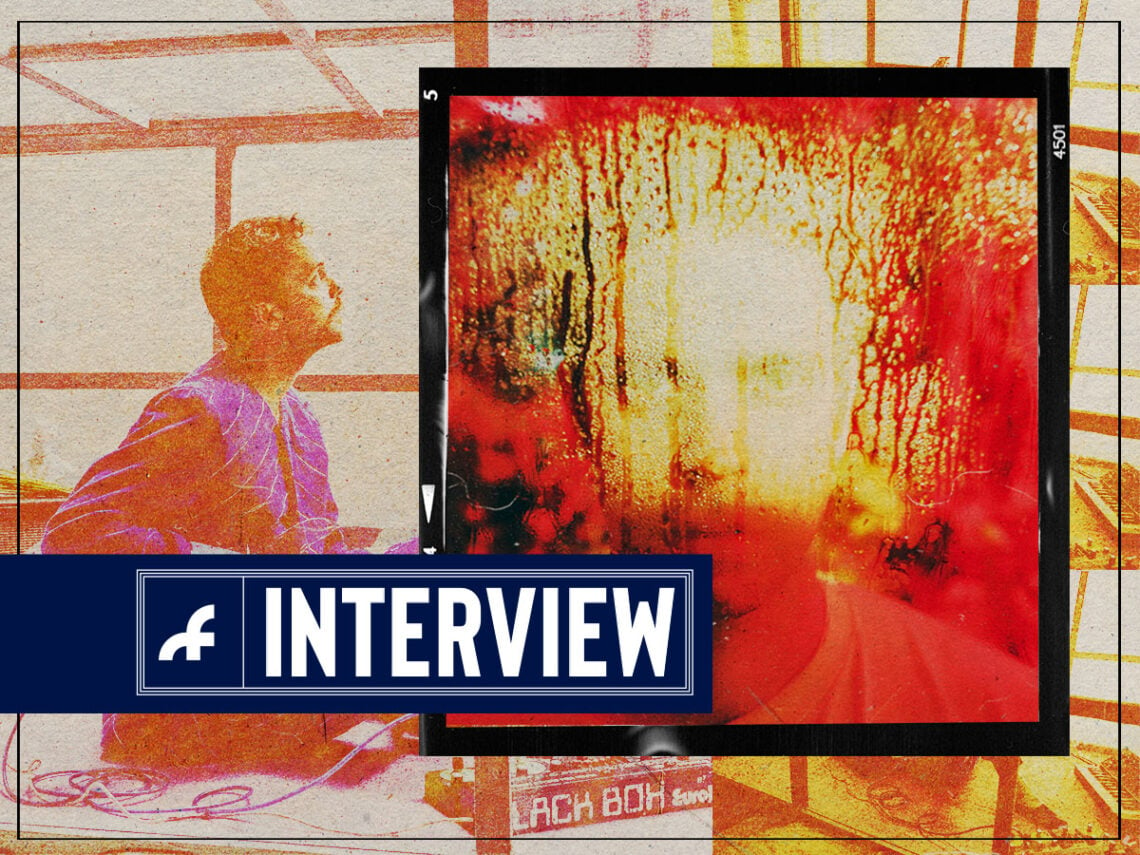
The album artwork for Saturnia, featuring an enigmatic photograph of Watson set against a burnt orange aesthetic, may pose a challenge in discerning the precise direction of the album. You may even think it’s one-dimensional. However, in reality, Saturnia is a seamless journey that effortlessly bridges the earthly and cosmic realms, featuring live drums and acoustic guitars entwined with expansive electronic elements, all complemented by Watson’s velvety vocals.
Speaking with Watson himself, it’s clear that this distinctive yet elusive feeling was entirely intentional. “I took my time a little bit more,” Watson admits, “I would work on bits of music for a lot longer before I actually started recording.” Penning songs during the Covid-19 pandemic might have felt somewhat unpredictable, especially considering that Watson wrote the album while looking after his newborn son.
This transition meant he had to dismantle his home studio and repurpose it as his son’s room, but this ended up benefiting his process and keeping the whole thing simple. “Because of Covid-19 and because I had a new kid, for the first time ever I would write songs and think about them months on end,” he says.
As the album continued to develop, it became a starting point for a much broader, more adventurous, and musically enriching journey. What makes Saturnia particularly gratifying is how the songs pivot and unpredictably transform along the way, initially starting as one thing before catapulting into an entirely different musical realm, a natural sign of their long gestation.
There are also a lot of ways that Saturnia distinguishes itself from GUM’s previous five albums. Although it may come as a surprise to those familiar with Watson’s drumming for Tame Impala, most of GUM’s prior records heavily relied on drum machines and samples. However, on Saturnia, he opted for live drums and incorporated a broader range of organic instruments. “When you use drum machines or samples,” he says, “you tend to sort of copy and paste a lot. And then, because I’ve been playing drums forever, I’ll just do takes and then go through and edit them later and chop them up.”

In contrast to his contributions to Pond, Watson also delved into a more “robotic” sound, embracing the allure of employing a less precise and more spontaneous approach that avoids the pitfalls of excessive polishing. At the same time, Saturnia was also very much an exercise in restraint. Whereas previously, when Watson would create with the liberty of boundlessness, he imposed certain constraints on the new album to improve its overall sound. “I’m not very good at it,” Watson jokes, “on this album, there’s little reprieve from the wall of sound.” When you possess his skill in blending a myriad of moods and sounds that arise in your mind, the task lies in discerning what to pare down for the song’s improvement, a feat he executes masterfully on Saturnia.
Another crucial aspect of Saturnia, that solidifies it as an unfiltered reflection of Watson’s current musical journey, is his collaboration with Pond bandmate, James Ireland. “I think when you start to do too many overdubs with your band, or too many tracks on tracks, you start to feel a bit self-indulgent,” he says, “but when it’s yourself, you just keep going. That’s why this time, I brought in James Ireland; he’s a producer, an engineer, and a really good mix engineer. We would book studios on our days off in Europe; he would help me by asking important questions like, ‘Do you actually need this?’”
During the making of the album, Watson ventured into a unique direction and refrained from directly drawing upon the sounds of other artists. At the same time, this made the end result reflective of some of his favourite musical icons. “I think I’m getting better at not directly referencing things,” he says. “I used to be like, ‘I’m going to do a Led Zeppelin thing here’. Whereas now, I just sort of let it happen naturally. And then later on, once I’m mixing it, I’m like, ‘Oh, this kind of reminded me of that.’”
Understandably, Watson singles out ‘Saturnism’ and ‘It Lies A Lifetime’ as album standouts, along with the middle section of ‘Fear Of Joy’, which departs from any existing expectations and takes us on a journey through Watson’s psyche, culminating in a slightly jazzy feel. Equally, ‘Muscle Memory’ provides one of his more daring contributions, resulting in a sound that, as he puts it, is like “heavy metal Stevie Wonder”.
Above all, Watson exudes a remarkable down-to-earth demeanour. He emphasises that, unlike some other musicians, there was nothing particularly extraordinary about his experience or the writing process for Saturnia. When it comes to new music, fans and readers often seek attention-grabbing headlines, overlooking the fact that even the more relaxed artists possess the significant talent to pursue their craft in their own solitary corners.
“I’m very fortunate to have not gone through [any big event],” Watson says. “Context is very important to [fans], and people are always telling the backstory of records, which I find really interesting.” Even though Watson doesn’t ever really focus on a single theme, much less delve into any particular dramatic unfolding during the creation of Saturnia, perhaps that’s why the record is one of rock music’s most effortless odes to defying convention. It is a sonic exploration, and that journey is both more important and yet inseparable from what came before it.
