


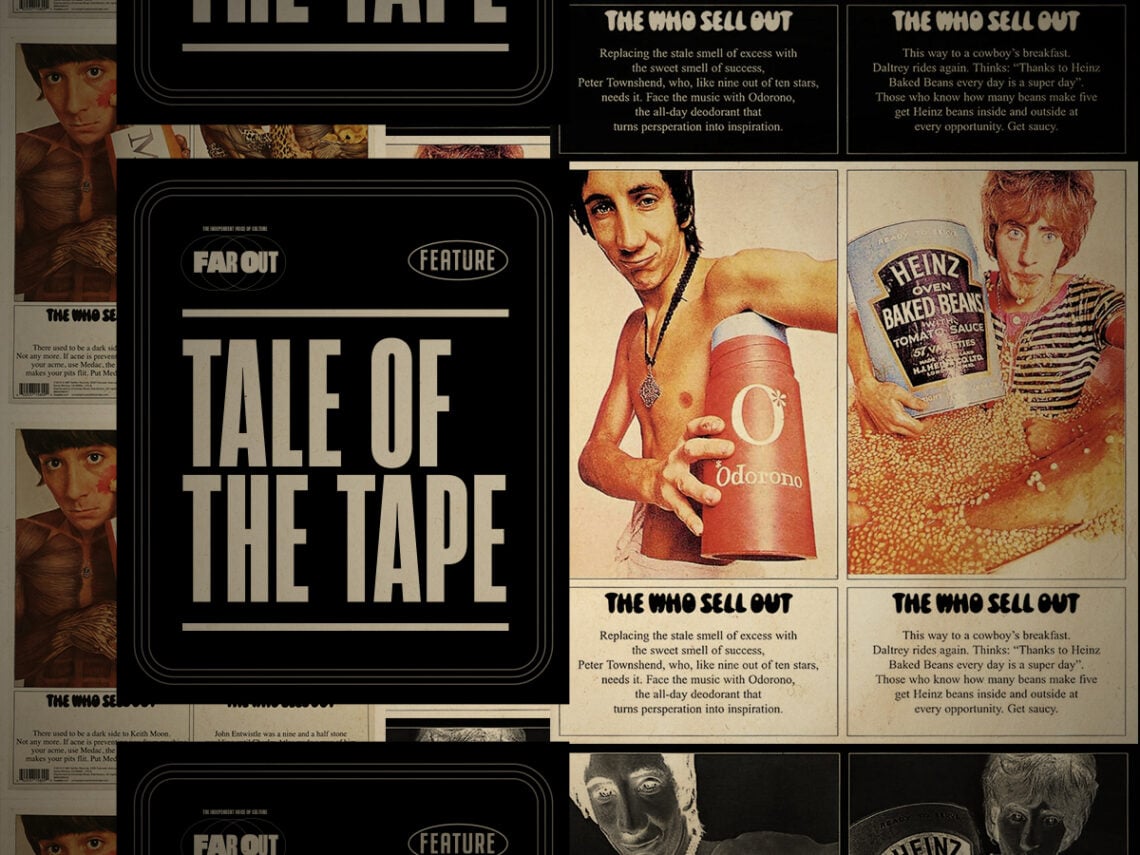
Tale of the Tape: How The Who created their postmodern masterpiece ‘The Who Sell Out’

Once you have created an era-defining anthem that alters the course of rock and roll history forever, where is there to go from there? That was the position The Who found themselves in 1967, the mod rock rebellion of singles ‘My Generation’ fading away in the rear-view mirror, and an uncertain future facing Pete Townshend and the gang.
London in the 1960s might have been the age of musical revolution, but it was also the era of fast-living and largely disposable bands. If you look back at some of the biggest records of that era, the artists who created them often didn’t last very long, in the grand scheme of the pop charts – it was one-hit-wonders galore. Even some of The Who’s most beloved contemporaries, like The Kinks, struggled to maintain the same level of success that they had established with hits like ‘You Really Got Me’.
That is where Townshend and The Who differed from their contemporaries, though. Rather than nailing themselves to one particular sound, the band were keen to continue expanding and experimenting with their output, gladly abandoning the youthful proto-punk sounds of their early output and striking upon something far more mature and artistically ambitious.
In 1967, for instance, Townshend’s art school sensibilities rose to the forefront, with The Who Sell Out offering an entirely new and completely unexpected sound for the band. Initially, in the wake of A Quick One, the album was set to be titled Who’s Lily, and a few disparate tracks were recorded alongside what would presumably have been the lead single, ‘Pictures of Lily’.
In the great tradition of The Who, though, those album plans were quickly abandoned.

Instead, the group got to thinking about their debt to the world of pirate radio. At that time, it must be remembered, radio was the prevailing means of musical distribution, and in the UK, the BBC outright refused to give airtime to the revolutionary rock being peddled by the likes of The Who and their endearingly anarchic comrades. It was only through pirate stations like Radio Caroline, Luxembourg, and Scotland that audiences were able to get their rock and roll fix.
As a kind of tribute to those essential – albeit illegal – stations, the band’s infamous managers, Kit Lambert and Chris Stamp, suggested The Who capitalise on the emerging landscape of concept albums, following in the footsteps of The Beatles’ Sgt Pepper’s Lonely Hearts Club Band, by creating a concept record around the theme of a pirate radio broadcast.
By the time that The Who Sell Out hit the airwaves, the British government had recently outlawed pirate radio, which might have been tragic for rock and roll, but it certainly worked in The Who’s favour. The album ended up as a beautifully postmodern mix of far-out tracks, bizarre pseudo-advertisements and cheesy radio jingles, some of which were so convincing that they attracted a few lawsuits from actual radio stations and jingle-writers.
It wasn’t a typical Who record, far from it. In fact, the only single from the album that made it into the pop charts was ‘I Can See For Miles’, and even that marked a significant departure from the band’s typical output. The album did, however, showcase the unwavering artistic drive of Townshend and the band, paving the way for future projects like Tommy or Quadrophenia, which cemented their position on the upper echelon of rock forevermore.
The Who Sell Out might not contain the big-hitters of other Who albums, but it remains an indisputable masterpiece of a concept album and, bizarrely, a lot of those radio ad parodies and jingles still aren’t that far removed from modern-day radio. Not only did the record cement The Who’s rock legacy, but it remains perhaps their most underrated effort of all time.
