


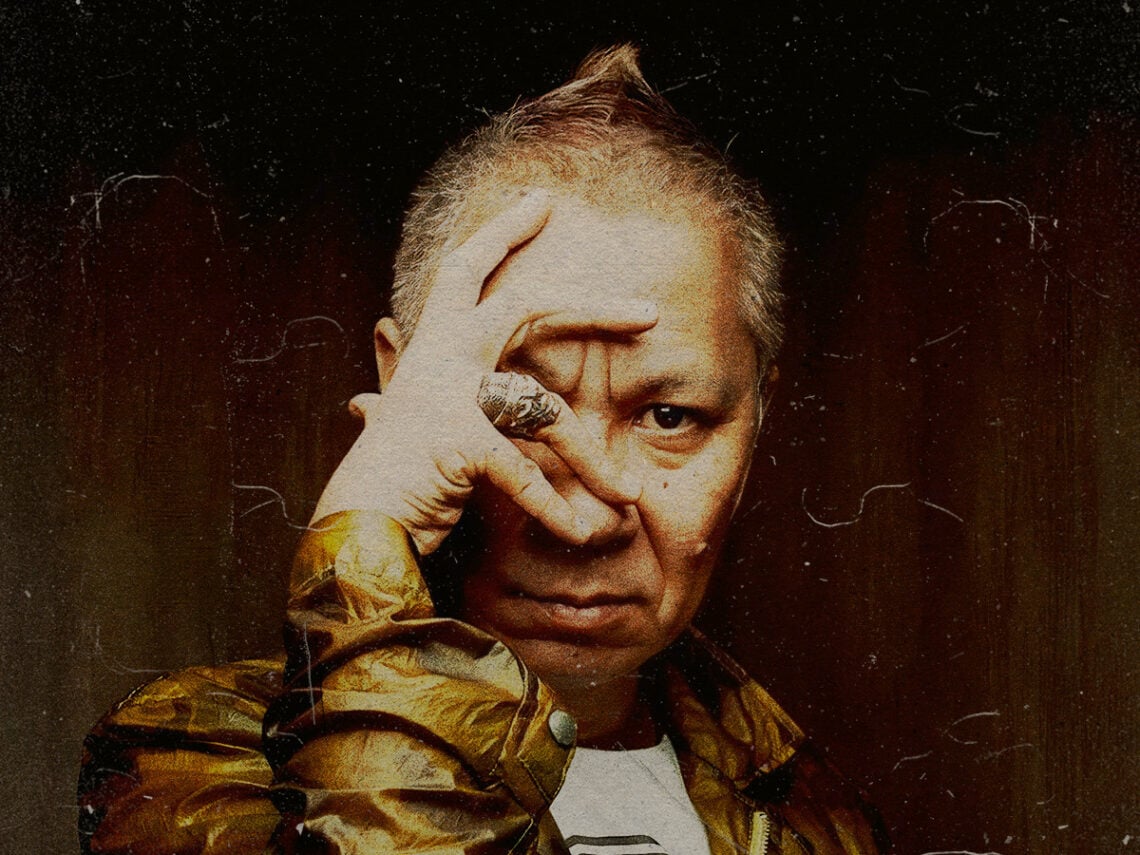
Why Takashi Miike compares his movies to “drinking a good beer”

Those who have never seen a Takashi Miike movie will likely be in shock when they gaze upon his works for the first time. A truly audacious film director from Japan, the land of general cinematic excellence, Miike is a prolific artist who has consistently pushed the boundaries of his medium in a wide range of genres.
It can be hard to pin down Miike’s general mood or aesthetic as his films vary so much in their approach to cinema. For instance, a number of his films are brimming with both violence and a sense of the surreal, including his 1999 horror movie Audition and his 2001 yakuza flick Ichi the Killer.
Such films have seen Miike explore the boundaries of the most extreme kind of human behaviour, as have the likes of Visitor Q and the Dead or Alive trilogy. Elsewhere, though, say in The Bird People in China, Miike has shown an ability to create a kinder, more family-oriented type of cinema and his many remakes of classic Japanese movies are also widely admired.
In sum, Miike is simply one of the greatest contemporary Japanese directors who is well deserving of his reputation as an auteur filmmaker. Sitting down to watch a Miike movie is likely to introduce you to a facet of humanity you might not have known existed, so having a refreshing beer at the same time is always a good idea to potentially soften the blow.
In fact, when speaking in an interview with the Roger Ebert website, Miike suggested that his films are akin to sitting back with a cold one noting, “My films are like drinking a good beer, but pleasure doesn’t mean that it cannot change someone’s point of view.” Clearly, the director thinks that there is a certain amount of pleasure that can be gained from watching his movies despite their frequent dark natures.
Sure enough, watching a film tends to be a pleasurable (or at least entertaining) experience, even when audiences are faced with the fearsome, terrifying or even confused aspects of wider cinematic genres. Discussing his feelings about the emotion of pleasure, Miike added, “Pleasure can also be a mirror of the anxiety we feel in everyday life. It can have a message inside.”
Despite the global admiration for the works of Miike, the director still thinks that his films aren’t properly appreciated in his home country, although he’s grateful that places like the Fantasia International Film Festival, based mainly in Montreal, find a love for them. “Even in Japan, people don’t understand my films,” he said. “It doesn’t matter as long as my films are appreciated at Fantasia.”
Indeed, Miike is widely appreciated in Europe and North America and is considered one of the great modern Japanese directors. Still, that hasn’t made the Osaka-born filmmaker want to be any better than the likes of Akira Kurosawa, Yasujirō Ozu, or Kinji Fukasaku. Rather, he wants to be part of the wider conversation about Japanese cinema.
“I don’t want to surpass them but be a part of their history,” he concluded. “In Japan, there was a big earthquake and a problem with the Nuclear power plant in Fukushima. Something that was very normal yesterday could change, and some things don’t go as well as we imagine.”
