


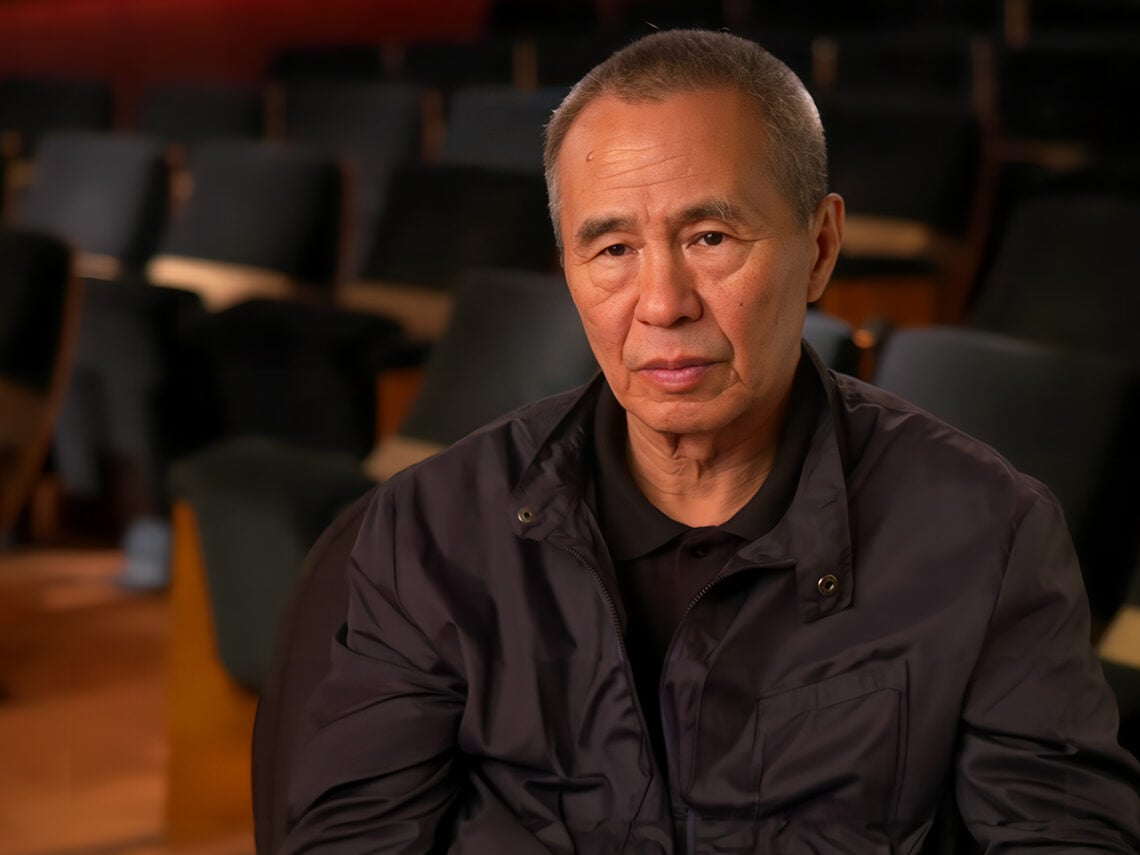
Taiwanese director Hou Hsiao-hsien retires due to dementia

It’s been announced that the acclaimed Taiwanese director Hou Hsiao-hsien has been battling with dementia and, despite having been location scouting and developing his upcoming project, Shulan River, the Asian auteur will no longer sit in the director’s chair.
As a prominent figure in world cinema, Hsiao-hsien emerged in the 1980s and contributed award-winning masterpieces such as A Time To Live, A Time To Die, A City of Sadness and Flowers of Shanghai.
The news was officially announced during film scholar Tony Rayns’ introduction to a screening of A Time To Live, A Time To Die at the Garden Cinema in London on October 23rd. The news has since been confirmed to IndieWire by a source close to Hsiao-hsien and George Crosthwait, curator of the Garden Cinema, who said the director “will certainly not work again”.
The news means his 2015 film, The Assassin, which won the ‘Best Director’ award at the Cannes Film Festival that year, will mark Hsiao-hsien’s last movie as a director. He will, however, receive a producing credit on the upcoming debut feature by his long-standing art director Huang Wen-Ying.
Be With Me will be Wen-Ying’s first movie as a director, although she’s worked closely with Hsiao-hsien since his 1995 movie Good Men, Good Women. The director’s office in Taiwan has reportedly closed, with staff being “let go”. His family, however, has retained privacy over the matter.
During the ’80s, Hou emerged as a forerunner of the Taiwanese New Wave cinema. His work played a pivotal role in positioning Taiwan as a major global cinema contributor, especially when the nation was transitioning to democracy after long years under the Chinese Nationalist government’s authoritarian rule.
This government had relocated to Taiwan following the People’s Republic of China’s takeover of mainland China in 1949. Notably, Hou’s A City of Sadness broke barriers by being the first Taiwanese film to address the February 28th Incident.
This tragic episode from 1947 saw thousands of Taiwanese civilians fall victim to Nationalist-led massacres amidst the chaos of the Chinese Civil War and a surge in anti-communist sentiments. Before this film, the tight grip of government censorship prevented any mention of the incident in the media.

Never Miss A Scene
The Far Out Film Newsletter
All the latest film news from the independent voice of culture.
Straight to your inbox.