


‘Tainted Love’ at 45: The making of Soft Cell’s iconic hit

When Dave Ball and Marc Almond first met at Leeds Polytechnic uni, they probably weren’t the kind of pair you’d expect to become major musical icons in the years to come.
But differences aside, they both felt a desire to make upbeat, uplifting music during a time when other creatives were venturing towards the bleaker side of expression.
The origin story of Soft Cell isn’t an uncommon one, involving two like-minded people (creatively, at least) and a deep-seated desire to follow their joint musical interests. It all started when Almond would hear Ball “making bleepy noises on a synthesiser” and asked him to do music for his performance art, which eventually “grew into proper songs” as the pair became a fully-fledged musical duo.
The first time Almond heard ‘Tainted Love’, he was working in a club at the time, and immediately ran up to the DJ to ask what the song was. And soon enough, the song was incorporated into their live sets, a much-welcomed, danceable pop number to mix up their otherwise “weird little pop tunes about consumerism”.
However, escapism and fun weren’t the only things that initially drew Almond to the track. As someone who’d no doubt grown up understanding what it felt like to be an outlier, socially and culturally, the lyrics were something he could relate to, much like many others who would later hear their version and feel at one with its covert elegance and endearing coolness.
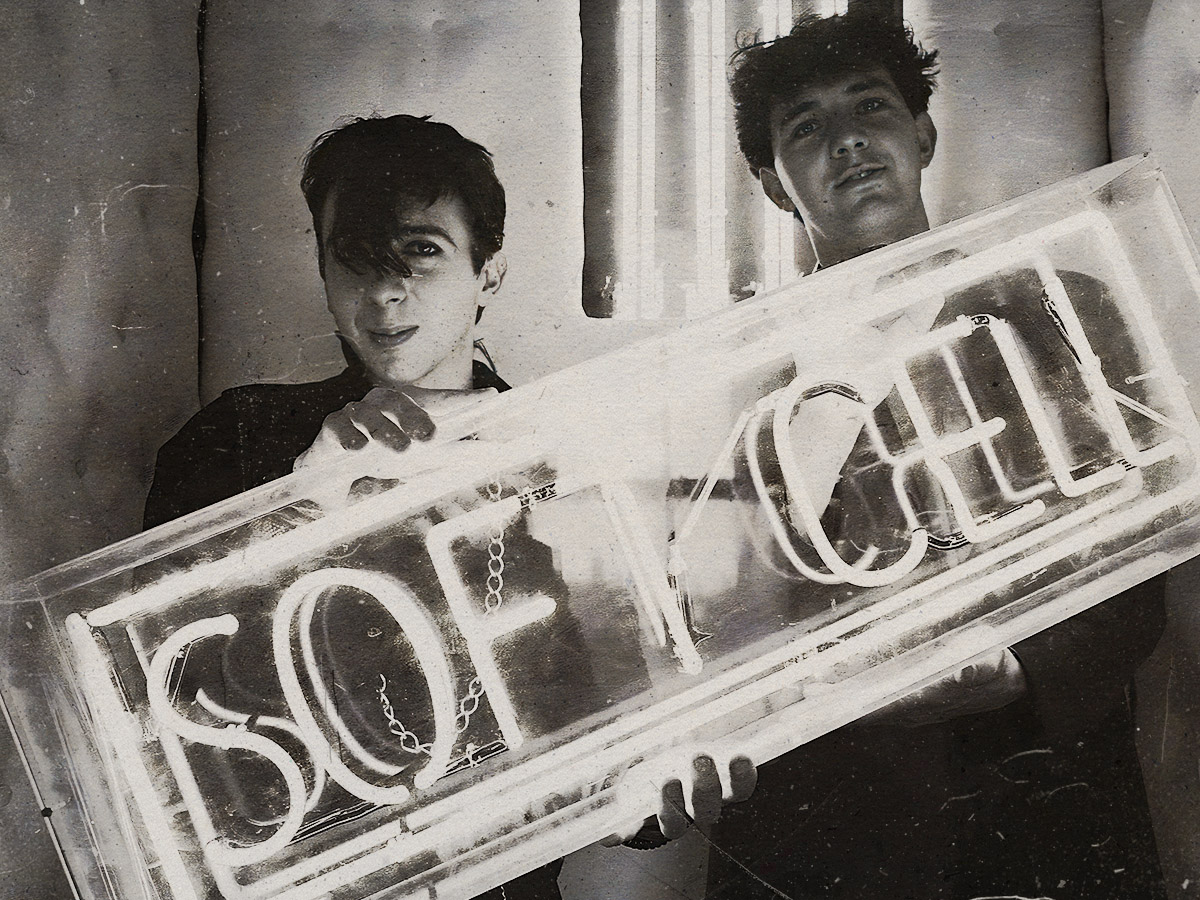
As Almond later told The Guardian, “I loved the title and the opening line: ‘Sometimes I feel I’ve got to run away.’ It summed up how I felt. It was 1981, and I was 21, already feeling world-weary after some love affairs. I adored the sneering, curled-lip aspect of the song.”
The pair were so confident with the song and their arrangement of it that Almond only performed two versions of the vocal, turning it into one of the best-selling singles of 1981 purely because they had the audacity to give it an entirely different personality compared to Gloria Jones’ fast-paced, soulful 1964 original.
That “sneering, curled-lip” aura is also part of the reason why it became an enduring queer anthem, not least because Almond himself was an out gay man, but because queer audiences could relate both to its overarching confidence and defiance and also the subtle delicacy that lingered underneath.
After all, Soft Cell’s version of the song was a risk in itself, but so too was everything that came after, from their performance of the track on Top of the Pops and how their record company warned them against wearing the studded wristbands, eyeliner and bangles because it’d be a turn-off, to how it went on to soundtrack an entire community fighting one of the biggest sociopolitical crises in history.
But perhaps its endurance also stems from the fact that it was a strike of pure genius in an otherwise contradictory social setting. As Ball recalled, they were both “living in a dodgy little housing association flat in Leeds” when the song started being played in clubs, with the song emerging from what he described as “a collision of really cheap and really expensive technology”.
Clearly, then, it wasn’t exactly the type of environment you’d expect future icons to get their start, but that’s also why the energy in the song is still palpable any time you hear it. After all, it’s bigger than its own humble origins, capturing the pure magic of optimism, ambition and raw energy amid the haze of everyday mundanity.
