

Taika Waititi picks 12 songs “to play in your time machine”
Read More


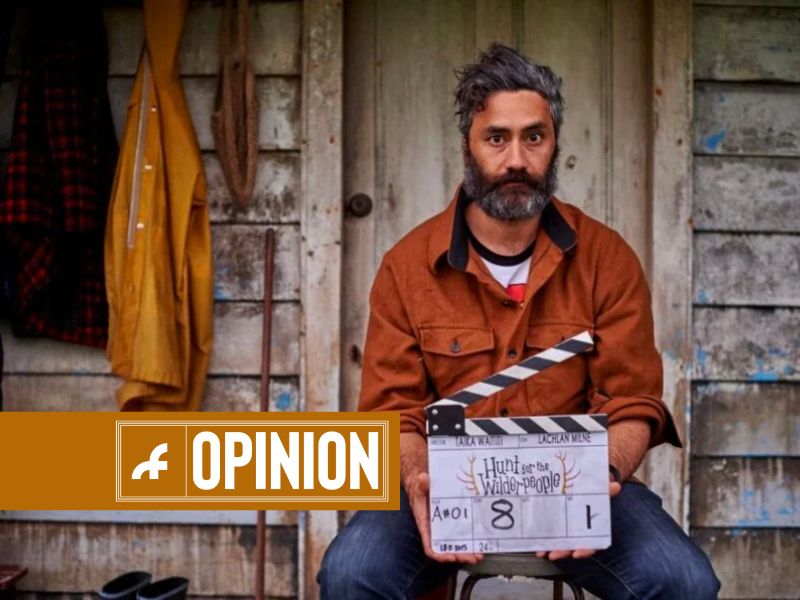
Possessing the filmmaking skills that perfectly toe the line between being a creative visionary and one that sticks to the conventions of modern cinema, New Zealand director Taika Waititi has become something of a false icon for contemporary industry innovation.
Steadily rising the ranks of moviemaking stardom to become one of the most famous names in Hollywood, Waititi became a hot property ever since his celebrated comedy feature film What We Do In The Shadows in 2014. Since then, Waititi has only grown in contemporary prominence, helming the independent coming-of-age drama Hunt for the Wilderpeople in 2016 before taking to the Marvel Cinematic Universe (MCU) one year later with Thor: Ragnarok.
Whilst it is his Marvel outing that he is most well-known for, Waititi is likely most proud of his 2019 passion project, Jojo Rabbit starring Thomasin McKenzie, Roman Griffin Davis and Scarlett Johansson. Winning the filmmaker the award for Best Adapted Screenplay at the 2020 Academy Awards, the film exceeded critical expectations in walking away with one of the most significant awards of the night.
Cracks had always been visible in Waititi’s flashy veneer, with several of his movies receiving far more attention than their actual quality was due, but this only came into question upon the release of Thor: Love and Thunder. The thudding doorstop of years of mediocrity, Waiiti’s latest MCU outing is the most desperate comedy of 2004, patronising its audience with bright colours, a barren rock ‘n’ roll soundtrack and a narrative that lacks any potency.
Indeed, Waititi’s nonchalant New Zealand comedy has gotten a little stiff, with critics of the director arguing that such had started smelling pungent ever since What We Do In The Shadows. Cynical and predictable, once you’ve experienced one Waititi one-liner, you’ve experienced them all, with each joke taking the wind from the sails of almost every one of his movies.
Unlike such celebrated comedy filmmakers as Edgar Wright, Mel Brooks and John Landis, Waititi lacks the nous to know when to slow down and cut the humour. Such an inability is laid on thick in his glib WWII comedy Jojo Rabbit which attempts to make light of such fragile subjects as the Nazis and the Holocaust. Addressing the subject with all the rushed insincerity of a teenager dashing through a museum, however, Waititi fails to give it the attention it deserves, diminishing the historical importance and atrocity of such events in a transparent, dopey comedy.
Though, it was after the release of this Oscar-winning satire that the broader world of the movie industry came rushing in, eager to get a slice of the director’s newfound combination of critical and commercial success. He was given his very own Star Wars movie, as well as the opportunity to adapt Alejandro Jodorowsky’s graphic novel The Incal, which seems like the equivalent of handing a priceless artefact to a child with buttered hands. Waititi is undoubtedly in a position of good authority in the industry.
Capable of proficient filmmaking, Waititi has demonstrated that he can be an accomplished director when he wants to be. The problem is that he far too often uses comedy as a crutch and a fall-back plan. However, it’s early in his career, and he is in a position to dominate contemporary filmmaking. Still, he needs to alter his approach and creative ethos to be critically and commercially successful.
