


“We were good at being weird”: The synth-punk story of San Francisco’s Units

With its potent countercultural history, punk naturally found an easy home in San Francisco during the late 1970s. Drawing from the same dissident energy that fuelled the Beat poets and the Haight-Ashbury hippy idyll before its lapsing into self-parody, the city’s Bay Area and orbiting neighbourhoods served as a petri-dish for some of the genre’s weirdest permutations.
Amid an explosion in underground art, film projects, subversive events, and a liberal beacon of LGBTQ+ and racial justice, a fiercely creative and forward-thinking community sprang forth from San Fran’s fertile underground. Atypical and confounding groups such as Dead Kennedys, Flipper, Chrome, Tuxedomoon, Crime, among countless others, charged with an unmistakably unorthodox yet colourful sense of affrontery uniquely born from the city’s strange fog.
Before the term new wave had even entered the musical lexicon, a cluster of like-minded misfits saw the emerging, and crucially, now financially accessible, electronic technology as punk’s befittingly new and alien instrument. Eschewing guitars in favour of portable synthesisers, a nascent breed of art-minded groups embraced the strange new tonalities that they brought, looking to New York’s Suicide, Los Angeles’ The Screamers, and healthy amounts of Devo for pointers. They welded a fizzy and urgent synthpunk sound coated in keyboards but spiked with punk’s live and crackling ephemerality. Alongside the likes of Los Microwaves and Voice Farm was the Units.
Formed in 1978 as a performance art group by Scott Ryser, Rachel Webber, and Tim Ennis, the Units wielded their synths with iconoclastic fervour, seeking to reject the frontman ego and stale band conventions that plagued the day’s rock world.
“I wanted a group that only used synthesisers to differentiate us from the ‘cute boys club with guitars’ norm that prevailed at the time,” Ryser tells us. “We incorporated some performance art theatrics, but the hardcore all-synthesiser music was the focal point. We didn’t want to ‘entertain the masses’ with our performances; we wanted it to be anti-institutional and confrontational of the status quo. So it stands to reason that we wanted to play brash-sounding hardcore music. Up to that point, the only synthesiser music I had heard was corny sci-fi movie soundtracks, experimental kooky blips and bloops, or glam rockers playing their synths like organs. I wanted the Units to sound different than all that had come before it.”
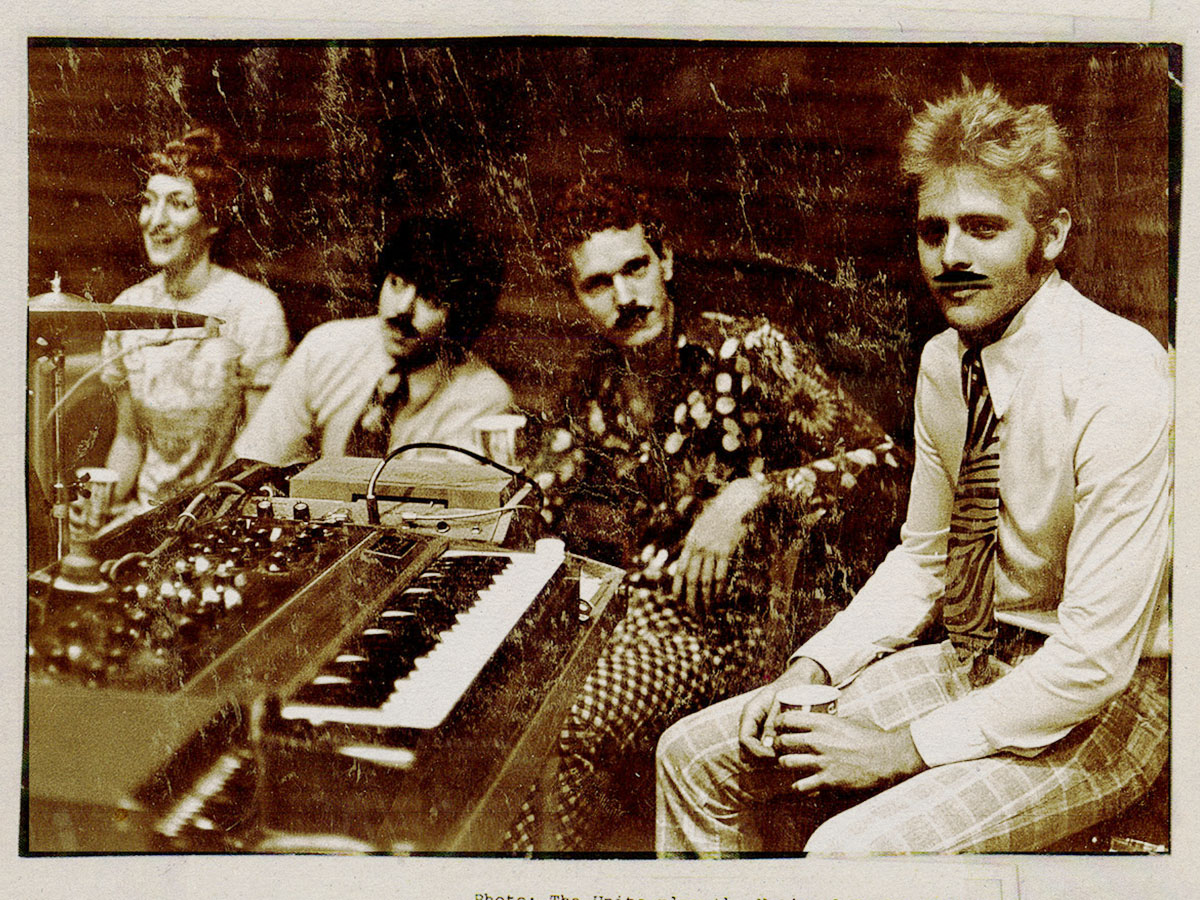
Performance art and punk went arm in arm during its heyday, especially in San Francisco. As well as regularly playing the litany of independent clubs across the city, the band would collaborate with artists such as Karen Finley and Tony Ousler, and feature in such situationist stunts as playing in the shop windows of downtown’s JCPenney store and performing their own skewed take on the National Anthem while scoring a charity boxing match between local artists Tom Chapman and Tony Labat at the Kezar Pavilion. Units also entered the world of filmmaking, exhibiting their anti-consumerist Unit Training Films collage of found footage, educational material, and soft porn in local theatres or projected during live shows, an effort to further ward off frontman distractions.
Units’ forward-thinking social critique was fundamentally shaped by San Francisco’s vibrant intersection between art and politics, pulling in all kinds of punk-fuelled creatives eager to ensconce themselves in a DIY community over schmoozing with the cultural elites and media gatekeepers.
“It’s hard for me to imagine the formation of the Units happening the way it did anyplace else,” Ryser confesses. “It wasn’t known for having big business record companies or being a media centre like NYC or LA. In San Francisco, performance artists, filmmakers, video makers, painters, graphic artists, gorilla artists, and zine makers were all friends and collaborating with each other. Cheering each other on. And daring each other to take things a step further…I don’t think creative people went to SF to ‘make it big’ at that time. They went there because they didn’t really fit in wherever they were coming from. Somehow it turned into a great big community of misfits.”
For a long time, synths were the exclusive preserve of the rich and famous who could afford them—gargantuan modular beasts that occupied rooms in the big studios or select university campuses, only lugged on stage by prog wizards such as Yes and Emerson, Lake & Palmer. In the early 1970s, portable synths first became commercially available and at least offered a blue-collar guy the choice between a car or the latest Moog.
“I bought the first Minimoog that came into Don Wehr’s Music City in San Francisco in early 1972,” Ryser recalls. “The people at Moog wrote the Minimoog serial numbers with a Sharpie pen back then. Mine is #1342. I had to sell my pick-up truck and use my paltry savings in order to buy it. My Minimoog had been sitting in the store for a while because nobody in the store knew what to do with it or how to play it. They gave me all the Moog promo materials they had in the store along with the synthesiser because they weren’t going to order any more…they figured that very few people were ready to shell out that kind of dough for something nobody knew how to play!”
Soon enough, all the band wanted a piece of the synth revolution: “Bandmate Tim Ennis got his ARP Odyssey when about 10 friends all chipped in and bought him a used one as a present after his base guitar was stolen. Rachel went through a few synthesisers before getting a Moog Source. By then, Moog was selling them to us wholesale. When Alex [Rudis, later to form Red Asphalt and score video games] joined the band for a while in the early 1980s, he had a really cool ARP 2600… I have no idea how he came up with the money for that. But it was probably why we took him on.”
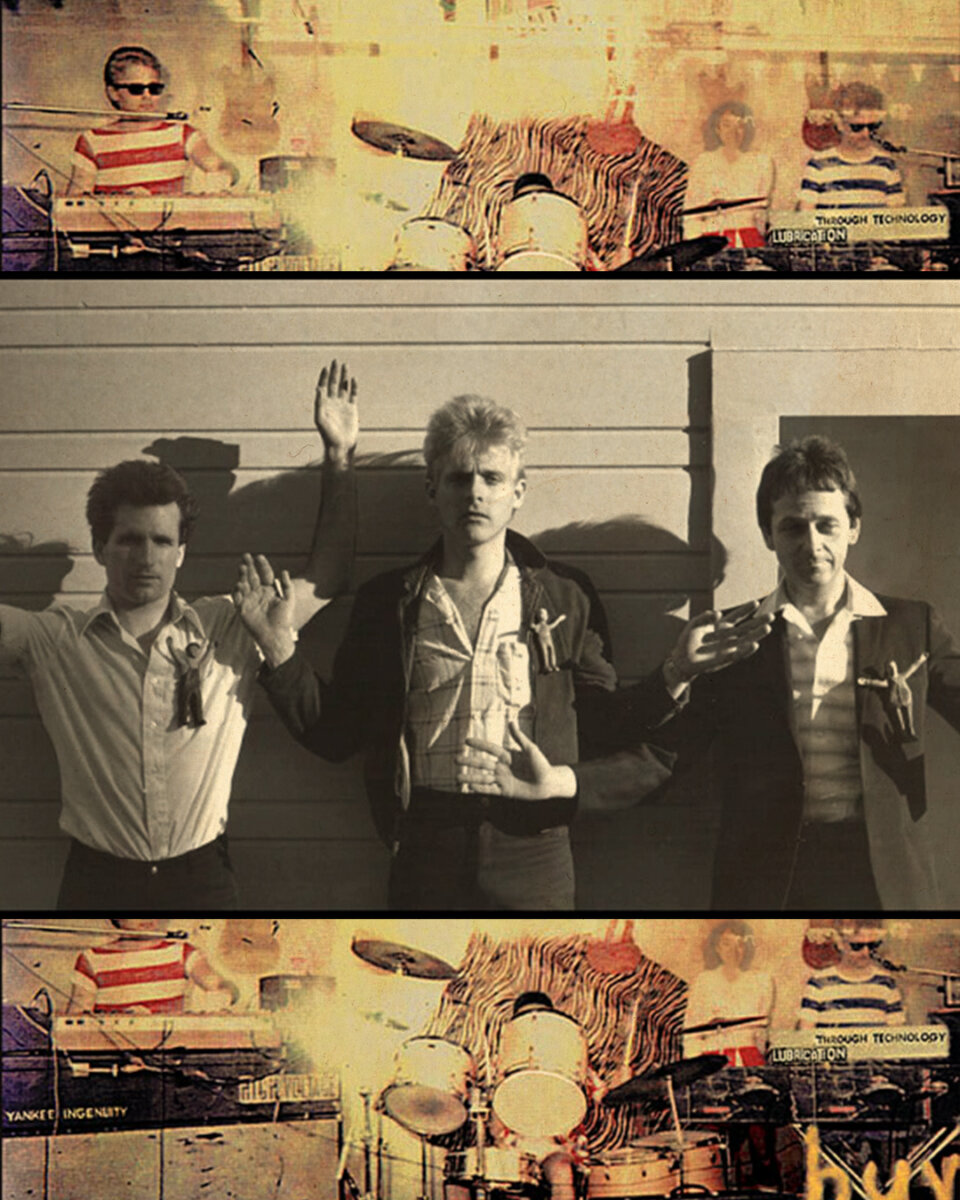
While much synthpunk at the time favoured brittle primitivity and austere hiss, Units conjured a rich and flavoursome resonance from their synths, still firmly fired-up with punk combativeness but expertly modifying their gear and running through external gadgets including a Sequential Circuits Model 800 Sequencer and an Echoplex, creating a sonic character packed with artful finesse and distinctly their own.
Their piquant and chunky electro sound was thrillingly captured on their 1980’s debut album Digital Stimulation. The first LP issued by local indie label 415 Records, with cuts such as the immortal ‘High Pressure Days’, ‘Warm Moving Bodies’, and the explosive title-track, shot a bristling attack of analogue synths and Brad Saunders’ live drums that cemented itself as the archetypal definition of synthpunk, electronics that glowed and radiated with organic bounce anchored by the percussive beat echoing the rock format. It’s an astonishing record that snaps with fresh and alive energy even after 45 years.
Despite forming key pillars of the San Francisco punk scene, and playing shows with everybody from Iggy Pop, XTC, The Police, and The Psychedelic Furs, the band’s innovative reputation in synthpunk and their involvement in the arts world didn’t quite reach the levels of exposure their peers enjoyed during the new wave rush—a label the band never cared for anyhow. Yet, around a rejigged line-up swapping Saunders for Seth Miller and adding Jon Parker for sequencer parts, Units continued to play live shows extensively and recorded their planned sophomore LP Animals They Dream About—featuring the majestic ‘Straight Lines’ and infectiously hooky ‘Blue or White’—with Be-Bop Deluxe frontman and guitarist Bill Nelson. It was buried for years due to label disagreements and contractual headaches, only seeing an official light of day in 2016 via the Futurismo reissue project.
Taking a stab at the more glossy end of synthpop, Units joined forces with Nelson once again and headed to Different Fur studios with The Tubes keyboardist Michael Cotten to cut the brighter ‘The Right Man’ single, dropped via Up Roar Records in 1982.
Yet, this was no hungry grab for commercialism, but a keen desire to ensure the band didn’t stagnate in the same sound or ideas for any length of time.
“We didn’t really want to become ‘a more accessible’ band”.
Scott Ryser
“We just thought it would be fun to try it in the moment,” Ryser added. “At that point in time, I felt like punk was dead. It wasn’t new or anti-establishment anymore. It had become swallowed up by the corporations and had become a popular commodity being sold back to the masses. I was shocked that Units had become somewhat ‘popular’ in the first place. That hadn’t been our original intention. More creative ideas were happening in hip-hop in the early ‘80s.”
‘The Right Man’ sailed to number 60 on the Billboard Disco Top 80 in January 1983, peaking at 18 a few weeks later, and Units’ flirtation with the pop mainstream was rewarded with a signing to Epic, who funded the band to head to Wales and record their ‘third’ LP at the famous Rockfield Studios. The album never materialised, with only a smattering of cuts finding release on 1983’s New Way To Move EP. Let down by the music industry once again, Ryser and Weber upped sticks to New York around Spring 1984, started a successful design company, raised a family, and effectively dissolved Units.
The band seemed destined to serve as a footnote in San Francisco’s punk and electronic history. Yet, slowly moving into the 2000s, various DJs, struck by ‘High Pressure Days’, undimmed synthpunk’s power by remixing the track, adding to curated compilations, and it saw new life in select vinyl issues.
Before long, the Community Library label released The History of The Units retrospective in 2009, and most of their back catalogue was officially available, including their definitive Digital Stimulation LP. As well as dropping 2019’s solo album Flying Away, Units’ legacy still keeps Ryser occupied: “I spend a fair amount of time licensing songs to films, video games, and other bands covering Units songs. Mainly ‘High Pressure Days’. It’s been covered, released, or remixed by over 50 DJs, bands, etc., from all over the world.”
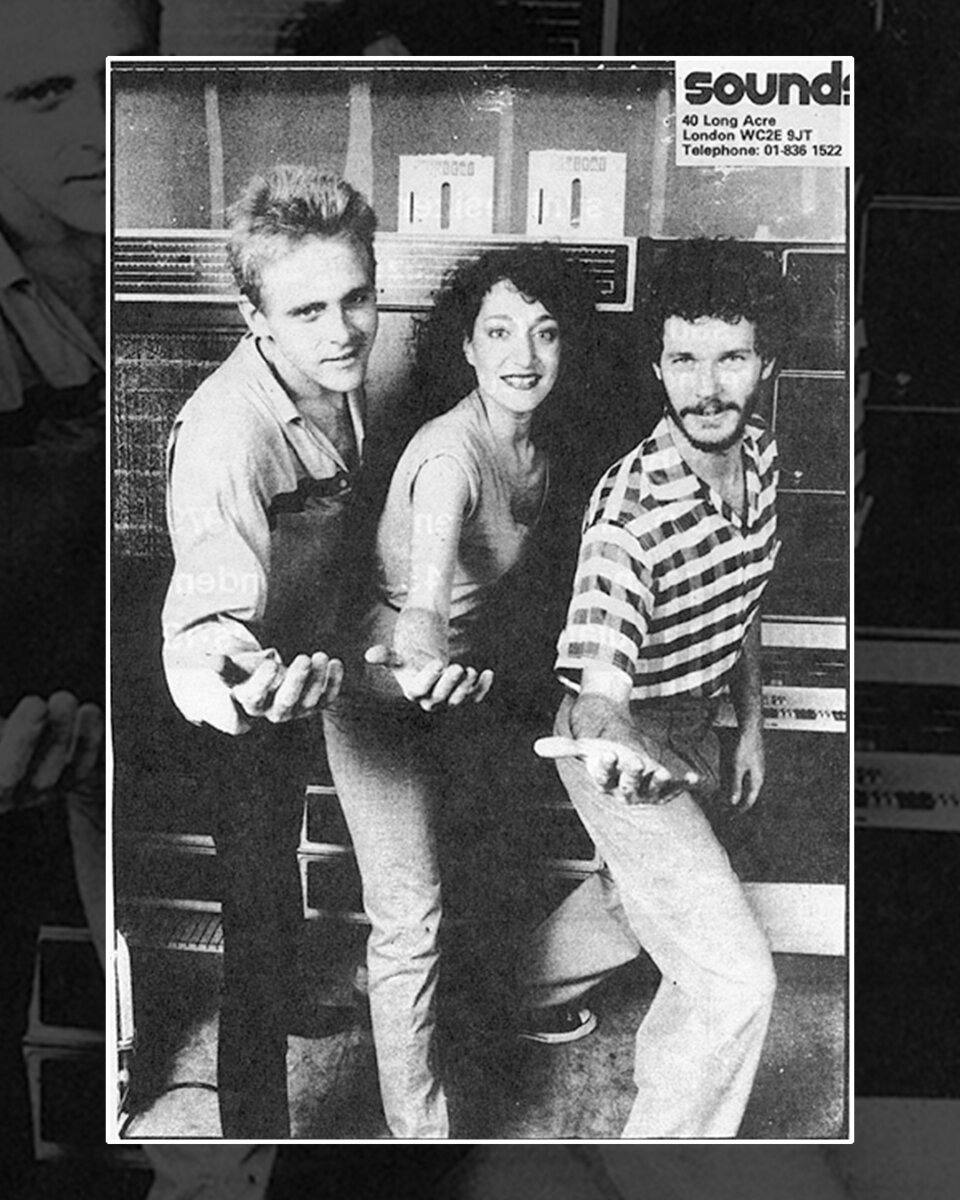
With such attention on them and the resurgence of their commercial fortunes, many a fan has longed for the chance to see the band in the flesh for a series of shows, but Ryser sees those years as formative but confined to history. “I’ve been asked several times over the years, but I’m quite happy with how it all happened in the past,” he says. “I’m content to leave it that way. Good memories. The concept of the Units was new and different in the late 1970s. Not so much so now. I don’t want to get up on a stage in my ’70s and try to ‘act’ punk—although my grandchildren might get a kick out of it!”
Units’ dues were a long time coming. Through the dramas and misfortune of label bullshit that’s befallen many a great band, they nonetheless left an incredible body of work that rubs shoulders with the very best of the new wave generation, wielding synth attacks and artfully sly, excoriating lyrical jabs that swirl together in a breathless blast of dynamic, processed Moog arrangements that never compromised on the raw electricity that hung in the San Francisco air. At their heart and lying buried in their sonic foundations, however, was always punk’s liberatory ethos.
“I considered our band as punk at the time,” Ryser concludes. “It was a word that didn’t seem as narrowly confined as it is now. To me, it was a word that signified a kind of black humour, DIY, anti-authoritarian, cultural revolution of sorts. In my mind, it wasn’t so much a music genre as a lifestyle. I remember the day I first read in some magazine that our band was called this new thing…‘new wave’…and that actually bothered me quite a bit. Because then it classified us, like we belonged in a certain bin at a record store, and we had become a commodity. I thought that ditching the traditional guitars and making untrained music with synthesisers was about as ‘punk’ as you could get.”
Always careening along a trajectory that defied conventions, even when tasting Billboard success, the story of Units is one of sticking to your creative guns and fighting tooth and nail to maintain the integrity of your art, whatever it may be. Still sounding modern, warped, and teeming with vitality, Digital Stimulation and the surrounding recording sessions now rightfully stand as classics of the era, confidently squaring up to any of the indie-dance acts or keyboard-gunked ‘egg’ punks that litter today’s Bandcamp.
“We were good at being weird,” Ryser laughs when assessing the Units’ turbulent few years in the music world, “Thank god it didn’t work out!”

Never Miss A Beat
The Far Out Punk Newsletter
All the latest Punk content from the independent voice of culture.
Straight to your inbox.