


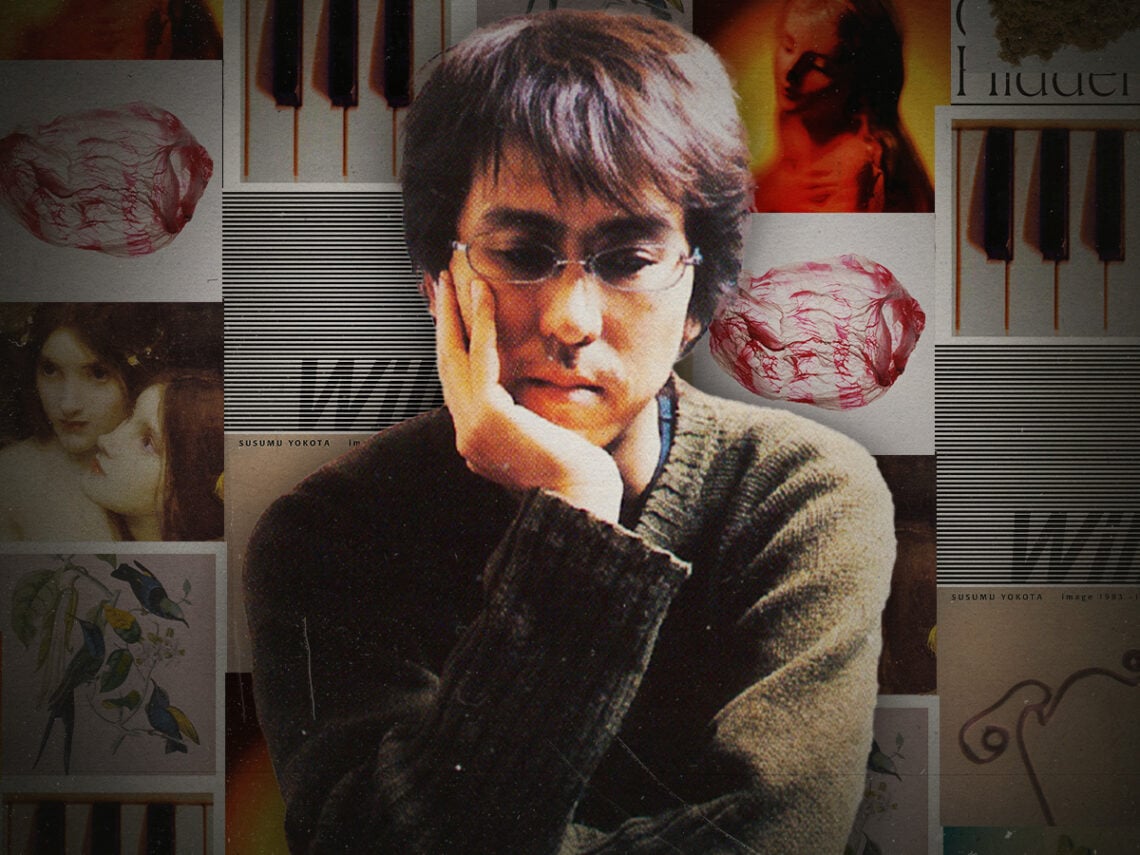
Susumu Yokota: the inventor of a thousand genres

The lines separating genres are getting blurrier by the day, and Susumu Yokota played a key role in bringing different sounds and styles of music under one roof to create the universality that we’re so accustomed to today.
Although he passed away at the young age of 54, the Japanese artist left behind enough material for several lifetimes. It has now been a decade since he left us, yet his catalogue only gets greater with time. Not to take away from all that he accomplished during his time on earth, but the online community certainly helped bring his work back into rotation in his absence. In hindsight, the versatility he demonstrated and the proficiency with which he pulled it off have made him somewhat of an icon in an era that is largely genreless.
A professional shapeshifter, Yokota seemed easily bored by consistency in art, and his creations demonstrated that in the most riveting manner. If his career were condensed into one word, his discography may be classified as “ambient” or “atmospheric”. Upon closer inspection, however, it becomes clear that the product was far more complex than the impression it creates from a distance. The Toyama native was always a wizard in the studio, which is why he thrived in the house, techno, and broader electronic music space under his many alter egos: Stevia, Ebi, Mundi, Tenshin and more.
In 1998, he founded the Skintone label and began publishing all his music under said banner. Having created his own world to channel his busy mind, Yokota began churning out music and experimenting with a full range of motion.
His second release on the imprint was a compilation of recordings titled Image (1983–1998), which, as the same suggests, included tracks from across 15 years. The charm of this package lies in its fuzzy and fragmented aesthetic as it bundles together all his influences, sometimes even coming off as a little scatterbrained. Quite different from the polished sound he would become famous for, this project is arguably some of his rawest work. In particular, the cut ‘Fukuro No Yume’ stands out for its high-impact minimalism that ends up leaving quite an impression despite not being too complex in its structure.
The amount of character and personality Yokota’s music displays is precisely what makes him so unique. As he settled into the comforts of operating in a lane he had carved out specifically for himself, his scope began broadening rapidly as he brought in countless instruments and influences into the mix. Combined with his experimentation and technical prowess, these sounds gave ambient music a whole new identity by adding more and more layers to it.
1999’s Sakura is arguably his best-known work to date, as it brought together textures and formats from all over like never before. What made it special, of course, was the fluency with which he tied together elements that may have been written off as mismatches on paper. That said, his brilliance only continued to grow, so even works like 2004’s Symbol and 2010’s Kaleidoscope shine just as bright as his most beloved releases.
Throwing his music on shuffle means listening to the world in its breathtaking enormity. The methods he used and how he processed his audio gave it all a trademark touch, although his music always remained largely impossible to describe since it contained so much from so many different places.
There are several ways to travel, but the music of Susumu Yokota is perhaps the most cost-efficient way to explore every corner of the planet.
