


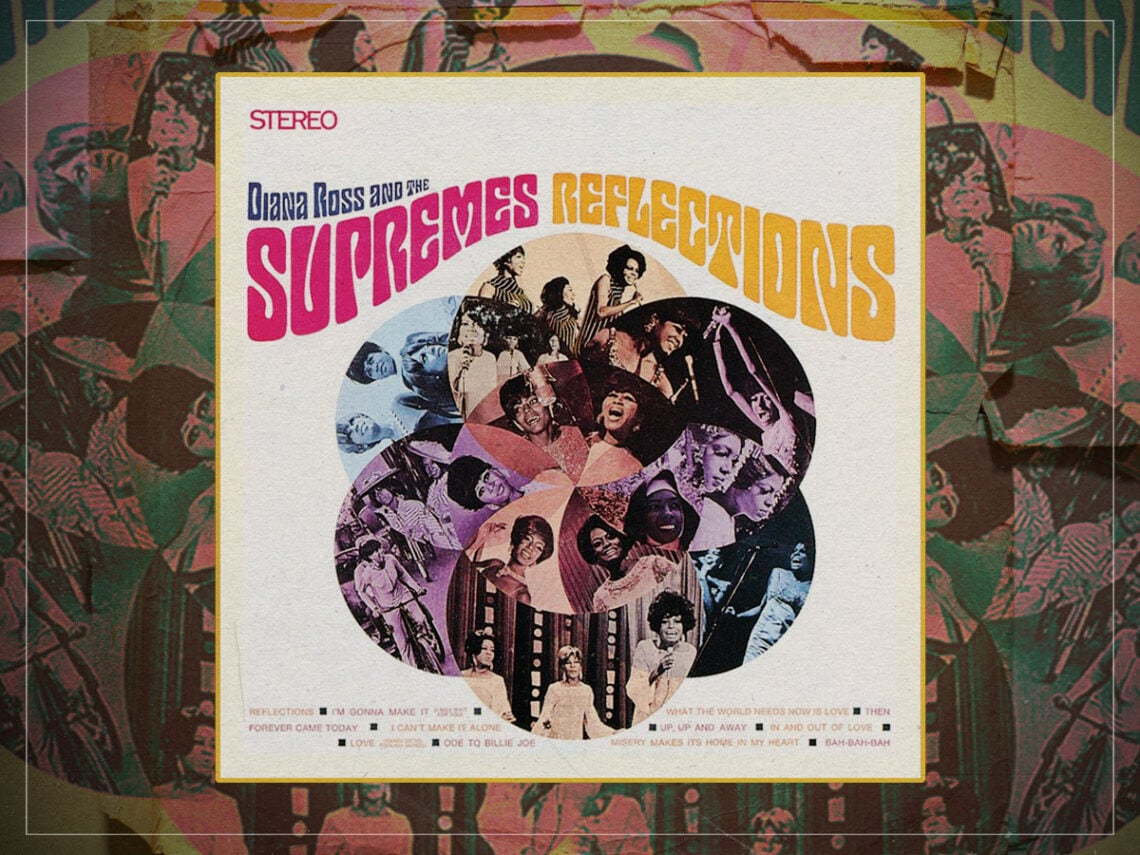
‘Reflections’: The Supremes hit that signalled the end of an era for Motown

Nothing lasts forever. Motown Records had an unparalleled grasp on the American musical mainstream back in the 1960s, but the golden age of the label, which launched the likes of Marvin Gaye, Martha Reeves, and The Supremes, had to come to an end at one point or another.
From the moment that budding young music mogul Berry Gordy made the decision to form his own record label, the Detroit native was acutely aware of the fact that hit records were the key to keeping the business going. It didn’t take too long for Motown to land upon its first chart success, with Barrett Strong’s 1959 single ‘Money (That’s What I Want)’, and as the 1960s began to pick up steam, more and more Motown singles were climbing up the pop and R&B charts in the US.
Many of those singles – the vast majority, in fact – came from Motown’s infallible songwriting trio, Holland-Dozier-Holland. Essentially, when you think of the ‘Motown sound’ that typified the output of folks like The Four Tops, Marvin Gaye, Mary Wells, and The Supremes, among various others, the likelihood is that those records were written by Holland-Dozier-Holland. Without their input, Motown’s domination of the pop charts back in the 1960s would have been far less prominent.
One of the trio’s greatest accomplishments, in fact, was transforming The Supremes from the laughing stock of Hitsville USA – with the Diana Ross fronted outfit desperately unable to achieve any chart success during their first few years at the label – into Motown’s flagship group. ‘Baby Love’, ‘Where Did Our Love Go’, ‘Stop! In The Name of Love’; virtually all of The Supremes’ greatest hits came from the minds of Holland-Dozier-Holland.
Nevertheless, the songwriters didn’t always see the results of their colossal successes. Berry Gordy was famous for dishing out some pretty abysmal contracts during the Motown years, and Holland-Dozier-Holland certainly fell victim to those contracts, and weren’t too happy with the royalties they were being paid for their incredible run of hits. So, amid a legal battle, the trio left Motown in 1968, taking their hit power with them.
One of the final tracks the songwriters penned for Motown was The Supremes’ era-defining classic ‘Reflections’. As opposed to their typical pop-soul sound, ‘Reflections’ saw the group embrace the emerging sounds of psychedelia, which had captured the attention of counterculture around that same time, in 1967. Unsurprisingly, the single was a huge success for the label, peaking at number two in the US pop charts, and number five in the UK. That success, however, was also coupled with a sense that things were coming to an end.
‘Reflections’ was the end of an era for The Supremes and for Motown. Without Holland-Dozier-Holland, both the group and the label would be forced to adapt in order to maintain their position in popular culture. What’s more, it was one of the final Supremes records to feature Florence Ballard, before her alcoholism led to her dismissal from Motown later that same year.
To their credit, both Motown and The Supremes were able to adapt to that new era, as well as the shifting sands of the music industry. In the wake of ‘Reflections’, the label warmed to the idea of blending soul and psychedelia more often, leading to the creation of some of its most iconic tracks, ‘Papa Was a Rollin’ Stone’ being a key example. Meanwhile, The Supremes rebranded as Diana Ross and the Supremes, ahead of Ross’ break-out solo career.
Although Motown was never truly able to recapture the intensity and success of their Holland-Dozier-Holland years, that era was bound to come to an end sooner or later. In the end, perhaps it was better that the label was forced to adapt quickly, rather than carrying on with the same old sounds until all interest had waned.
